A Shinto shrine is laid out like a short walk. You pass a gate, follow a path, wash your hands, meet two stone guardians, and then reach the prayer hall. Each part has a job. This guide goes through them in order, using the English pages of Jinja Honcho, the Association of Shinto Shrines.
Quick answer
A shrine has a torii gate at the entrance, a path (sando) to the prayer hall (haiden), a water basin (temizuya) for washing hands and mouth, a pair of guardian statues (komainu), and a main hall (honden) behind the prayer hall that you do not enter.
Jinja Honcho says the torii marks the border between the sacred space and the everyday world, so many people pause and bow slightly before they walk through. For the full prayer steps, see our shrine and temple etiquette guide.
| Topic | The parts of a Shinto shrine and what each one is for |
| Access | Jinja Honcho says all shrines are open to everyone. Amulets and formal prayers need a small offering |
| Where to see it | Any shrine in Tokyo. Examples below link to our guides |
| Main source | Jinja Honcho (Association of Shinto Shrines), English pages “At a Jinja” |
| Last checked | November 2026 (on November 18, 2026) |
The Shrine Grounds in Walking Order
Jinja Honcho describes a shrine and its grounds as like the home of the kami (the Shinto gods and spirits). It says you do not need a special bow on entering. It is enough to behave as you would when you visit an important person in their home.
| Part | Japanese name | What it is (Jinja Honcho) |
|---|---|---|
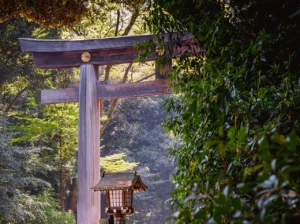
| Gate | Torii | Marks the entrance and the border of the sacred space |
| Path | Sando | The main path, usually from the first torii to the prayer hall |
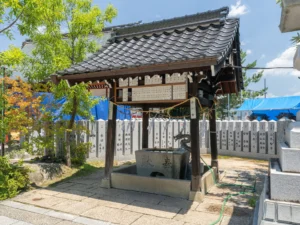
| Water basin | Temizuya | A covered water font to cleanse your hands and mouth before you pray |
| Guardian statues | Komainu | A pair of lion-like statues that guard the shrine |
| Prayer hall | Haiden | The hall in front of the main hall, where people pay their respects |
| Main hall | Honden | The most sacred building, where the kami is enshrined. Its doors are kept locked |
| Offering box | Saisenbako | A slatted box at the front of the prayer hall for coins |
| Rope and paper streamers | Shimenawa and shide | A twisted straw rope and zigzag paper that mark a sacred place or object |
| Lanterns | Toro | Votive lanterns, often given as offerings by worshippers |
Torii: The Gate
Jinja Honcho says the entrance to a shrine is marked by a torii, and that the torii is the clear sign of a shrine. Its FAQ adds that every shrine has a torii at the entrance, and this is the main thing that tells a Shinto shrine from a Buddhist temple.
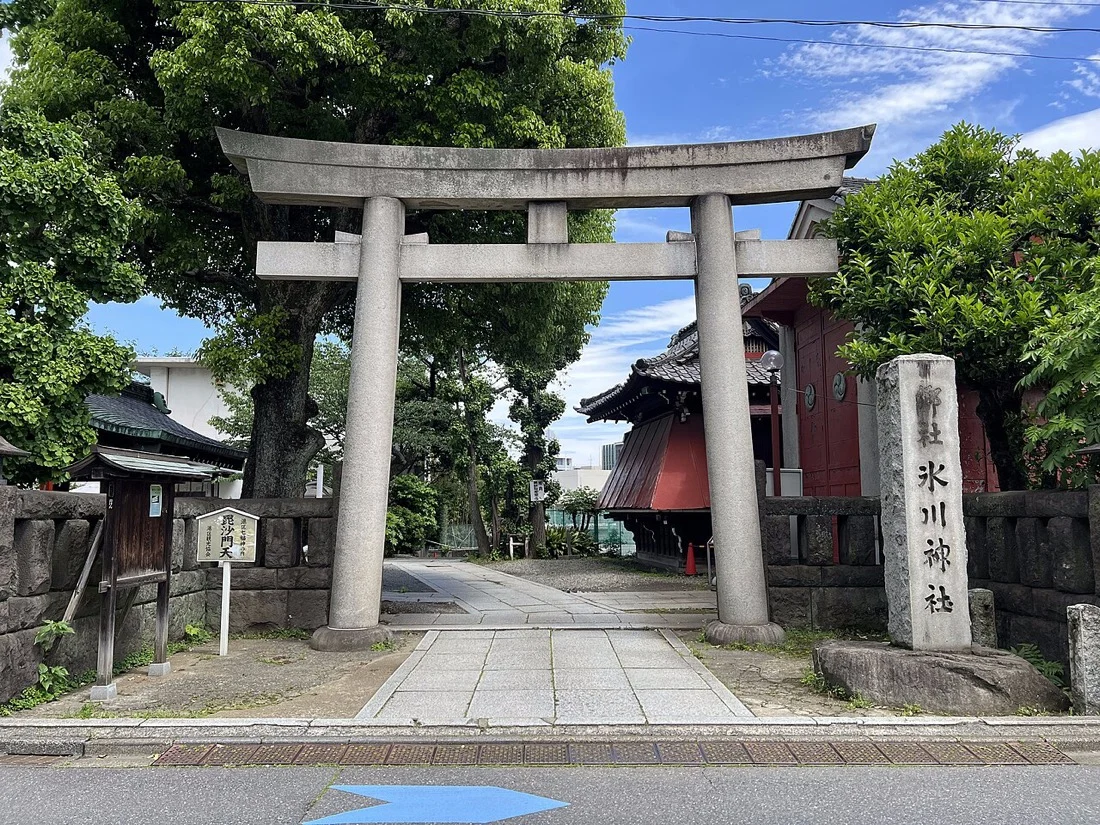
- Shape: a typical torii has two upright pillars and two crossbeams. The upper beam sticks out past the pillars. Torii are generally made of wood or stone, and some are painted vermilion.
- Two common types: the Myojin torii has an upper beam that curves upward. The Shinmei torii is unpainted and has a straight top beam.
- Mountains and sacred sites: some sacred places have no hall at all. There, a torii stands at the entrance and stands for the presence of the kami.
- What to do: you may pause and bow your head before you walk through.
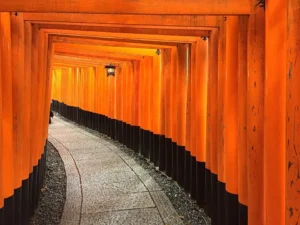
- Red gates: the bright red torii are linked to Inari shrines. See our Inari shrines guide.
- In Tokyo: our Asakusa Shrine guide says its torii is in the Shinmei style, built in 1885. Our Nezu Shrine guide covers a path of small red torii.
Sando: The Path
The sando is the main path. It usually starts at the first torii and leads to the prayer hall. See our Meiji Jingu guide for a Tokyo shrine to see these parts.
Temizuya: The Water Basin
Purity matters a great deal in Shinto, so most shrines have a covered water font and basin near the entrance. Jinja Honcho says you should use it to cleanse your hands and rinse your mouth before you pay your respects.
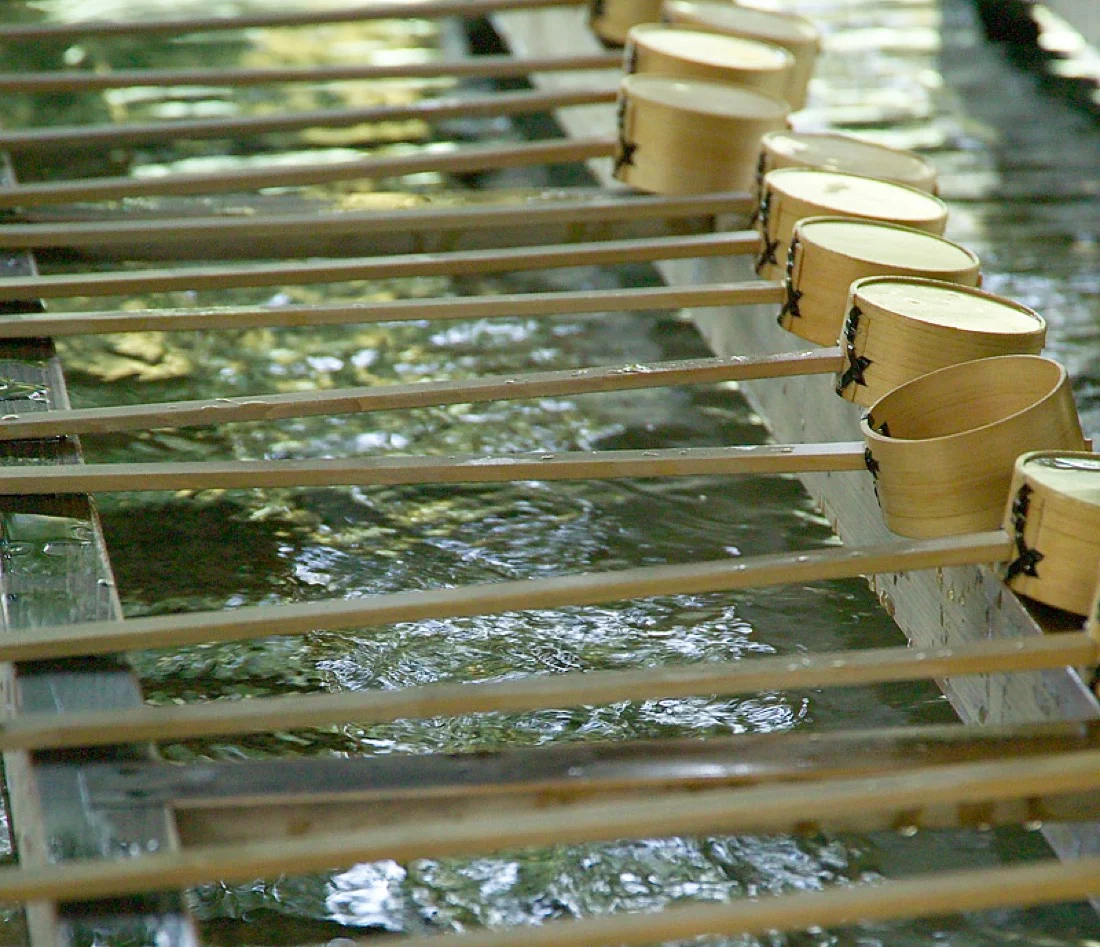
The steps on the Jinja Honcho page are:
- Take the ladle in your right hand and scoop up some water.
- Rinse your left hand. Pass the ladle to your left hand and rinse your right hand.
- Pass the ladle back to your right hand. Pour a little water into your left palm and rinse your mouth. Do not put the ladle to your mouth, and spit the water out at the base of the font, not into it.
- Rinse your left hand again, because it touched your mouth.
- Put the ladle back where you found it.
If a sign at the shrine shows a different method, follow the sign.
Komainu: The Guardian Statues
Many shrines have a pair of animal statues in the grounds. Jinja Honcho says the most common are mythical creatures called komainu, which look like lions. They stand as guardians, protect the shrine and keep evil influences out. Usually one statue has its mouth open and the other has it closed.
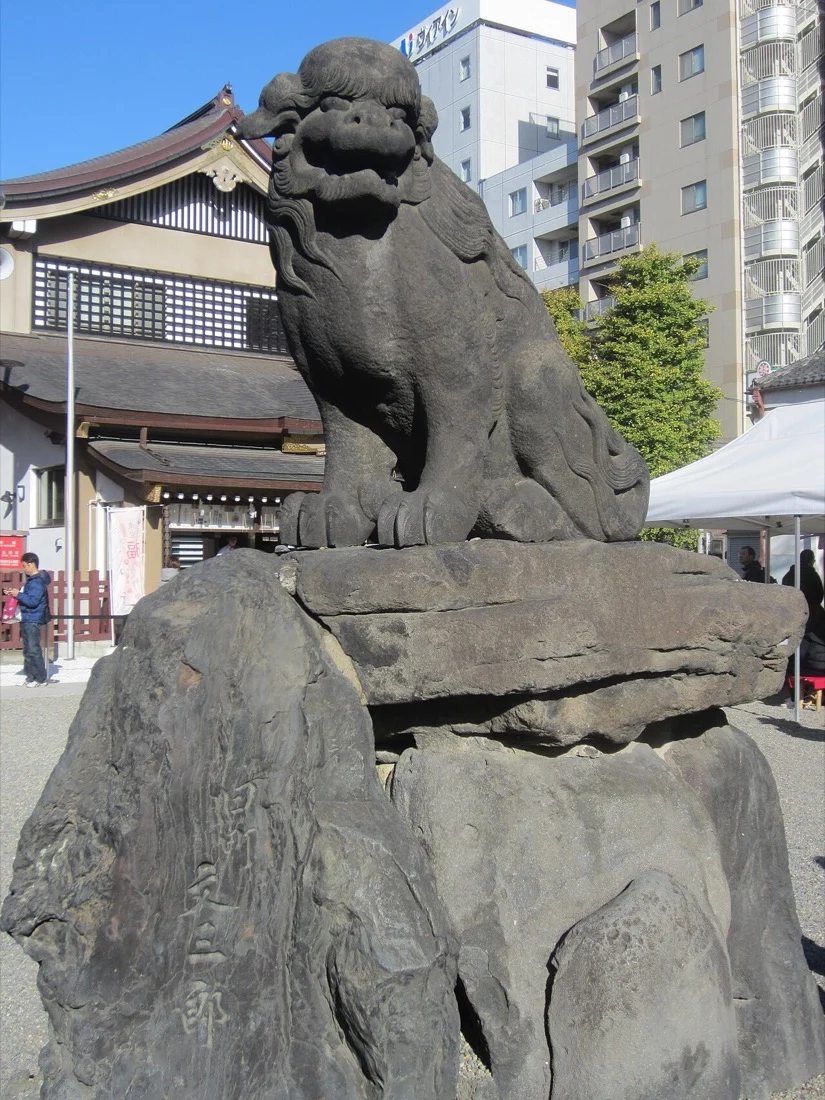
- Materials: stone komainu are common all over Japan. Wood, metal and ceramic are also used.
- Foxes: at some shrines the guardians are foxes. Jinja Honcho links foxes to Inari shrines and says the fox is thought to be a symbol of the kami itself.
- Look for the pair: stand in front and compare the two mouths. We did not find an official explanation of the open and closed mouths, so we do not guess at one.
- Tokyo examples: our Akasaka Hikawa Shrine guide lists seven pairs of komainu. Our Togo Shrine guide notes that its guardians are lions, not the usual komainu. Our Akagi Shrine guide lists the komainu on the shrine map.
Haiden and Honden: The Halls
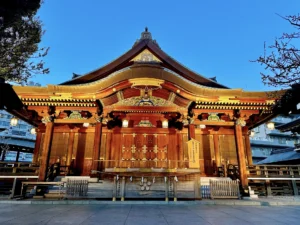
The prayer hall, or haiden, stands in front of the main hall. Jinja Honcho says it is often the most visible building as you enter, and it is used for ceremonies and for honoring the kami. The main hall, or honden, is behind it. It holds the sacred object of worship, and its doors are locked and opened only for special rituals.
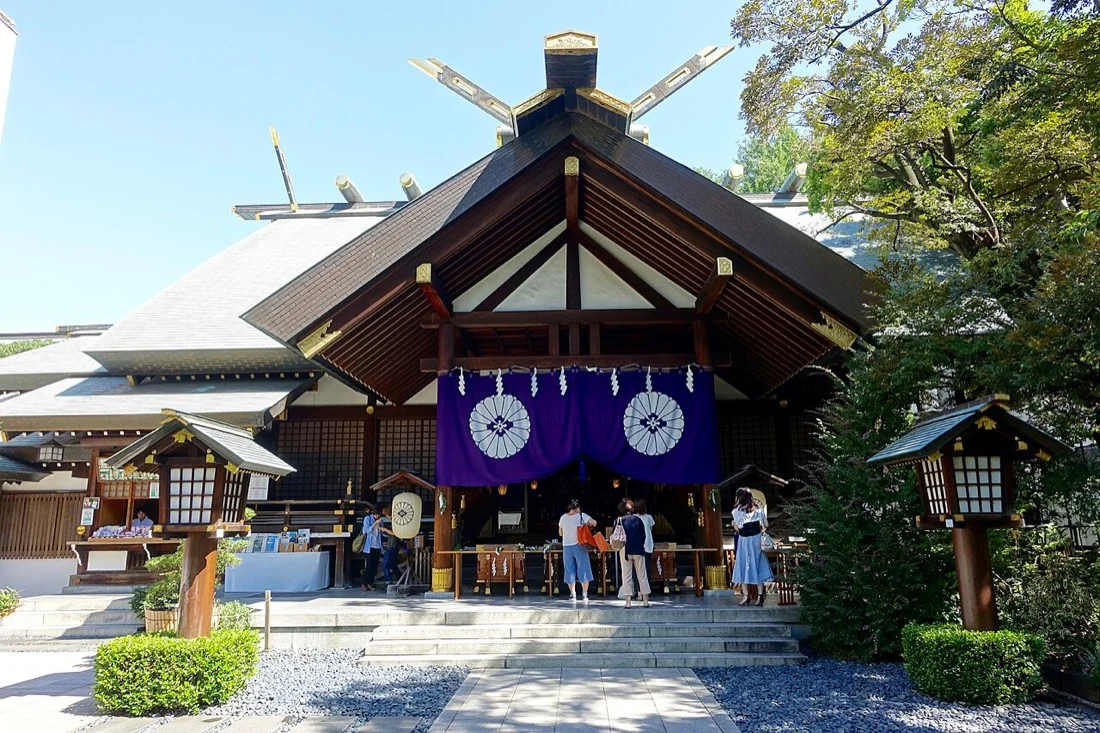
- Where you pray: Jinja Honcho says most people pay their respects from outside, and you should not enter any building without an invitation, even if it looks open. The same goes for areas closed off by fences or ropes.
- Offering box and bell: there is often an offering box and a bell rope at the front. The bell sound is said to purify you, and a small offering shows respect.
- The sacred object: inside the main hall is the goshintai, “the body of the kami”. The public never sees it. Examples include swords, stones and mirrors.
- Two main building styles: Jinja Honcho names Shinmei-zukuri (raised floor, unfinished wood, thatched roof, as at Ise Jingu) and Taisha-zukuri (developed from the homes of village chiefs, as at Izumo Oyashiro). Many shrines mix features, so use these as a guide only.
- The prayer steps: bow deeply twice, clap twice, pray quietly if you wish, and bow deeply once. This is the official order on the Jinja Honcho page. Our etiquette guide has more.
Other Things You Will Notice
- Shimenawa and shide: a twisted straw rope with white zigzag paper marks sacred ground or objects. See our sacred trees guide.
- Stone and hanging lanterns (toro): often donated by worshippers.
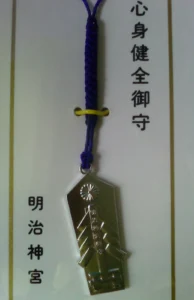
- Amulets and wish plaques: the shrine office or a small stall gives these for a small offering. Jinja Honcho says amulets are not simple souvenirs but should be treated as sacred. See omamori, omikuji, ema and goshuin.
- Shoes: the Jinja Honcho page says to follow the priests if you are asked to enter a building. See taking off your shoes in Japan.
Tips for Visitors
- Go straight to the prayer hall first. Jinja Honcho says to pay your respects to the kami before looking around.
- Do not stand or sit in front of the prayer hall or on its steps. This blocks people who are praying.
- Behave well on the whole grounds, not only near the buildings. Jinja Honcho says the whole precinct is sacred once you pass the torii.
- More shrines to try: temples and shrines in Tokyo, Kanda Myojin, Hie Shrine and What Is Shinto.
FAQ
What is a torii?
A torii is the gate at a shrine entrance. Jinja Honcho says it marks the border between the sacred space and the everyday world. It generally has two pillars and two crossbeams and may be wood or stone.
What are komainu?
Komainu are the paired guardian statues at many shrines. Jinja Honcho says they look like lions and protect the shrine from evil. Usually one has an open mouth and one a closed mouth.
Do I have to bow at the torii?
No rule forces you to. Jinja Honcho says many people pause and bow slightly, and that treating the grounds with respect is enough.
How do I use the temizuya?
Rinse your left hand, then your right, pour a little water into your left palm to rinse your mouth, and rinse your left hand again. Do not touch the ladle to your mouth. This is the Jinja Honcho method.
Can I go inside the prayer hall or main hall?
Jinja Honcho says most people pray from outside, and you should not enter any building without an invitation. The main hall doors are locked except for special rituals.
How can I tell a shrine from a temple?
Look for a torii at the entrance. The Jinja Honcho FAQ says this is the main symbol that marks a Shinto shrine and not a Buddhist temple.
Keep reading
Sources
Facts come from the English pages of Jinja Honcho, read on November 18, 2026, and from our own Tokyo shrine guides. We have not visited these shrines for this article. Shrine rules can differ, so follow signs and staff.