Researched guide · Last checked: Nov 15, 2026
Asakusa Shrine is a Shinto shrine in Asakusa, Taito City, right beside Senso-ji temple and about 7 minutes on foot from Asakusa Station. It honors the three men said to have founded Senso-ji, and it is the center of the Sanja Matsuri in May. The shrine buildings were given by the third Tokugawa shogun, Iemitsu, in 1649 and are an Important Cultural Property.
Quick answer
A Shinto shrine next to Senso-ji, dedicated to the three men tied to Senso-ji’s founding.
Shrine office hours: Weekdays 9:00-16:00; weekends and holidays 9:00-16:30.
Quick facts
| What it is | A Shinto shrine next to Senso-ji, dedicated to the three men tied to Senso-ji’s founding |
| Known for | Edo-period shrine buildings (Important Cultural Property) and the Sanja Matsuri |
| Shrine office hours | Weekdays 9:00-16:00; weekends and holidays 9:00-16:30 |
| Festival | Sanja Matsuri on the third Saturday and Sunday of May |
| Address | 2-3-1 Asakusa, Taito City |
| Nearest station | Asakusa Station (Tokyo Metro Ginza Line, Toei Asakusa Line, Tobu Line), about 7 minutes on foot; Tsukuba Express Asakusa Station, about 10 minutes |
| Last checked | November 2026 |
The story
According to the shrine’s account, in 628 two brothers, Hinokuma no Hamanari and Takenari, pulled a small Kannon statue from the Sumida River. They placed it ashore, and a local man, Haji no Nakatomo, became a monk and made his home a temple for it. This is the origin of Senso-ji. The three men were later honored as local deities. The shrine does not know its exact founding date. It guesses it was between the late Heian and early Kamakura periods. Locals call it Sanja-sama.
What to see
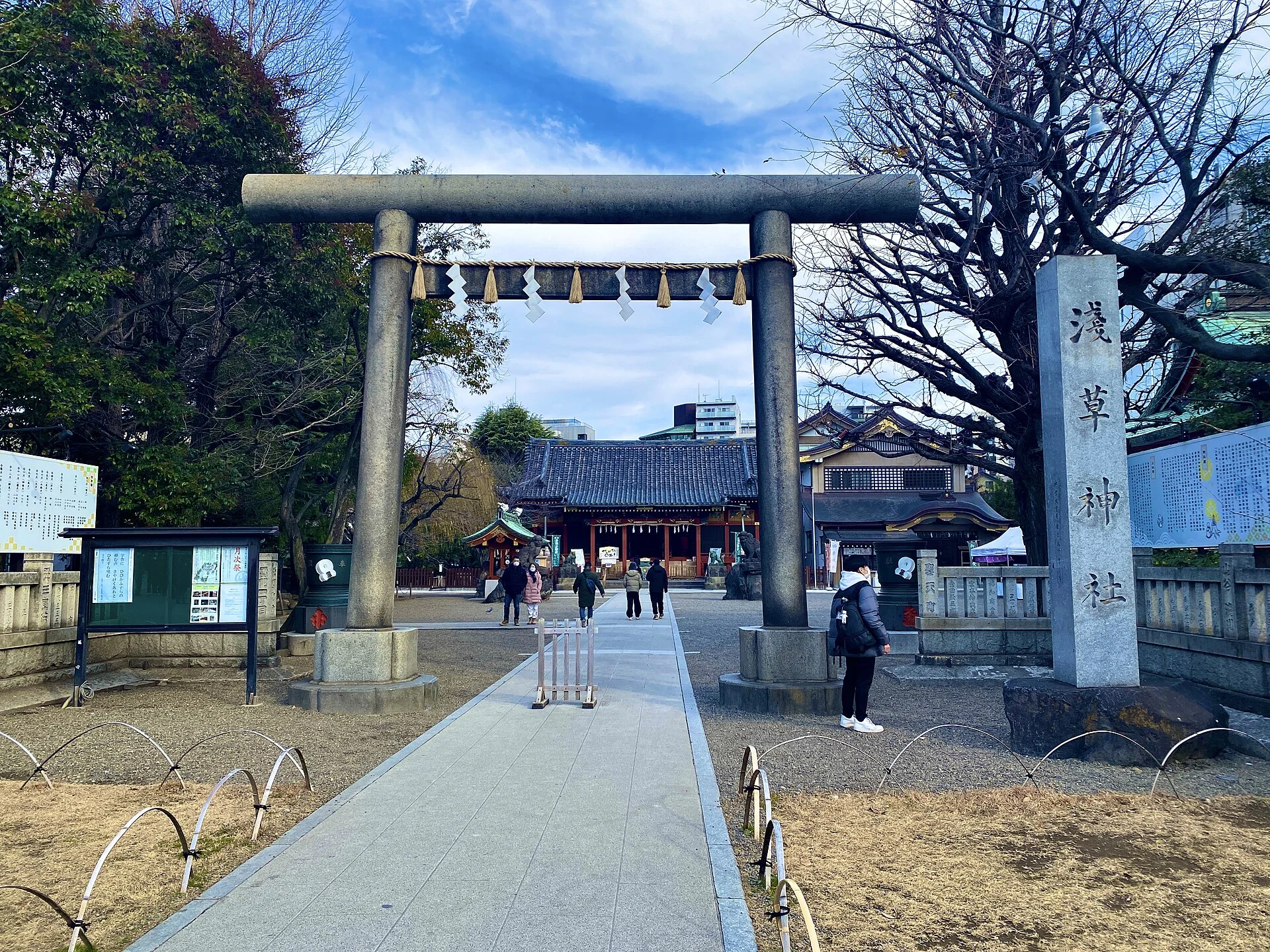
- The shrine buildings: the main hall, offering hall and worship hall form one complex in the gongen style, like Nikko Toshogu. They were given by the shogun Iemitsu in 1649, survived fires, wars and the Great Kanto Earthquake, and were named an Important Cultural Property in 1951. The colors were repainted in 1996.
- Painted creatures: the shrine shows a phoenix, a kirin and a flying dragon, along with two guardian figures called zuijin, with their bows and swords.
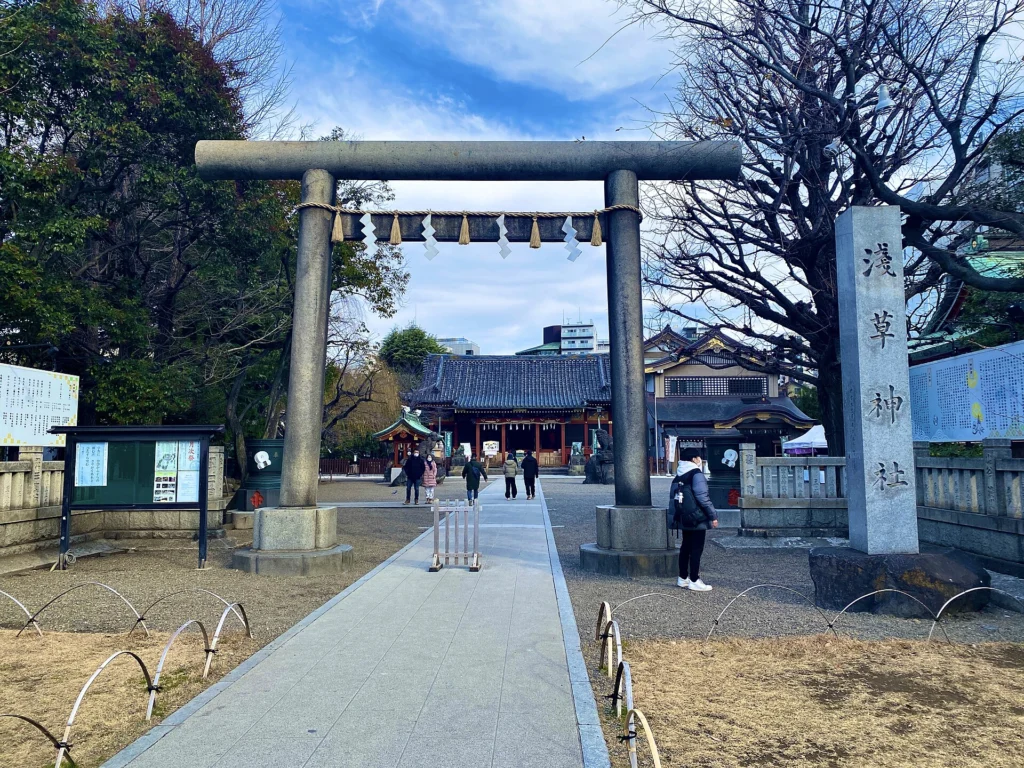
- The torii: a Shinmei-style torii built in September 1885.
- The sacred tree: a pagoda tree in the grounds, because the Kannon statue was set on a stump of one.
- The mikoshi shed: it holds the three portable shrines carried at the Sanja Matsuri. The doors open during the May festival, at New Year and on some weekends and holidays in early spring.
- Smaller shrines: the shrine’s site also lists Hikan Inari Shrine and Asakusa Fuji Sengen Shrine.
Sanja Matsuri
Sanja Matsuri is one of the Three Great Festivals of Edo. It takes place on the third Saturday and Sunday of May, when local people carry portable shrines through the neighborhood. The shrine says the festival is mainly for the harmony of the local people, but others can enjoy it too. See our Sanja Matsuri page for the schedule and tips.
Tips
- The shrine office hours differ between weekdays and weekends. The shrine’s site does not list visiting hours for the grounds.
- Cars may enter only for prayers and wedding guests, and only from Umamichi-dori. Do not drive through Senso-ji. Use a public paid lot instead.
- Read our shrine and temple etiquette guide before you go.
Getting there
- Asakusa Station (Tokyo Metro Ginza Line, Toei Asakusa Line or Tobu Line): about 7 minutes on foot.
- Tsukuba Express, Asakusa Station: about 10 minutes on foot.
The shrine sits to the right of Senso-ji. Combine it with Nakamise-dori and the Asakusa guide.
FAQ
What is Asakusa Shrine?
A Shinto shrine next to Senso-ji. It honors the three men tied to Senso-ji’s founding and hosts the Sanja Matsuri.
When is the Sanja Matsuri?
On the third Saturday and Sunday of May.
How old are the shrine buildings?
They date from 1649, when the shogun Iemitsu gave them. They are an Important Cultural Property.
Is it the same as Senso-ji?
No. It is a separate Shinto shrine next to the Buddhist temple Senso-ji, although their histories are linked.
How far is it from the station?
About 7 minutes on foot from Asakusa Station on the Ginza, Asakusa and Tobu lines.
Sources
Facts come from Asakusa Shrine’s official website (Last checked: November 15, 2026). This page is based on official sources, not our own visit. Last checked: November 2026 (on November 15, 2026).