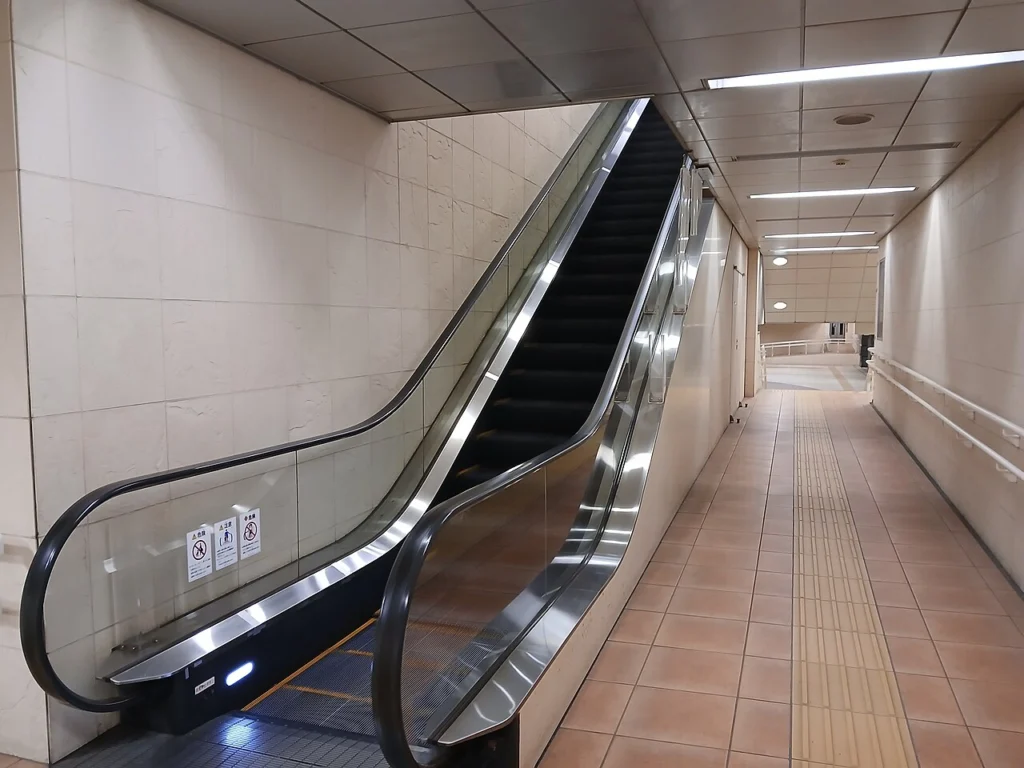
In Japan, the official request is to stand still on escalators, hold the handrail and not walk. Japan’s Ministry of Land, Infrastructure, Transport and Tourism (MLIT) promotes a “Stand on Both Sides” policy. Still, many people stand on one side and leave the other side open. This guide explains both, so you know what to do.
Quick answer
Stand still, hold the handrail and do not walk. MLIT asks people to stand in two rows, one on each side.
You may still see people stand on one side and leave the other open for walkers. The government says this is common, but it can be unsafe for some riders. We did not find an official rule about which side to use, so just stand still on either side.
Overview
| Official request | Stand still and hold the handrail. Do not walk or run |
| MLIT policy | “Stand on Both Sides” (two rows) |
| In practice | Many people still stand on one side and leave the other open |
| Why | Falls, collisions, and riders who can hold only one handrail |
| 2026 campaign | July 21 to August 31, 2026, by 58 railway companies and bureaus and 7 groups |
| Fine or penalty | We could not confirm one |
| Last checked | November 2026 (on November 16, 2026) |
What Japan Asks Escalator Riders to Do
MLIT promotes a “Stand on Both Sides” policy for escalators. It encourages passengers to remain standing and not to walk on the escalator. MLIT recommends standing in two rows instead of walking, according to a Cabinet Office government article published in March 2026.
Why not stand on one side only?
The same government article says it is still common to see people standing on one side and leaving the other side open. It gives reasons why this does not work for everyone:
- Some riders can only stand on one side for physical reasons, for example because they can hold only one handrail.
- Some riders are with small children and may prefer to stand side by side for safety.
- Walking can cause falls. Clothing or limbs can be caught in the machinery, and a falling rider can bring other people down.
JR East, the railway company, says the same thing. Leaving one side open can lead to dangerous accidents for riders who can hold only the left or right handrail.
The 2026 Campaign
From July 21 to August 31, 2026, a campaign called “Don’t walk, stand still” ran across Japan. According to JR East’s press release, 58 railway companies and bureaus and 7 groups joined, together with shopping facilities and local governments. MLIT and the Consumer Affairs Agency supported it. Posters and display ads asked people to stand still and to hold the handrail.
Tokyo operators are among the co-organizers. They include Tokyo Metro, Toei Subway (Tokyo Metropolitan Bureau of Transportation), JR East, Tokyo Monorail and Yurikamome. The Japan Elevator Association is also on the list. We did not check whether the campaign continues after August 31, so look for posters and announcements in the station.
What Locals Say
The Japan Elevator Association asked people in a FY 2024 questionnaire. 90.2% agreed that “People should stop walking on escalators.” 55.9% said they had felt endangered when people walking on escalators, or their bags, collided with them. A 2015 study in London, quoted in the government article, found that passenger flow is about 30% higher when people stand on both sides.
How to Ride in Tokyo
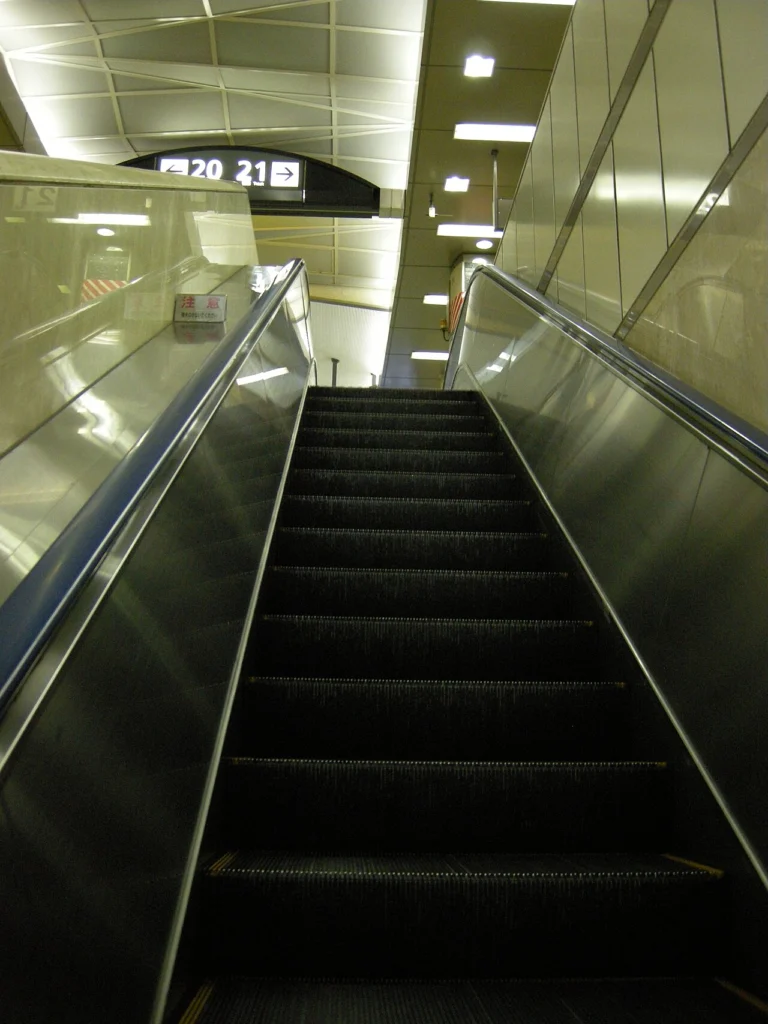
- Stand still. Do not walk or run. This is the official request.
- Hold the handrail. This is the second message of the 2026 campaign.
- Stand on either side. If someone ahead stands on one side, you can still stand still behind them. Do not push past.
- Leave space at the top and bottom. Tokyo Metro asks riders to make space in front of stairs, escalators and ticket gates.
- Allow extra time. Our tip: if you have a train to catch, leave a few more minutes so you do not need to rush.
For more habits on trains, see train manners in Tokyo. Before you travel, read trains in Tokyo and how to use Suica. If you carry big bags, see luggage in Tokyo. Big stations such as Tokyo Station have many escalators.
What We Could Not Confirm
- Which side people stand on. The official pages we read do not say which side is the usual one in Tokyo. We do not give one.
- Fines or laws. We did not find an official penalty for walking on escalators. Rules can differ by place.
- Strollers, wheelchairs and children. We did not find official rules in the pages we read. Follow the signs and staff.
- After the campaign. We could not confirm whether the posters and announcements continue.
More about habits in Japan: Japanese culture guide and Japanese phrases for travelers. If you need to pass someone, sumimasen (“excuse me”) is the usual word.
FAQ
Do you walk on escalators in Japan?
The official request is not to walk. MLIT promotes a “Stand on Both Sides” policy, and railways asked riders to stand still and hold the handrail in a 2026 campaign.
Which side do you stand on an escalator in Tokyo?
The official pages we read do not name a side. They ask people to stand still, on either side. Many people still stand on one side, so you may see that habit.
Why does Japan ask people not to walk on escalators?
The government and JR East point to falls, collisions, and riders who can hold only one handrail. Falls can also bring other people down.
Is walking on an escalator illegal in Japan?
We could not find an official penalty. The 2026 campaign was a request, not a fine.
What is the “Stand on Both Sides” policy?
It is an MLIT policy that encourages passengers to stand in two rows on an escalator and not to walk.
Does the escalator campaign still run?
It ran from July 21 to August 31, 2026. We did not confirm whether it continues, so look for station posters and announcements.
Keep reading


Sources
The facts about escalators come from the official pages below. Last checked: November 2026 (on November 16, 2026). Rules and campaigns can change, so please check signs and announcements at the station.