A maneki-neko is a “beckoning cat”: a small cat figure that raises one paw. You will see them in shops and homes in Japan. Gotokuji, a Buddhist temple in Setagaya in western Tokyo, tells a story about a cat that invited a lord to the temple, and it keeps a shrine hall for the cat. This guide explains that story in plain English, using the temple’s own pages, and shows how to visit.
Quick answer
Gotokuji says the story began when a cat at the temple gate beckoned a lord who was returning from falconry. He stopped, a thunderstorm broke, and he was grateful for the luck the cat brought. The lord was Ii Naotaka of Hikone, and the temple was rebuilt in 1633 with his support. The temple keeps a hall, Shofuku-den, for the cat, and many cat figures stand in the grounds.
To visit: Gotokuji is open 6:00 to 17:00. It is 5 minutes on foot from Miyanosaka Station on the Tokyu Setagaya Line, or 15 minutes from Gotokuji Station on the Odakyu Line. We did not find an entrance fee on the pages we read, so check before you go.
| Topic | Maneki-neko (beckoning cat) and the Gotokuji story |
| Place | Daikeizan Gotokuji, Setagaya, Tokyo (a Soto Zen Buddhist temple) |
| Visiting hours | 6:00 to 17:00. The temple office is open 8:00 to 15:00 (official, Japanese page) |
| Getting there | Miyanosaka Station (Tokyu Setagaya Line) 5 minutes on foot. Gotokuji Station (Odakyu Line) 15 minutes on foot |
| Entrance fee | Not listed on the pages we read. Check before you go |
| Source | Gotokuji official English pages and the official Japanese top page |
| Last checked | November 2026 (on November 18, 2026) |
What Is a Maneki-neko?
Maneki-neko means “beckoning cat.” The name comes from the raised paw, which looks like a hand waving someone closer. The Gotokuji page spells the name Manekineko. The temple says that, in general, a beckoning cat holds a coin in its raised paw. We did not read an official page that gives one single origin for the figures, so we only retell the story that Gotokuji itself tells.
The Story Told at Gotokuji
- A lord was on his way back from falconry (hunting with trained birds). A cat at the temple gate beckoned him, and he decided to stop.
- While he was at the temple, thunder rang out and rain began to fall. He spent the time in a pleasant talk with the temple master and stayed out of the storm.
- The lord was impressed by the luck the cat had brought. The temple says he was Naotaka Ii, the lord of Hikone domain.
- With Naotaka’s financial support, Gotokuji was rebuilt in 1633. The temple says it was the Ii family’s family temple (a bodaiji, a temple that cares for a family’s dead) and keeps many cultural assets linked to the family.
- Later the temple built Shofuku-den to honor the cat that brought good fortune, and named it “Manekineko.” The temple says many people visit it to pray for the well-being of the family, a prosperous business, luck and happiness.
Why Gotokuji’s Cat Holds No Coin
Gotokuji’s official page points out that its beckoning cat raises its right hand but holds no coin. The temple explains this as a lesson. In its words, a beckoning cat does not bring happiness directly. It brings chances to connect with people, and it is up to you whether you make them work. If you live in constant gratitude, luck and happiness come naturally. That is why the Gotokuji cat holds no coin.
What to Look For at the Temple
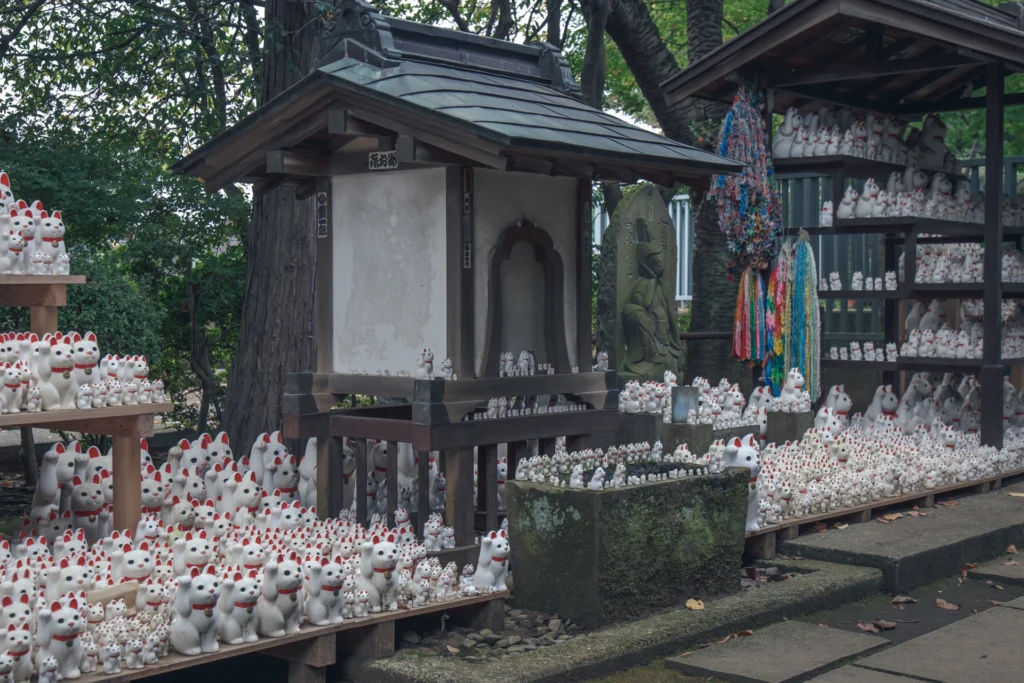
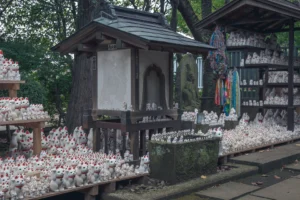
- Shofuku-den: the hall that honors the cat. The temple says a standing statue of Shofuku Kannon (a Buddhist figure of compassion) is enshrined inside.
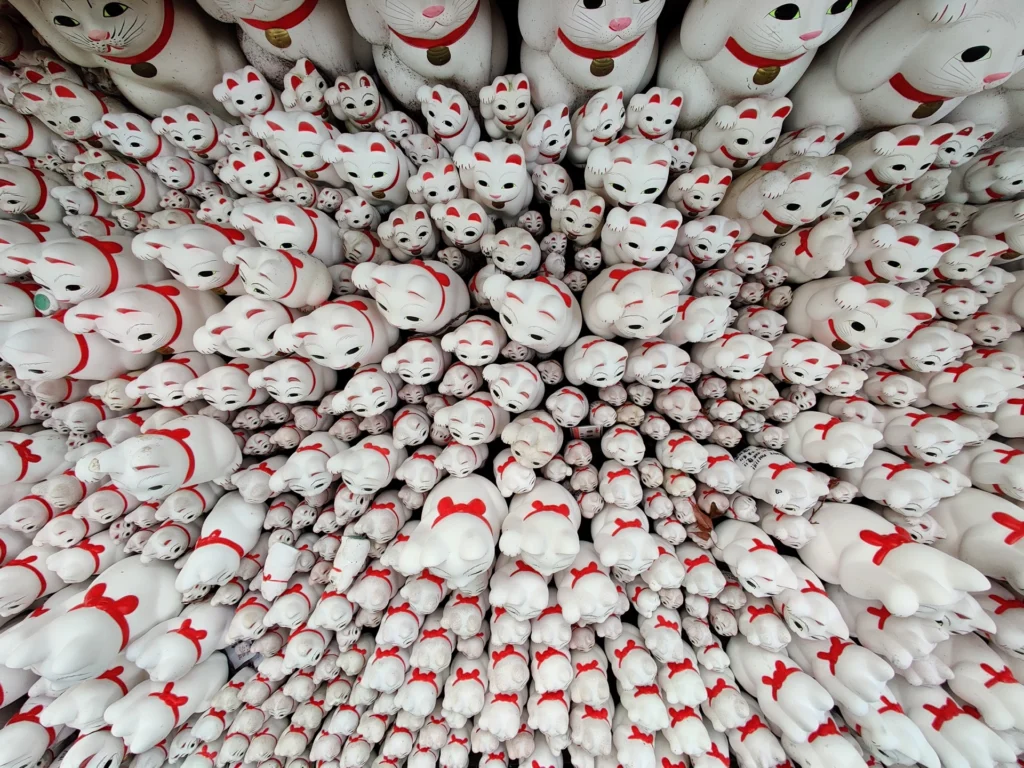
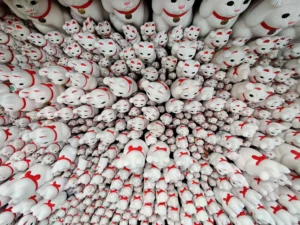
- The cat figures: the temple says an array of beckoning cat dolls is settled at a spot it calls Honojo. Giving one back is not required, but many people return and offer one after their wish comes true.
- The three-storied pagoda (Sanju-no-to): finished in May 2006 and 22.5 meters high. The temple says it carries carved figures of the 12 Chinese zodiac animals and several cats, and invites you to count the cats. A cat sits among the mice in the north, which the temple describes as living together without a fight.
- The ema (wooden wish plaques): the temple says its own ema shows a beckoning cat together with the zodiac animal of the year, a design found only at Gotokuji. Our guide to omamori, omikuji, ema and goshuin explains how these items work.
- The temple office: the temple says you can buy beckoning cat dolls and beckoning cat amulets there. Prices were revised in June 2026 and no amounts were given on the pages we read.
- Please be kind to the figures: the temple posted a notice in March 2024 asking visitors not to scribble on them.
How to Visit
- Hours: 6:00 to 17:00 for visiting. The temple office, where you can get cat dolls and amulets, is open 8:00 to 15:00.
- By train from Shibuya: our Setagaya half-day plan pairs the temple with Shoin Shrine on the Setagaya Line. We did not read fares or ride times, so check a route app.
- Address: 2-24-7 Gotokuji, Setagaya City. Phone: 03-3426-1437.
- Manners: this is a working temple. Read our shrine and temple etiquette guide and keep your voice low.
- The temple also posted a notice in 2026 about commercially guided tours. If you plan to bring a tour group, read it on the official site first.
More About the Area and Culture
For the place guide, see Gotokuji Temple. For a day plan, try the Setagaya guide. If you like cats and Tokyo, our cat cafes in Tokyo list is another idea. New to Japanese religion? Read What is Shinto and the Japanese culture guide. For trains, see Trains in Tokyo and How to use Suica.
FAQ
What is a maneki-neko?
It is a “beckoning cat,” a cat figure with a raised paw. This guide retells the story told by Gotokuji Temple in Setagaya, Tokyo.
What is the Gotokuji beckoning cat story?
The temple says a cat at its gate beckoned a lord returning from falconry. He stopped, a thunderstorm began, and he was thankful for the luck. He was Naotaka Ii of Hikone, and the temple was rebuilt in 1633 with his support.
Why does the Gotokuji cat hold no coin?
The temple says its beckoning cat brings chances to connect with people, not happiness by itself. It holds no coin to teach that, in the temple’s words, constant gratitude brings luck.
Is Gotokuji the only place with a beckoning cat story?
We read only Gotokuji’s official pages, so we cannot say. The temple tells its own story and does not claim to be the only one.
When can I visit Gotokuji?
The temple is open for visiting from 6:00 to 17:00. The temple office is open from 8:00 to 15:00. Check the official site for notices before you go.
How do I get to Gotokuji?
It is 5 minutes on foot from Miyanosaka Station (Tokyu Setagaya Line) or 15 minutes on foot from Gotokuji Station (Odakyu Line), according to the temple.
Keep reading

Sources
Facts come from official pages of Gotokuji read on November 18, 2026. We have not visited the temple for this guide. Hours and notices can change, so please check before you go.