Researched guide · Last checked: Nov 15, 2026
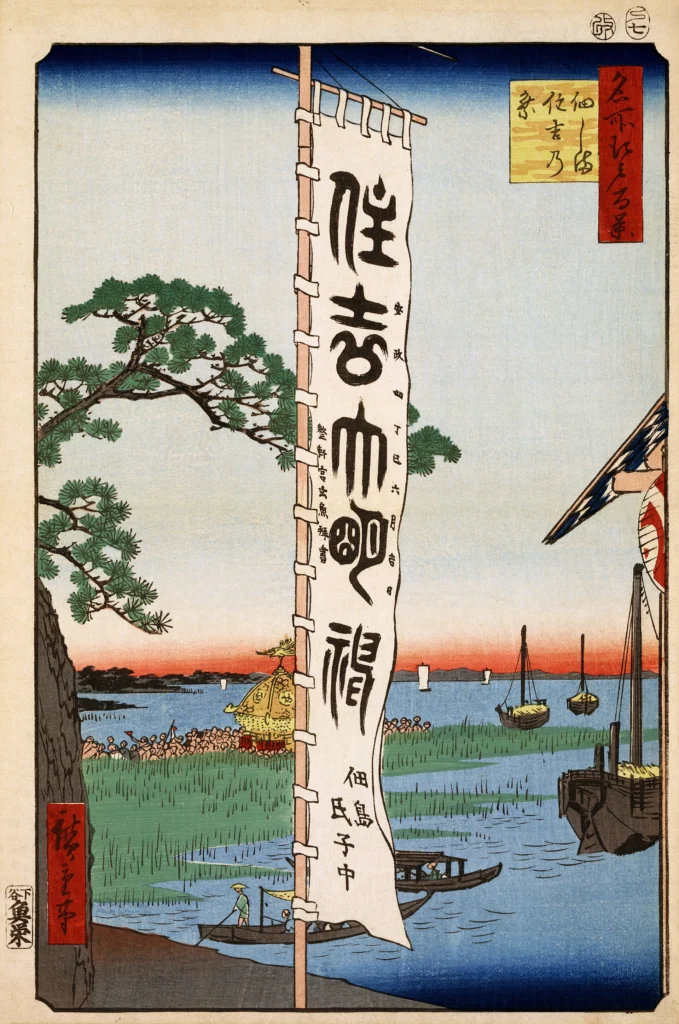
Tsukuda Sumiyoshi Shrine stands on Tsukudajima, an old island fishing district in Chuo City, near Tsukishima Station. The shrine says fishermen from Tsukuda in Osaka came to Edo in the Kan’ei years (1624-1644) and built it, and that it moved the spirits of its gods there in 1646. It guards people who travel by sea, and today it is the local shrine of Tsukishima, Kachidoki, Toyomi and Harumi. The grounds are open 24 hours.
Quick answer
Tsukuda Sumiyoshi Shrine stands on Tsukudajima, an old island fishing district in Chuo City, near Tsukishima Station.
Opened: Spirits moved to Edo on June 29, 1646 (the shrine’s date).
Hours: Grounds open 24 hours. Shrine office 8:00-16:30.
Admission: The official site does not list an entry fee.
Quick facts
| What it is | A Shinto shrine that protects sea and travel safety, in the old fishing district of Tsukudajima |
| Opened | Spirits moved to Edo on June 29, 1646 (the shrine’s date) |
| Hours | Grounds open 24 hours. Shrine office 8:00-16:30 |
| Admission | The official site does not list an entry fee |
| Address | 1-1-14 Tsukuda, Chuo City, Tokyo |
| Nearest station | Tsukishima Station (Yurakucho Line and Oedo Line), exit 6, about 5 minutes on foot |
| Last checked | November 2026 |
What to see
- Water basin hall: built in 1869. Relief carvings of the Tsukudajima area decorate the frames above the walls. The basin was given in 1841 by a cotton wholesalers’ group.
- Ceramic plaque: a rare name plaque made of pottery, given in 1882 by pottery wholesalers. Prince Arisugawa Takahito wrote the characters.
- Bonito monument: a 3-meter-tall monument (with its base) given in 1953 by the Tokyo bonito wholesalers. A festival is held there each year at the end of May.
- Copper lantern: built in 1915 by Okazaki Sessei, who also made the kirin statues on Nihonbashi Bridge.
- Old brick storehouse: built in 1911 in English-bond brick, it once held the portable shrine.
- Senryu verse stone: from 1966, carved with a poem by Mizutani Ryokutei, who grew up among Tsukuda fishermen.
- Small shrines: Ryujin Shrine (Ryuo Benzaiten), Iriifune Inari, Funadama Shrine and others stand in the grounds.
History
- The Osaka link: the Sumiyoshi gods were first honored at Tsukuda in Osaka. After Tokugawa Ieyasu came to the Kanto region, 33 fishermen from there and the priest Hiraoka Gondayu Yoshitsugu went to Edo, carrying the gods’ spirit.
- The island: the shogunate gave them a tidal flat in front of Teppozu in the Kan’ei years. They built the island and named it Tsukudajima after their hometown.
- 1646: the spirits of the three Sumiyoshi gods, Empress Jingu and Tokugawa Ieyasu were enshrined on June 29.
- Later: as Tsukishima, Kachidoki, Toyomi and Harumi were reclaimed from the sea, the shrine became their local shrine. It says Tsukudajima escaped both the Great Kanto Earthquake and the wartime air raids.
Yearly events
- January 1: New Year’s Day ceremony. The first Snake Day of 2027 is January 2, when a special charm is given out at Ryujin Shrine.
- February 3: Setsubun bean-throwing and ceremony.
- Late March to early April: the Ryujin Shrine festival (Cherry Blossom Festival), with a ceremony at 11:00.
- June 30 and December 31: purification rites (Nagoshi and Toshikoshi Oharai) at 14:00 and 17:00.
- August 6: the shrine’s main yearly ceremony.
- November 23: the harvest thanks festival (Niiname-sai).
Tips
- Prayers are by reservation. The shrine asks for formal clothes. It does not accept shorts, T-shirts or bare feet in the hall.
- The shrine says this is the Tsukuda Sumiyoshi Shrine in Tokyo and warns that people often confuse it with Sumiyoshi shrines in other prefectures.
- There is no parking, so use nearby coin parking.
- The shrine’s site mentions its big portable-shrine festival only in old notices. Ask the shrine for the next date.
Getting there
- Tokyo Metro Yurakucho Line or Toei Oedo Line, Tsukishima Station: exit 6, about 5 minutes on foot.
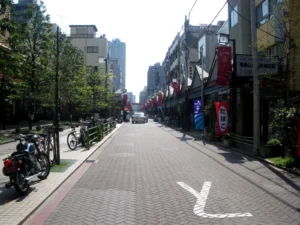
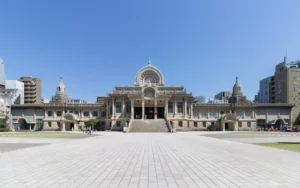
The shrine is near Tsukishima Monja Street. For other shrines, see Tsukiji Honganji, temples and shrines in Tokyo and our Tsukiji and Toyosu guide. The Tsukiji Outer Market is a short ride away.
FAQ
Is Tsukuda Sumiyoshi Shrine open 24 hours?
The shrine says there is no closing time, so you can visit at any hour. The shrine office is open 8:00-16:30.
Is there an entry fee?
The official site does not list one.
Can I get a prayer said?
Yes, by reservation at the shrine office or by phone. The fee for a personal prayer starts at 10,000 yen per person.
How do I get there?
From Tsukishima Station, exit 6, walk about 5 minutes.
Is it the same as Sumiyoshi Taisha in Osaka?
No. It is a separate shrine in Tokyo. It honors the same three Sumiyoshi gods but began with fishermen who moved from Tsukuda in Osaka.
Keep reading
Sources
Facts come from the official Tsukuda Sumiyoshi Shrine website (in Japanese), last checked on November 15, 2026. They are based on official sources, not our own visit. Last checked: November 2026 (on November 15, 2026).
- Sumiyoshi Shrine: History (official, Japanese)
- Sumiyoshi Shrine: Visiting and prayers (official, Japanese)
- Sumiyoshi Shrine: Access (official, Japanese)
- Sumiyoshi Shrine: Cultural properties in the grounds (official, Japanese)
- Sumiyoshi Shrine: Yearly events (official, Japanese)
- Sumiyoshi Shrine: Small shrines in the grounds (official, Japanese)
Also nearby: Shinto purification: Izanagi and the temizuya