Researched guide · Last checked: Nov 17, 2026
Higan is a seven-day period in spring and again in autumn, centered on the equinox. Japanese families visit graves and offer sweet rice cakes called botamochi or ohagi. It is a quiet custom, not a festival, so visitors will mostly see it in shops and in cemeteries.
Quick answer
Higan is a Buddhist memorial week that runs for seven days around the spring equinox and the autumn equinox. The middle day is a national holiday each time. People visit family graves, make offerings and eat botamochi (spring) or ohagi (autumn), sweet rice cakes covered with red bean paste.
In 2027, Spring Equinox Day is March 21 and Autumn Equinox Day is September 23. Count three days before and three days after to get the week (our calculation).
As a traveler, you do not need to do anything. Be quiet near cemeteries and temples, and check each temple’s own page before you go if you want to join a service.
| What it is | A seven-day memorial period in spring and autumn, centered on an equinox day |
| Middle day | Spring Equinox Day and Autumn Equinox Day, both national holidays |
| 2027 dates | Spring: March 18 to 24. Autumn: September 20 to 26 (our calculation from the middle day) |
| Typical customs | Visiting graves, offerings at the family altar, memorial services, botamochi and ohagi |
| Good for | Understanding what you see in spring and autumn, and why sweets with red bean paste appear |
| Last checked | November 2026 (on November 17, 2026) |
What Higan Means
Higan (彼岸) literally means “the other shore.” Tendai, a Buddhist school, explains that higan is the world of the Buddha, while shigan, “this shore,” is the world of confusion where we struggle in daily life. The Jodo school, another Buddhist school, links the word to the Western Pure Land, the paradise of Amida Buddha.
The week works as a time to remember ancestors and to think about one’s own heart. A common saying, quoted by Tendai, is “Heat and cold last only until higan.” In spring the cold fades, and in autumn the heat eases.
When Is Higan?
Higan is seven days long, and the middle day is the equinox day. The Cabinet Office says Spring Equinox Day is meant to “admire nature and cherish living things,” and Autumn Equinox Day is meant to “honor ancestors and remember those who have passed away.” The National Astronomical Observatory announces next year’s dates each February in the Official Gazette, so the date changes a little from year to year.
| Spring higan | Autumn higan | |
|---|---|---|
| Middle day | Spring Equinox Day | Autumn Equinox Day |
| 2027 middle day | March 21 (the Cabinet Office also lists March 22 as a holiday) | September 23 |
| 2027 week (our calculation) | March 18 to 24 | September 20 to 26 |
| Holiday purpose (Cabinet Office) | Admire nature and cherish living things | Honor ancestors and remember those who have passed away |
| Sweet | Botamochi | Ohagi |
Only the middle day is a public holiday. The other six days are normal days, so shops and trains run as usual. Check the Japan public holidays guide when you plan a trip around the date.
Where the Custom Comes From
The Jodo school says that the autumn higan custom is thought to have begun in the early Heian period. The Jodo school also teaches, following the monk Shandao, that the sun sets due west on the equinox, which makes these days a good time to turn one’s thoughts toward the Western Pure Land. Tendai says the same about the sun setting due west. Neither official page gives a single exact starting date, so we do not either.
What People Do
- Visit the family grave and clean it (Jodo and Tendai both mention grave visits).
- Make offerings. MAFF says people visit graves and offer botamochi at the household altar on the middle day.
- Attend a memorial service. The Jodo school mentions services and chanting the nembutsu, a short prayer to Amida Buddha.
- Think about your own heart. Tendai says looking at your own state of mind matters, along with the grave visit.

Botamochi and Ohagi: The Higan Sweet
Both names describe the same kind of sweet: sticky rice covered with sweet red bean paste. MAFF (the Ministry of Agriculture, Forestry and Fisheries) says one theory links the names to flowers, the peony (botan) in spring and the bush clover (hagi) in autumn. Another theory says koshi-an, smooth paste, gives botamochi and tsubu-an, chunky paste, gives ohagi. Today the two names are mostly used for the same sweet.
MAFF says the red color of the azuki bean is believed to drive away evil, and that offering the sweet at higan is said to have become common in the Edo period. In the past, sugar was expensive, so a sweet offering was also a way to show gratitude.
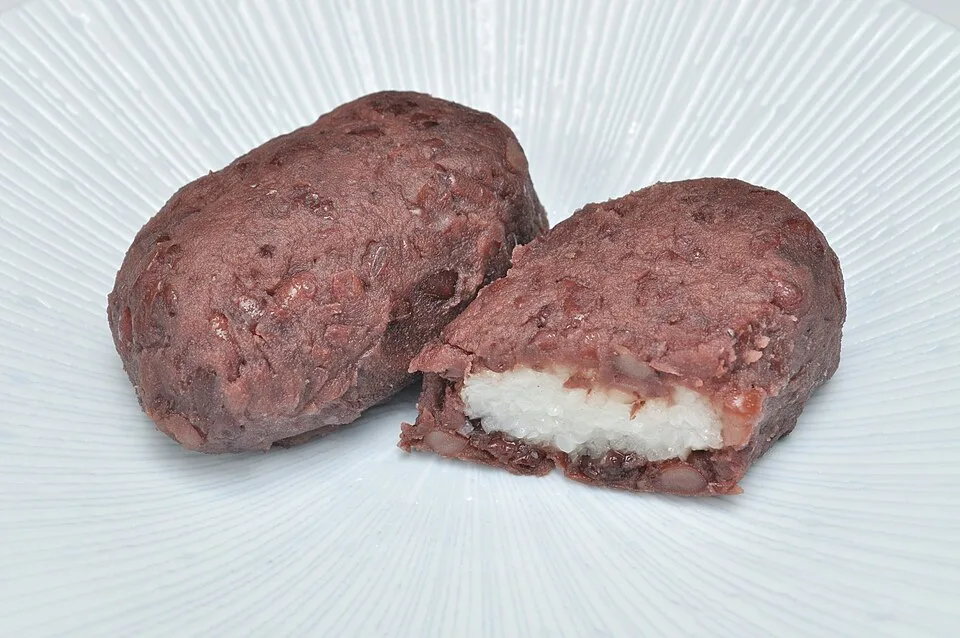
If you want to try one, look at Japanese sweet shops (wagashi shops) around the dates above. Sales and flavors vary by shop, so check the shop’s own page. For other sweets, see our Tokyo cafes and sweets guide and washoku guide.
Tips for Visitors
- You can enjoy higan from the outside. Notice the sweets in shop windows and the flowers people carry to graves.
- Treat cemeteries as places of mourning. Keep your voice low, and ask before taking photos near families.
- Temples may hold services during the week. Each temple sets its own schedule, so check the temple’s official page before you go. Our shrine and temple etiquette guide covers the basics.
- Higan is different from Obon, a separate summer custom for ancestors. See our Obon guide.
- In spring, plan around the season. See Tokyo in March. In autumn, see Tokyo in September.
Other Customs Linked to the Season
Autumn equinox time also brings moon viewing, explained in our tsukimi guide, and the next holiday is Respect for the Aged Day. For another cycle of the year, see Japanese New Year customs. New to Tokyo? Start with Start here.
FAQ
What is Higan in Japan?
Higan is a seven-day Buddhist memorial period in spring and autumn, centered on the equinox day. People visit graves, make offerings and remember their ancestors.
When is Higan in 2027?
The middle days are March 21 (spring) and September 23 (autumn). The seven-day weeks are about March 18 to 24 and September 20 to 26. These ranges are our calculation, so check before you go.
Is Higan a public holiday?
Only the middle day is. Spring Equinox Day and Autumn Equinox Day are national holidays, and the other days of the week are normal days.
What is the difference between botamochi and ohagi?
They are very close. MAFF says one theory ties the names to the peony in spring and the bush clover in autumn, and another says koshi-an gives botamochi and tsubu-an gives ohagi. Today the names are mostly used for the same sweet.
Why do people eat sweet rice cakes at higan?
MAFF says they are offered at the household altar and eaten on the middle day, a custom said to have become common in the Edo period. The red azuki bean is also believed to drive away evil.
Is Higan the same as Obon?
No. Both are linked to remembering ancestors, but Obon is a separate summer custom. See our Obon guide for it.
Keep reading


Sources
Facts come from the official pages below (Last checked: November 17, 2026). We do not give one exact origin or date for the custom, because the pages we read do not. Dates and temple schedules change, so please check before you go.