Wabi-sabi is a way of seeing beauty in things that are plain, worn or not perfect. It is not a rule or a religion. In Tokyo you can see it in real objects and buildings: a small tea room, a thatched farmhouse, a bowl mended with gold. This guide explains the idea in simple words and points to places where you can look for it.
Quick answer
Wabi-sabi has no single official definition. In plain words, it is the habit of finding beauty in simple, rustic and aged things. Its home is the tea tradition (wabicha), which valued plain rooms and bowls over costly display. We explain it through things you can see, and we avoid big claims about what it “means” for life.
Where to look in Tokyo: the historic tea houses in the Tokyo National Museum garden, the Kaisuian tea room and a thatched farmhouse at the Edo-Tokyo Open-Air Architectural Museum, and kintsugi (mending pottery with lacquer). Opening days change, so check before you go.
| Topic | Wabi-sabi: beauty in simple, aged, imperfect things |
| Roots | The tea tradition (wabicha), shaped by Murata Shuko and Sen no Rikyu, according to Nippon.com |
| See it at | Tokyo National Museum tea houses, Edo-Tokyo Open-Air Architectural Museum (Kaisuian tea room, farmhouse), kintsugi workshops |
| Official definition | None found. We describe how the idea is used, not one fixed meaning |
| Access to tea houses | The Tokyo National Museum says its tea houses can be booked for events. Check before you go |
| Last checked | November 2026 (on November 18, 2026) |
What Is Wabi-Sabi?
Wabi-sabi is often described as an eye for quiet, modest beauty. The Nippon.com article on the Japanese tea ceremony links the “simple, rustic beauty of objects” taught by Sen no Rikyu to wabi sabi. We did not find an official one-line definition, and writers explain the two words in different ways. So we keep to what the sources show: plain materials, small spaces and objects that are used and worn.
A useful test is to look, not to define. A plain wall, a bowl with a rough edge, a roof dark with age. If you find these pleasant to look at, you are already seeing what the idea points to.
Where It Comes From: The Tea Tradition
- Nippon.com says Murata Shuko encouraged wabicha, a style of tea that stressed the spiritual side of the ceremony.
- Later, Sen no Rikyu turned it into an event built on harmony, respect, purity and tranquility.
- Rikyu served tea in a small, bare room of about two or three tatami mats. Guests came in through a low door called the nijiriguchi and had to crouch.
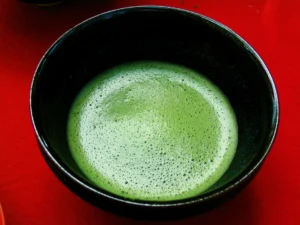
- Tea was served in plain bowls, not expensive ones.
This is why tea houses are the easiest place to see the idea. Our tea ceremony guide and Japanese tea types guide cover the practical side.
See It in Tokyo: Three Places
1. Tea houses at the Tokyo National Museum
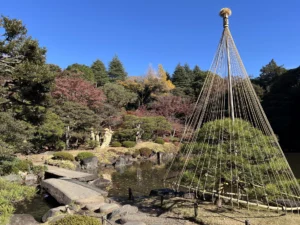
The Tokyo National Museum says five historic tea houses stand in its garden north of the Japanese Gallery. They are Shunsoro, Tengoan, Rokusoan, Okyokan and Kujokan. Each one was moved here from somewhere else. For example, Tengoan was built in Kyoto by the tea master Kobori Enshu and moved to Tokyo in 1878. Rokusoan was built in the mid-17th century at a temple in Nara, and the museum says part of it was lost when the ship carrying it sank. It was rebuilt on its present site in 1947.
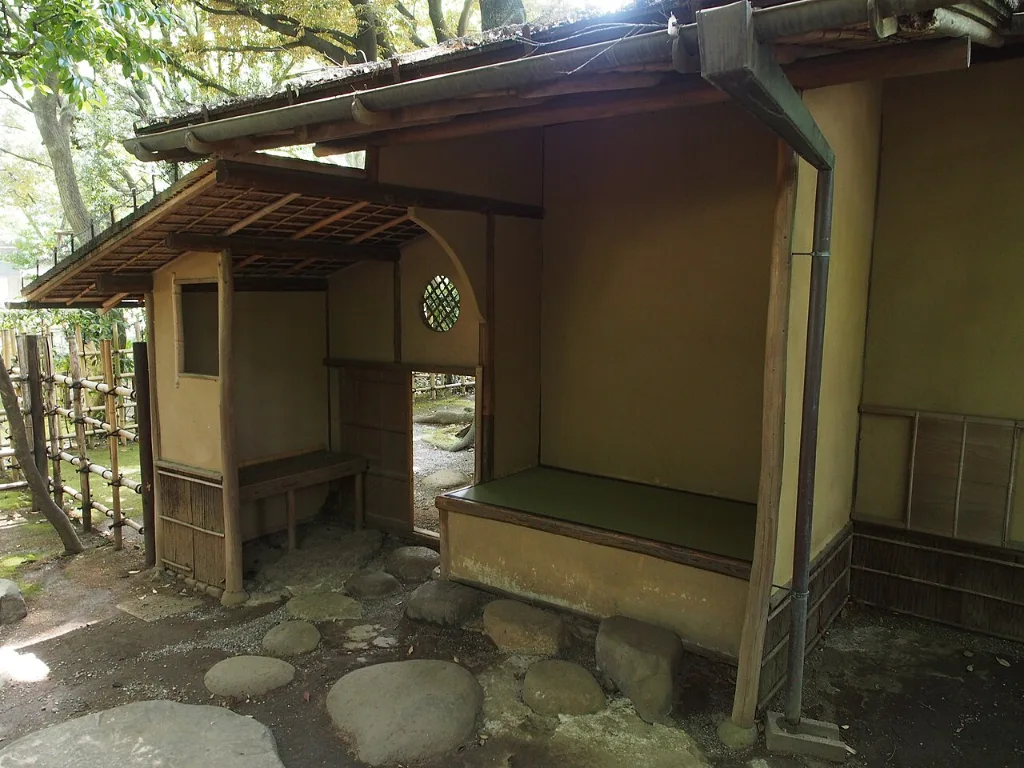
The museum says the garden may be closed for bad weather or maintenance, and the tea houses can be booked for tea ceremonies and other events. We did not find garden opening dates on the page we read, so check before you go. For the museum itself, see our Tokyo National Museum guide.
2. A tea room and a farmhouse at the Edo-Tokyo Open-Air Architectural Museum
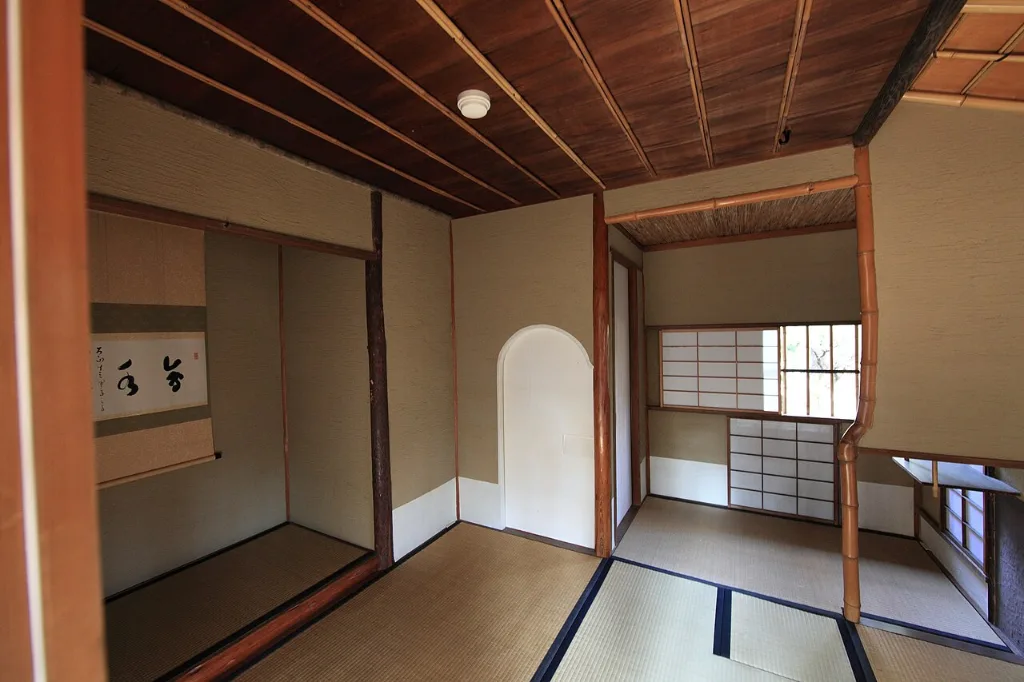
This open-air museum in Koganei keeps old buildings moved from around Tokyo. Its tea arbor Kaisuian was built in the Taisho period by Soju (Kaisui) Yamagishi, a tea master, and was moved to Nishi-ogikubo in 1957. The museum says the very small room has three regular tatami mats and one smaller mat.
The same museum has the Farmhouse of the Tsunashima Family, from Okamoto in Setagaya. The museum dates it to the mid-Edo period (1680 to 1745) and says it has a thatched roof and a large hall, built on a plateau above the Tama River. A farmhouse is the opposite of a palace, which is the point: the beauty is in the wood, the straw and the use over time. Please note the museum posted a notice on August 25, 2026 that tours of restored buildings were suspended for repair work. Check its site before you go, and see our museum guide.
3. Kintsugi: mending with lacquer
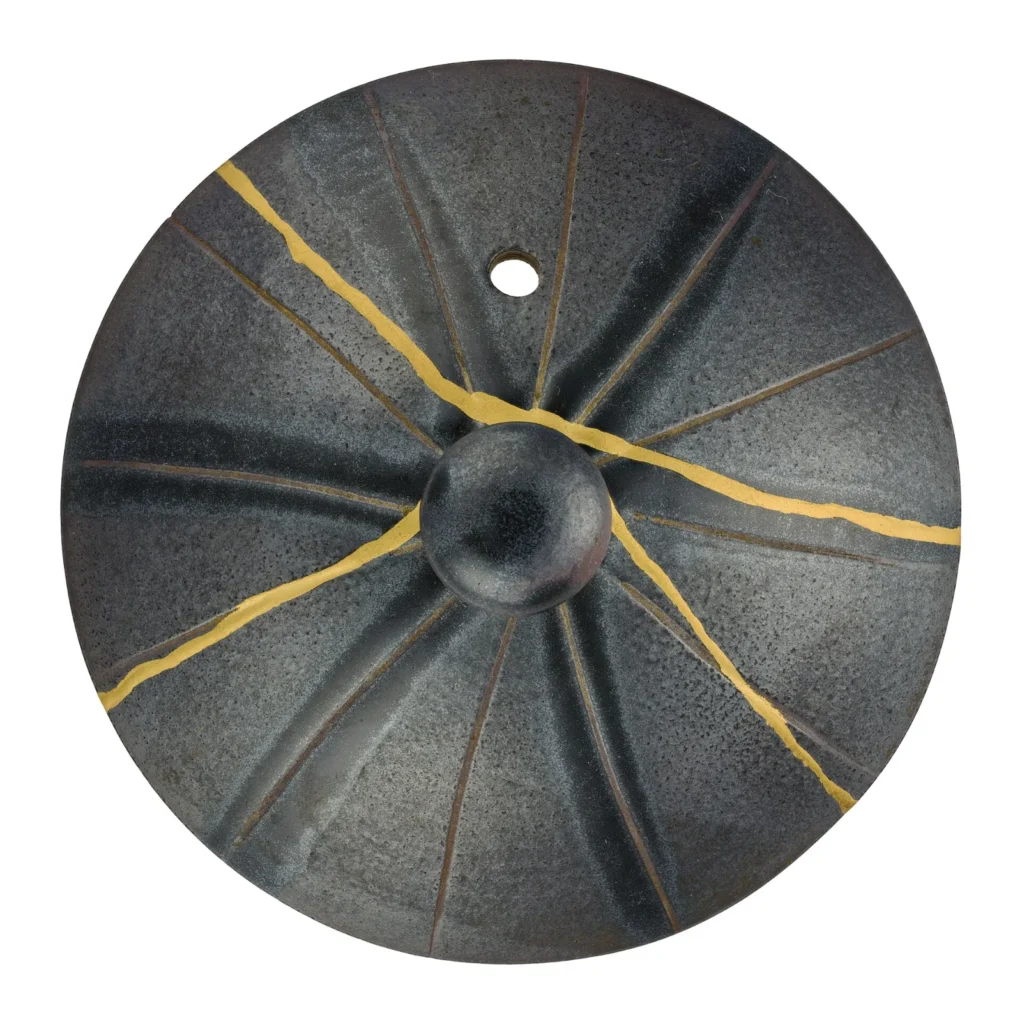
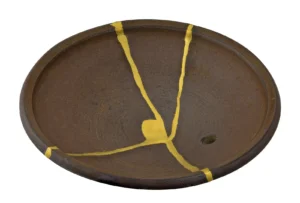
Kintsugi mends broken pottery so the repair stays visible. The Tsugu Tsugu studio in Tokyo says traditional kintsugi uses urushi (natural lacquer) and aims to bring back a piece’s “forgotten beauty.” The studio does not use the word wabi-sabi, so linking the two is our reading, and many writers make the same link. A broken cup that is mended and used again fits the same eye for worn things. See our kintsugi workshop guide for methods and prices.
How to Look: Simple Habits
- Slow down in small spaces. Wabicha is tied to small rooms, so notice how little is in them.
- Look at materials: earth walls, bamboo, paper windows, tatami, old wood.
- Notice age and repair. A worn step or a mended bowl is part of the view.
- Follow house manners. In tea rooms and old houses you may be asked to remove shoes; see our guide to taking off shoes.
- Be careful with big claims. Wabi-sabi is a way to look, and no one object proves it.
More places to see the same eye for plain beauty: our Japanese gardens guide, ikebana guide and Japan Folk Crafts Museum. To try a craft yourself, see craft workshops in Tokyo. For the wider picture, read the Japanese culture guide.
FAQ
What is wabi-sabi in simple words?
It is a way of finding beauty in plain, aged or imperfect things. There is no single official definition, so we describe how the idea is used in the tea tradition and in objects you can see.
Where does wabi-sabi come from?
Nippon.com says Murata Shuko encouraged wabicha, and Sen no Rikyu shaped it into a tea style with a small, bare room and plain bowls. Rikyu’s teaching on simple, rustic beauty is linked to wabi sabi.
Is kintsugi wabi-sabi?
Many people link them. The kintsugi studio we read does not use the word, so we call it our reading. Kintsugi mends broken pottery so the repair stays visible.
Where can I see wabi-sabi in Tokyo?
Try the historic tea houses in the Tokyo National Museum garden, the Kaisuian tea room and the Tsunashima farmhouse at the Edo-Tokyo Open-Air Architectural Museum, or a kintsugi workshop. Check opening days first.
Can I go inside the tea houses at the Tokyo National Museum?
The museum says the tea houses can be booked for tea ceremonies and other events, and that the garden may close for weather or maintenance. We did not find general entry rules, so check with the museum.
Is wabi-sabi a religion?
No source we read describes it as one. Nippon.com links wabicha to the tea ceremony. We treat it as a way of looking at things.
Keep reading


Sources
Facts come from the pages below, read on November 18, 2026. We have not visited these places for this guide. Hours, tours and garden access can change, so please check before you go.
- Nippon.com: The Japanese Tea Ceremony (English)
- Tokyo National Museum: Museum Garden and Teahouses (official, English)
- Edo-Tokyo Open-Air Architectural Museum: Center Zone, Tea Arbor Kaisuian (official, English)
- Edo-Tokyo Open-Air Architectural Museum: West Zone, Farmhouse of the Tsunashima Family (official, English)
- Tsugu Tsugu: about kintsugi (studio, English)