Researched guide · Last checked: Nov 15, 2026
Many visitors walk through a Japanese garden and wonder what they are looking at. The stones, the pond and the path all have a purpose. This guide explains the main ideas in plain words, then points to Tokyo gardens where you can see them.
Quick answer
The Japan National Tourism Organization (JNTO) says Japanese gardens have been appreciated for over 1,000 years and are designed around the flow of water. There are two main ways to show water: a real pond or waterfall, or a dry garden that uses sand and stones to suggest it.
In Tokyo, GO TOKYO recommends pond-centered strolling gardens over waterless rock gardens. Look at the stones, the pond views and the scenery beyond the garden wall.
Overview
| What it is | A short guide to the ideas behind Japanese gardens, with Tokyo examples |
| Two ideas to know | Dry gardens (karesansui) use sand and stones to suggest water. Many other gardens use a real pond, stream or waterfall |
| Source | JNTO and GO TOKYO (official tourism organizations, English pages) |
| Good for | First-time visitors who want to understand a garden, not only photograph it |
| Costs | Each garden sets its own fee and hours. See each garden page |
| Last checked | November 2026 (on November 15, 2026) |
Water Is the Center of the Design
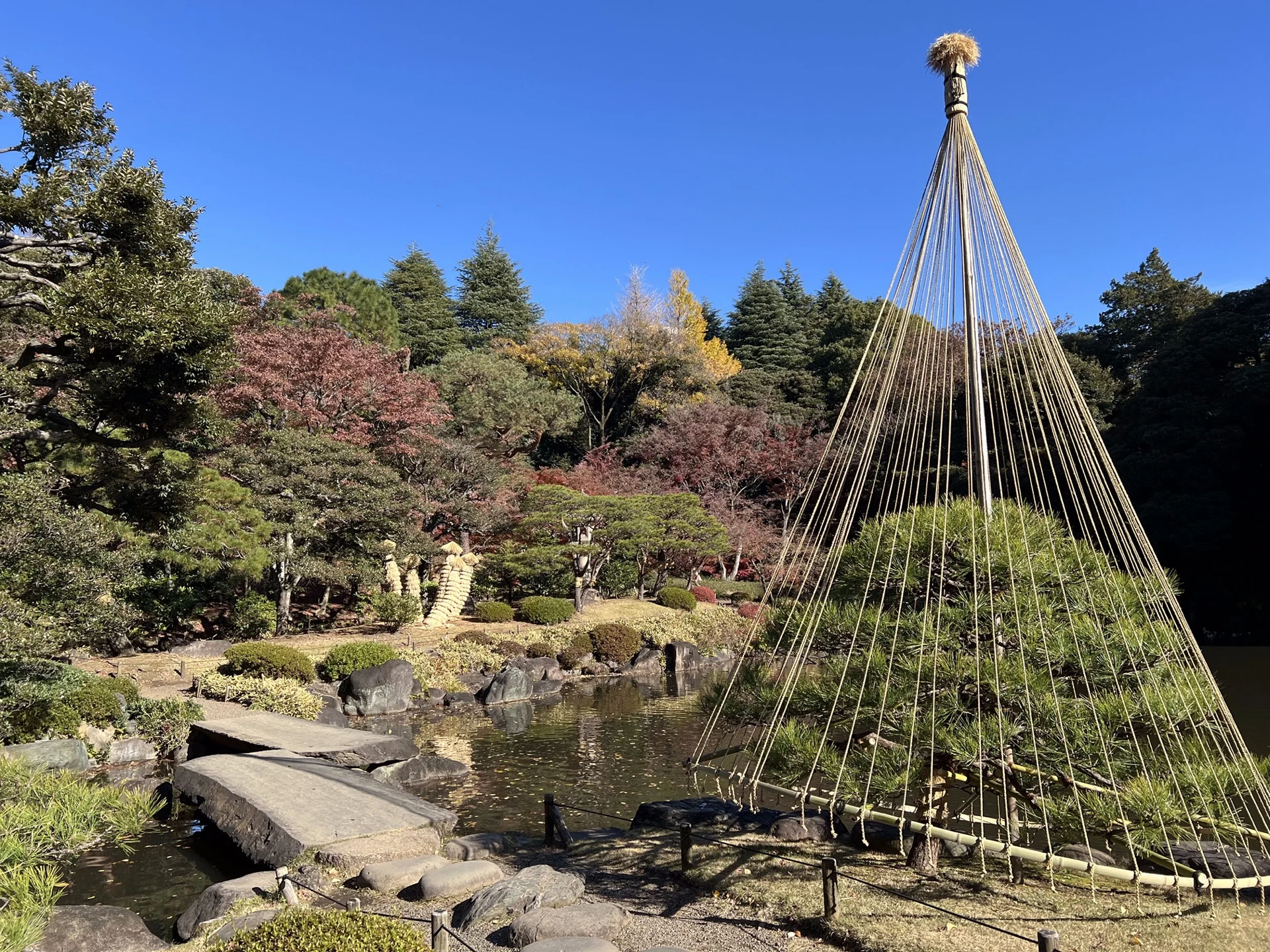
JNTO says Japanese gardens are designed around the flow of water. Many gardens have a path around a pond or beside a waterfall. Kyoto was the main center for famous gardens in the past, but Tokyo has many fine ones too.
Dry Gardens: Karesansui
Karesansui means “dry landscape”. These gardens have no water. JNTO says sand and stones are used to express the movement of water instead. Zen gardens are this type, and JNTO says Buddhist monks originally made them as a way to calm the mind and help meditation. JNTO names the Ryoanji Temple rock garden in Kyoto, a UNESCO World Heritage site, as an example. We do not list a Tokyo dry garden here, because the sources we checked do not name one.
Pond Gardens and Strolling Gardens
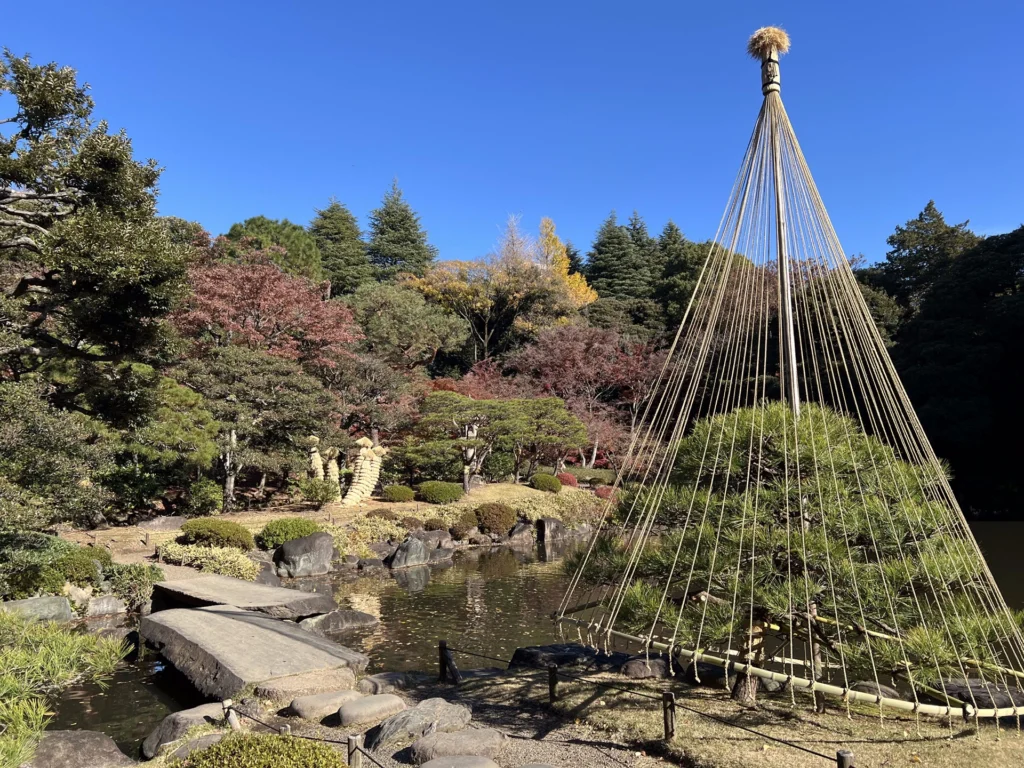
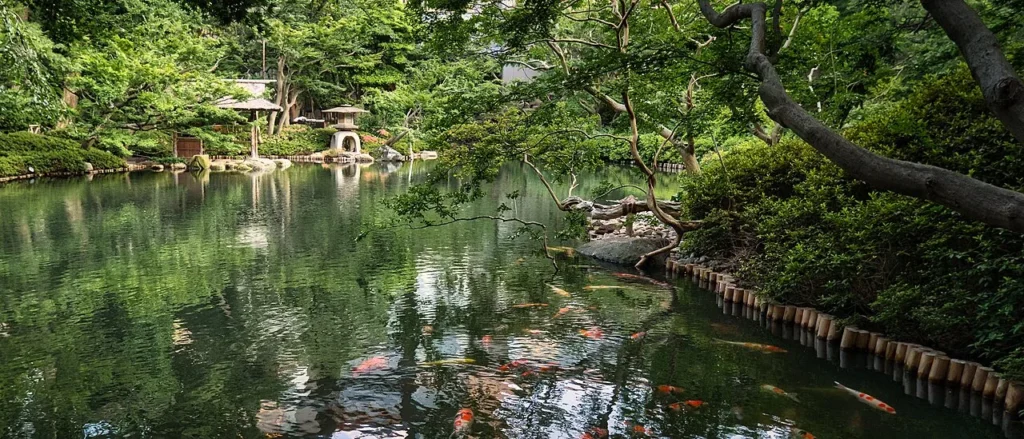
GO TOKYO describes a typical Japanese garden as one that follows Japanese philosophy and aesthetics, avoids artificial ornament and highlights the natural landscape. For Tokyo it recommends the pond-centered strolling gardens, where you walk a path around a pond and see changing views. Most of the gardens below are of this type.
Things to Look For
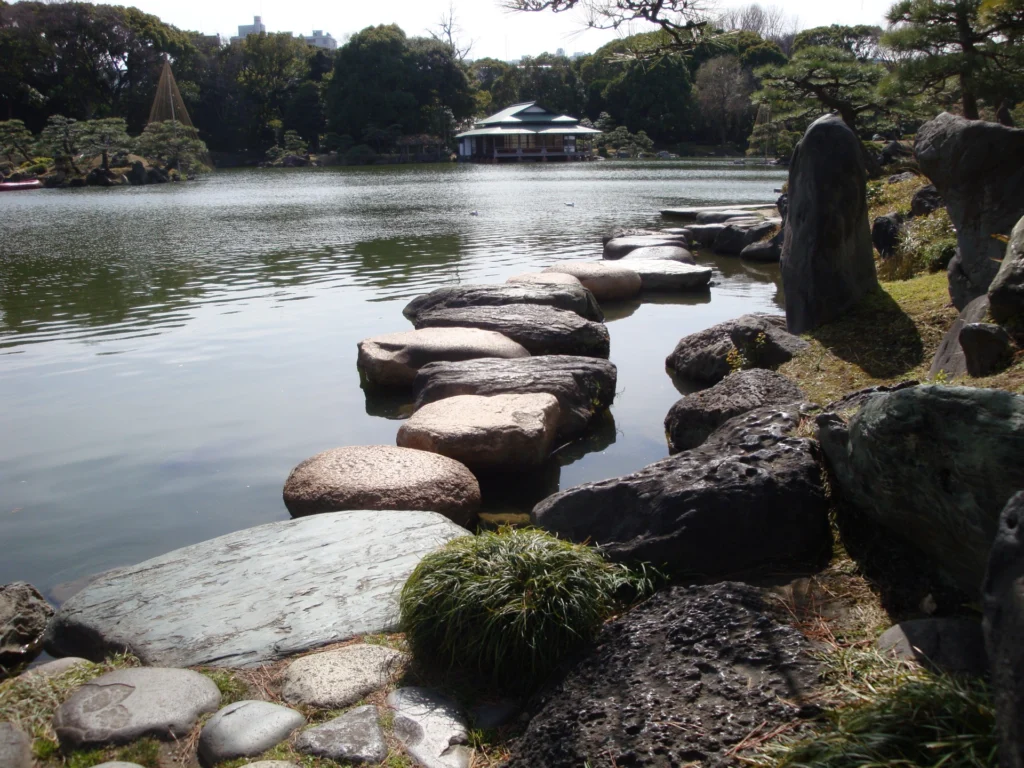
- Stones. JNTO notes that stones form the dry landscapes and work with ponds and waterfalls. GO TOKYO points out the stone arrangements, such as the stepping stones at Kiyosumi Garden.
- A garden that feels bigger than it is. JNTO says gardens use sudden changes in the direction or width of a path, and several viewpoints, to seem larger.
- Borrowed scenery (shakkei). JNTO defines this as making a garden look grand by indirectly using distant scenery or nature. Look beyond the garden wall.
- Sound. JNTO says falling water and rustling leaves are part of the design. Listen as you walk.
- Stone wash basins. JNTO says they are used for cleansing hands before a tea ceremony and give the soothing sound of flowing water.
- The season. JNTO notes that leaves on the path add a seasonal feel.
Tokyo Gardens to Visit
These facts come from the GO TOKYO garden guide. Fees and hours are on each of our spot pages.
- Kiyosumi Garden: a broad pond, Japanese black pines and stones gathered from across Japan. Stepping stones along the water give changing pond views.
- Koishikawa Korakuen: begun in 1629 and completed under Tokugawa Mitsukuni, the second lord of Mito. Paths link landscapes inspired by Japanese and Chinese scenery, and the central pond evokes Lake Biwa.
- Hama-rikyu Gardens: seawater enters the tidal pond through sluice gates, so the scene changes with the tide. A teahouse stands on an island in the pond.
- Shinjuku Gyoen: combines a traditional Japanese garden with a Formal Garden and a Landscape Garden. It was once a daimyo residence.
- Imperial Palace East Gardens: the Ninomaru Garden has a pond landscape, and you can see remains of Edo Castle.
- Happo-en: a strolling pond garden with bonsai.
More gardens: Rikugien, Kyu-Furukawa Gardens, Higo Hosokawa Garden and Mukojima-Hyakkaen Gardens. For a wider list, see Tokyo parks and gardens. Smaller gardens: Mejiro Garden, Otaguro Park, Arisugawa-no-miya Memorial Park, Kyu-Yasuda Garden, Kyu-Shiba-rikyu Gardens.
How to Visit a Garden
- Walk slowly and stop at each turn of the path to look back.
- Check opening days and entry rules before you go. GO TOKYO also advises checking notices for work that can limit access.
- Book tea experiences separately from garden admission, as GO TOKYO notes.
- For tea, see our tea ceremony guide. For shrines and temples, see shrine and temple etiquette.
Also nearby: Tsukimi Explained: Japan’s Autumn Moon-Viewing, Rice Dumplings and Pampas Grass
FAQ
What is a Japanese garden?
A garden designed around the flow of water and the natural landscape, according to JNTO. It can use a real pond or waterfall, or sand and stones to suggest water.
What is a karesansui?
A dry landscape garden with no water. JNTO says sand and stones are used to express the movement of water. Zen gardens are this type.
What is a strolling garden?
A garden with a path to walk, often around a pond, with views that change as you move. GO TOKYO recommends these pond-centered gardens in Tokyo.
What is borrowed scenery?
Shakkei in Japanese. JNTO describes it as making a garden look grand by indirectly using distant scenery or nature.
Which Tokyo garden should I visit first?
Choose by what you like. Kiyosumi Garden for stones and a broad pond, Koishikawa Korakuen for history, or Hama-rikyu Gardens for a tidal pond. Check opening days first.
Keep reading
Sources
The garden ideas are based on the JNTO page below, and the Tokyo garden facts on the GO TOKYO guide. Our own garden pages carry each garden’s hours and fees. Last checked: November 2026 (on November 15, 2026). Please check each garden before you go.