Researched guide · Last checked: Nov 17, 2026
Doyo no Ushi no Hi is a summer day when many people in Japan eat grilled eel (unagi) to get through the heat. You do not need to join in. But if you see long menus of eel rice bowls in summer, this is the reason.
Quick answer
Doyo no Ushi no Hi (the “Day of the Ox” in the Doyo period) is a day in mid-summer when people eat unagi, usually grilled eel on rice. Japan’s Ministry of Agriculture, Forestry and Fisheries (MAFF) says eel has vitamins and other nutrients that help against summer fatigue.
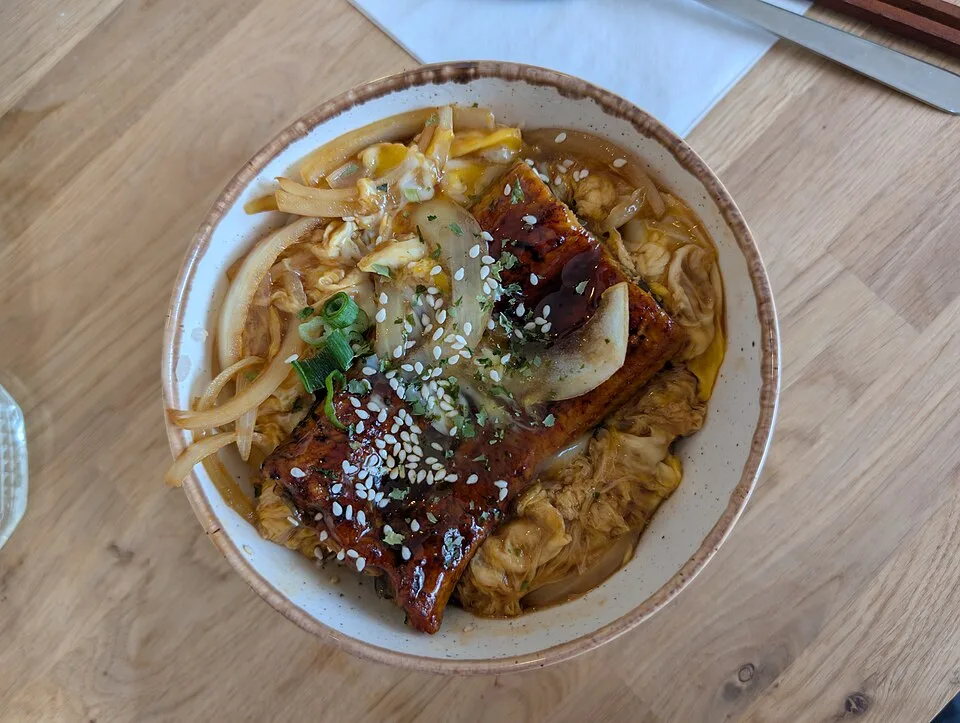
As a visitor, the easy way to take part is to eat unadon (eel on rice) or unaju (eel in a lacquer box) at an eel restaurant. The date changes every year, so check a calendar.
Eel is also a protected resource in Japan, with permits and limits for eel farming. Order it as a treat, not as a daily food.
| What it is | A summer day for eating eel, tied to the Doyo period |
| When | In summer, before Risshu (the start of autumn). The date changes every year. MAFF’s example: July 30 in 2016 |
| Typical food | Unagi kabayaki (grilled eel with a sweet-savory sauce), served as unadon or unaju |
| Where visitors join in | Eel restaurants. See our best unagi in Tokyo guide |
| Last checked | November 2026 (on November 17, 2026) |
What Is Doyo?
MAFF explains that Doyo is a period of about 18 days just before each of the four seasonal turning points: the start of spring, summer, autumn and winter. So there are four Doyo periods in a year.
Days in Japan also have a zodiac animal sign (junishi) in a 12-day cycle. A day with the Ox (ushi) sign that falls inside a Doyo period is a Doyo no Ushi no Hi. MAFF notes that in 2016 there were six such days in total. The one people care about is the summer one, which comes before the start of autumn.
Why Eat Eel?
MAFF says eel is rich in vitamins A, B1, B2, D and E, and in calcium, iron, zinc, DHA, EPA and collagen. It says that 100 grams of eel gives an adult the daily recommended amount of vitamin A. That is why eel is linked to beating summer heat fatigue.
Stories about who started the custom, and when, differ from one source to another. We do not name one here because the official pages we read do not settle it.
How Eel Is Served
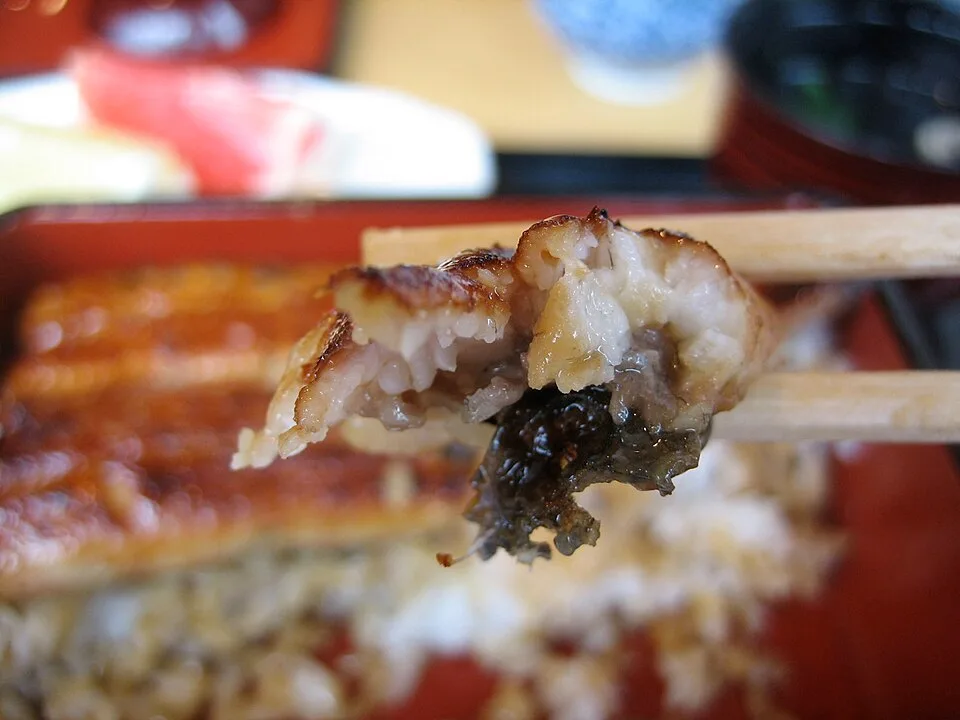
The classic dish is kabayaki: eel that is grilled and brushed with a sweet-savory sauce. MAFF says the origin of the word is uncertain (“various theories”). One theory is that a whole eel on a skewer looked like the head of a cattail plant, called gama, which gave the name gamayaki.
| Dish | What it is |
|---|---|
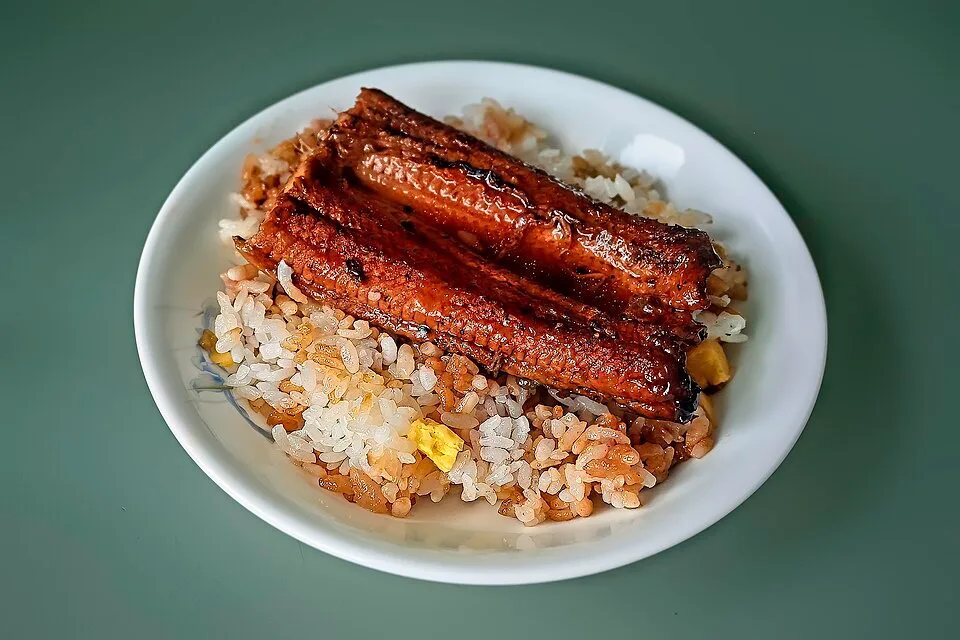
| Unadon | Grilled eel on a bowl of rice |
| Unaju | The same idea in a lacquer box, often a bit more formal |
| Mamushi | A Kansai word for eel. MAFF says it comes from mamushi (間蒸し), eel steamed between layers of rice |
Prices and menus differ by restaurant, and we do not list them here. For restaurants in Tokyo, see our best unagi in Tokyo guide.
Eel Today: Why It Is Treated Carefully
MAFF says the Japanese eel spawns near the West Mariana Ridge, about 2,000 km from Japan. It says domestic supply fell from nearly 160,000 tonnes at the peak in 2000 to about 50,000 tonnes in 2015.
Japan’s Fisheries Agency says eel farming has needed a permit from the Minister of Agriculture, Forestry and Fisheries since June 1, 2015, and that the permit system caps how many young eels (shirasu) a farm can stock. From December 1, 2025, exporting eels of 13 cm or shorter needs a certificate. Eel is a food to enjoy, and we suggest ordering a portion you can finish.
Tips for Visitors
- Look for restaurants with unagi or 鰻 on the sign or menu. Our Japanese food guide has other dishes to try.
- Plan ahead if you want eel on the day itself. We do not have data on crowds, so check the restaurant’s site or ask your hotel before you go.
- If you do not eat eel, you are not missing a rule. It is a custom, not something you must do.
- Summer in Tokyo is hot. See our Tokyo in July and Tokyo in August guides for weather and events.
- Look for other summer customs in our Obon guide and Tanabata guide.
Related Customs
For the bigger picture of Japanese festivals, see our matsuri guide. To learn how food and seasons connect, read washoku explained. For events by date, use our Tokyo events calendar, and start with our Japanese culture guide or Start here if this is your first trip.
FAQ
What is Doyo no Ushi no Hi?
It is a day with the Ox sign that falls in a Doyo period. The summer one is the day when many people in Japan eat eel.
When is Doyo no Ushi no Hi?
The summer one comes before the start of autumn, and the date changes every year. MAFF gives July 30 as the date in 2016. Check a calendar for the current year.
Why do people eat eel on this day?
MAFF says eel is rich in vitamins and other nutrients that help prevent summer fatigue. Stories about how the custom began differ, so we do not name one.
What is kabayaki?
Kabayaki is eel that is grilled with a sweet-savory sauce. MAFF says the origin of the name is uncertain.
What is the difference between unadon and unaju?
Both are grilled eel on rice. Unadon is a bowl. Unaju is served in a lacquer box.
Do I have to eat eel on this day?
No. It is a custom, not a rule.
Is eel protected in Japan?
Eel farming needs a government permit, and farms have limits on how many young eels they can stock, according to the Fisheries Agency.
Keep reading

Sources
Facts come from the pages below (Last checked: November 17, 2026). We do not give a single origin for the custom, because the official pages we read do not settle it. Dates and details change, so please check before you go.