Mottainai is a Japanese word for the feeling “what a waste.” It means you care about things and do not throw them away without using them well. Japanese government pages use it as a one-word way to say reduce, reuse and recycle. This guide explains the idea in plain English, using official sources, and shows how it connects to daily life and manners in Tokyo.
Quick answer
Mottainai roughly means “what a waste.” Tokyo Governor Yuriko Koike has said the 3Rs (reduce, reuse, recycle) can be captured in this one word. Japan’s Ministry of the Environment links the word to Wangari Maathai, the Kenyan-born Nobel Peace Prize winner who proposed the MOTTAINAI campaign, and to a fourth idea, “Respect.”
For a visitor, the idea is a mindset, not a rule. We did not find an official visitor rule called “mottainai.” For practical rules on bins and sorting, see our guide to trash in Tokyo.
| Topic | Mottainai: the Japanese “what a waste” idea |
| Meaning | Roughly “what a waste” (Tokyo Metropolitan Government, English) |
| Linked to | The 3Rs: reduce, reuse, recycle. Some government pages add a fourth idea, “Respect” |
| Campaign | MOTTAINAI campaign, proposed by Wangari Maathai (Ministry of the Environment, Japanese) |
| Is it a visitor rule? | No. We did not find one in the sources we read |
| Source | Tokyo Metropolitan Government (English) and Ministry of the Environment (English and Japanese pages) |
| Last checked | November 2026 (on November 18, 2026) |
What Does Mottainai Mean?
In a 2016 speech in English, Governor Koike said she had promoted the 3R initiative as Minister of the Environment. She explained that in Japanese the 3Rs can be captured in one word, “mottainai,” which means roughly “what a waste.” She also said she hoped the 2020 Tokyo Games would help make the word known around the world. The word is about regret when something is wasted, and about valuing what you have.
The Ministry of the Environment describes the idea in a Japanese page as a mindset of using things with care. We did not find an official source that gives one exact origin of the word, so we do not claim one here.
The 3Rs and the Fourth “R”
- Reduce: make less waste in the first place.
- Reuse: use things again, or pass them on to someone who can use them.
- Recycle: turn used materials into new resources.
- Respect: the Ministry of the Environment’s 2010 notice (Japanese) says the MOTTAINAI campaign combines the 3Rs with “Respect,” which it explains as gratitude and esteem, and that the word MOTTAINAI expresses this together.
The same notice says Wangari Maathai, a Kenyan-born advocate, proposed the MOTTAINAI campaign, and that she was the first person to win the Nobel Peace Prize for environmental work, in 2004. A Tokyo Metropolitan Government page (Japanese) also records Governor Koike mentioning Maathai’s idea of adding “Respect” to make “4R.” We could not open the Ministry of Foreign Affairs page about her, so we do not add more detail about her visit or her words.
How the Idea Shows Up in Japan
- Campaigns: the Ministry of the Environment says the MOTTAINAI Kids Flea Market began in 2007 to help children learn to value things, and has been held more than 400 times across Japan (Japanese page).
- Passing things on: the same ministry page suggests giving or selling things you no longer use, and using belongings for a long time. It gives secondhand kimono as one example.
- Tokyo: in August 2018 the Tokyo Metropolitan Government started “Team Mottainai” with businesses, NGOs and others. Governor Koike said in September 2018 that it aims to encourage eco-friendly habits such as wasting less food and using energy more wisely. The Japanese event page gives examples such as finishing meals in staff cafeterias and using fewer plastic bags at supermarkets.
- Food: the Ministry of the Environment and the Ministry of Agriculture, Forestry and Fisheries said Japan produced about 5.70 million tons of food loss and waste in fiscal 2019 (edible food thrown away, not counting inedible parts). Businesses made 3.09 million tons and households 2.61 million tons. This is an older figure, so check for newer data.
What It Means for Your Trip
These are our own simple ideas, not official rules. They fit the spirit of the word.
- Order what you can finish. Our guide to itadakimasu and gochisosama covers the meal phrases that show thanks for food.
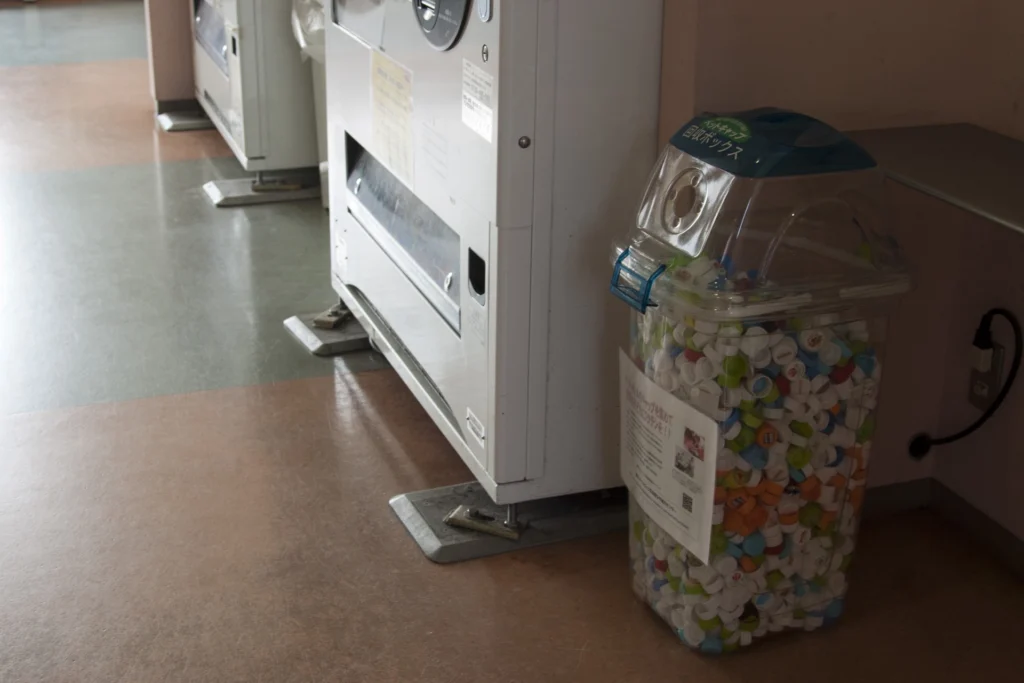
- Expect few public bins and sorted trash. Read Trash in Tokyo for where to throw things away and how to sort them.
- Eat where you stop. Eating while walking in Japan explains the habit and where to eat instead.
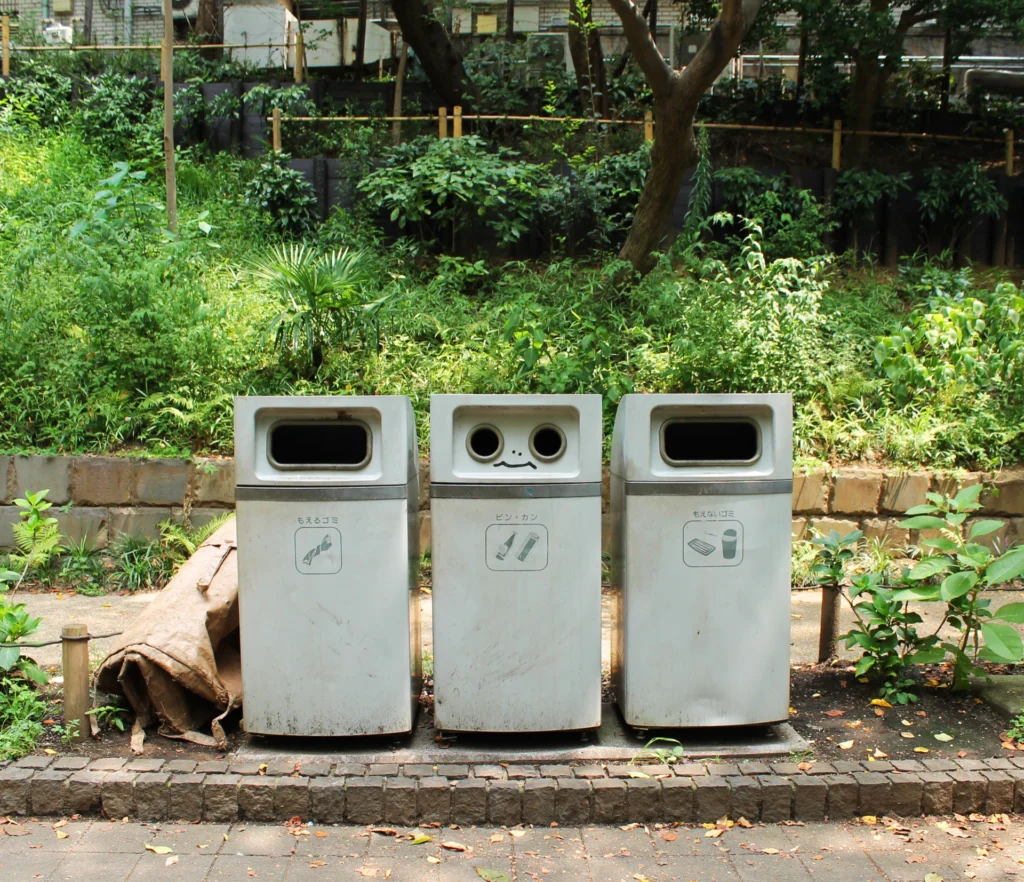
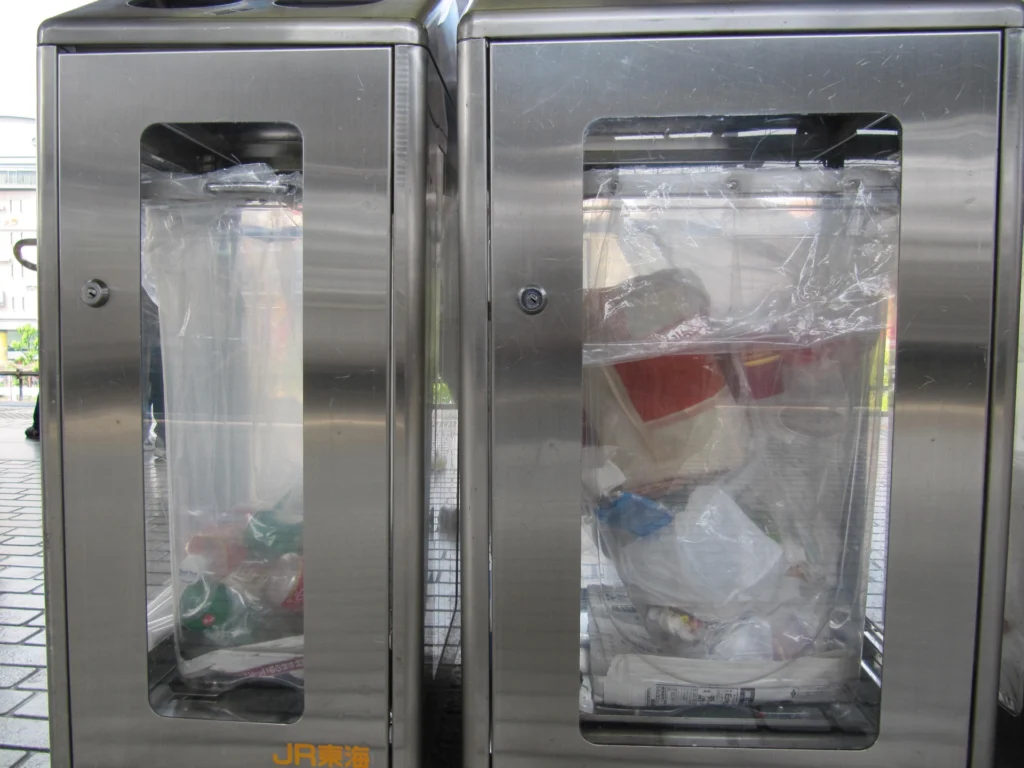
- Do not be surprised by careful sorting at stations and shops. Many places have separate bins, as in the photos above.
More About Food and Culture
For how Japanese people see food, read Washoku explained, omiyage gifts and Japanese table manners and chopsticks. To see how Tokyo uses waste heat, visit the Yumenoshima Tropical Greenhouse. The Japanese culture guide lists more manners and customs.
FAQ
What does mottainai mean?
It roughly means “what a waste.” Tokyo Governor Yuriko Koike has described it as one word that captures the 3Rs: reduce, reuse and recycle.
Who is Wangari Maathai?
Japan’s Ministry of the Environment describes her as a Kenyan-born advocate who proposed the MOTTAINAI campaign. It says she was the first person to win the Nobel Peace Prize for environmental work, in 2004.
What is the fourth R?
The ministry says the campaign combines the 3Rs with “Respect,” which it explains as gratitude and esteem.
Is mottainai a rule for tourists?
No. We did not find an official rule. It is a way of thinking, and the practical rules are about sorting trash and eating manners.
Does Japan really throw away a lot of food?
Official figures say about 5.70 million tons of edible food was lost or wasted in fiscal 2019. The figure is older, so check the ministries for newer data.
Where do I learn more about trash rules?
See our Trash in Tokyo guide for bins and sorting.
Keep reading
Sources
Facts come from official pages read on November 18, 2026. We have not looked into local rules for this guide. Pages marked Japanese have no English version that we found.
- Tokyo Metropolitan Government: Governor Koike speech, August 31, 2016 (English)
- Tokyo Metropolitan Government: Governor’s policy speech, September 19, 2018 (English)
- Tokyo Metropolitan Government: Team Mottainai kickoff, August 1, 2018 (Japanese)
- Ministry of the Environment: food loss and waste in FY2019 (English)
- Ministry of the Environment: MOTTAINAI campaign notice, June 17, 2010 (Japanese)
- Ministry of the Environment: Ecojin, “Enjoy mottainai” feature, 2018 (Japanese)