A ryokan is a traditional Japanese inn. You take off your shoes, sleep on a futon and eat dinner in your room. The rules are simple, and staff will guide you. This page covers what to do from check-in to check-out.
Quick answer
At the entrance: take off your shoes and put on the slippers the inn gives you. Some inns let you keep your shoes on as far as your room.
In your room: take off your slippers on tatami (the straw-mat floor). A staff member serves tea and sweets and confirms your meal time.
Yukata: wear the cotton robe with the left side over the right. Bath: wash first, then get in.
Price: a ryokan usually charges per person for one night with two meals (dinner and breakfast).
Ryokan at a glance
| Check-in | Most commonly around 3 p.m., and it differs by inn |
| Check-out | At most ryokan, 10 or 11 a.m. |
| Price system | Per person, for one night with two meals. Some inns also offer stays without meals |
| Average price | Average prices of Japan Ryokan Association member inns range from ¥5,000 to ¥119,000 per person |
| Payment | Most member inns accept major credit cards. Confirm when you book |
| Last checked | November 2026 (on November 15, 2026). Rules differ by inn, so check yours |
Shoes and slippers
In Japan, shoes come off indoors. At a ryokan, many inns ask you to take them off at the entrance, and they give you slippers for the wooden corridors. Some inns have stone or carpeted corridors, and there you may keep your shoes on as far as your room.
Take your slippers off before you step on tatami, and use the separate slippers for the toilet if the inn gives them. Our Japanese toilets guide explains the toilet side.
Your room, tea and futon
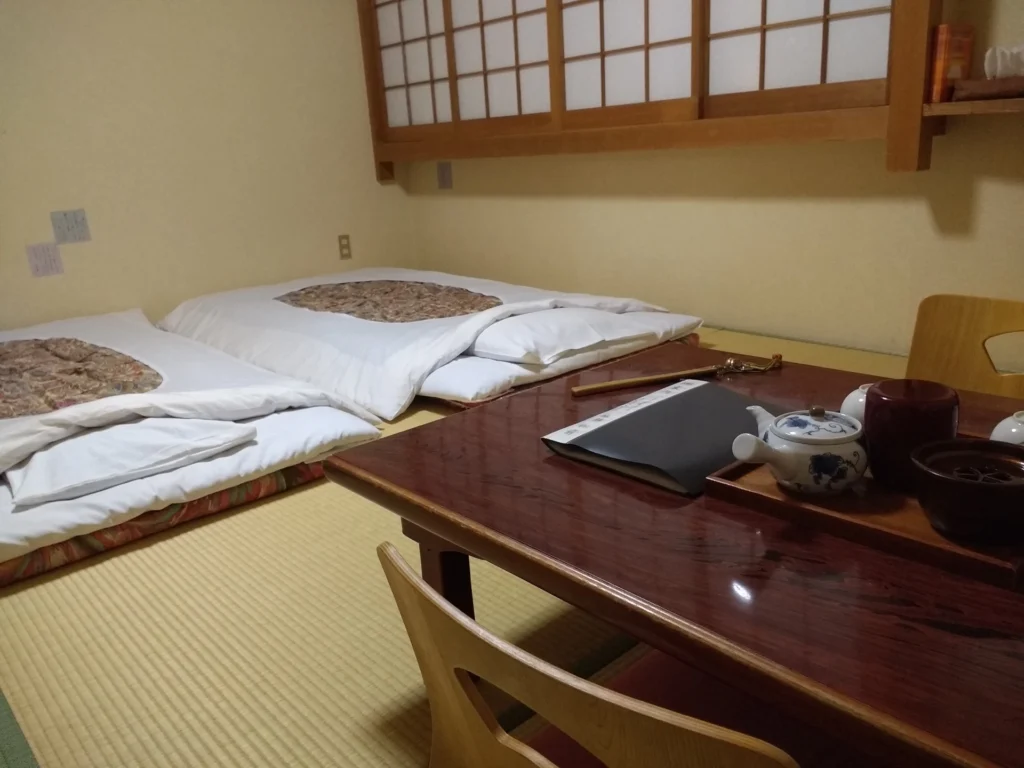
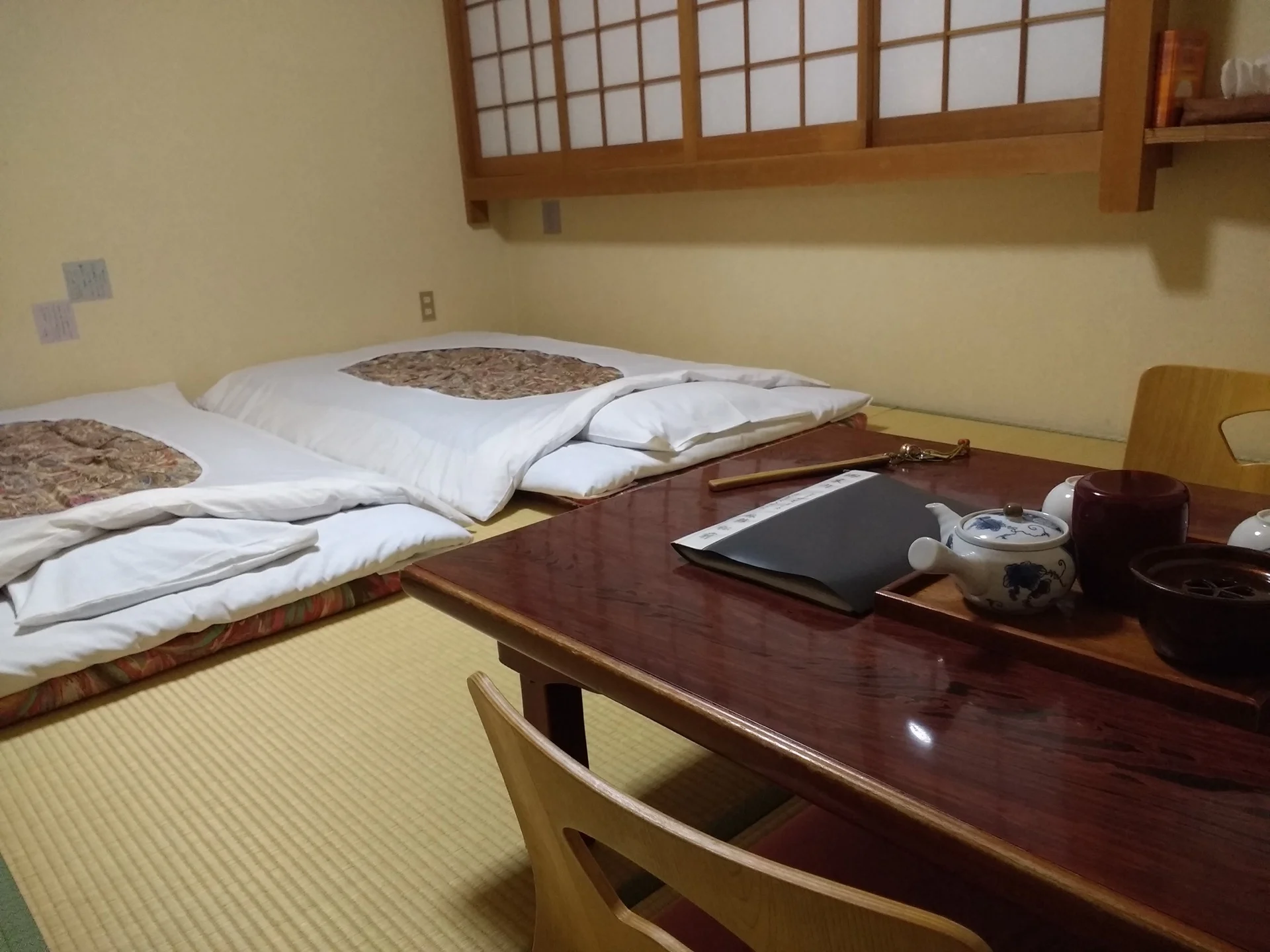
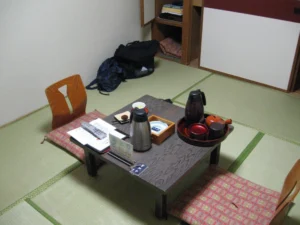
Most ryokan rooms are washitsu (Japanese-style rooms): tatami floors, a low table and legless chairs with cushions. Shortly after you arrive, a staff member brings tea and a sweet, and confirms the time for your meals.
At night the staff put out your futon on the tatami. Some ryokan have low beds or Western-style bedrooms instead, so check the room type when you book.
How to wear a yukata
A yukata is a light cotton robe, and a set is usually in your room. The Japan Ryokan Association says to wrap the left side over the right and tie the obi (sash). In cold months, some inns also give a thicker padded robe called a tanzen, worn over the yukata.
Whether you may wear the yukata and slippers outside depends on the inn. JNTO says it may or may not be allowed, so ask at the front desk. Want to try kimono instead? See kimono rental in Tokyo.
Baths
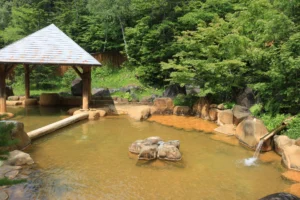
Most ryokan have a shared bath, separate for men and women. Wash and rinse at the shower stations first, keep your small towel out of the water and do not swim. JNTO says to undress fully in a gender-separated bath, and that dos and don’ts are posted on the walls of the bath area.
Tattoos are generally not allowed in shared baths, though there are exceptions. Ask the inn before you book, or look for a private bath (kashikiri-buro) or a room with its own bath. Our guides: onsen and sento etiquette and tattoos and onsen.
Dinner and breakfast
Dinner is generally a course of washoku (Japanese food) with seasonal ingredients, and at most ryokan it is served in your room. Breakfast is usually Japanese: rice, miso soup, grilled fish and more. Some large inns serve a buffet. A Western-style breakfast may be available if you ask in advance.
Plan your arrival time around dinner, because the staff confirm the meal time soon after you settle in. If you have food allergies, tell the inn when you book. Some inns also sell stays without meals. For eating out instead, see how to eat out in Tokyo.
Check-out and tipping
Check-out is at 10 or 11 a.m. at most ryokan. Staff often see guests off at the entrance. There is no need to tip in Japan: read our tipping guide. A simple “thank you very much” (arigato gozaimasu) is enough. For more phrases, see Japanese phrases for travelers.
Ryokan or hotel?
| Ryokan | Western-style hotel | |
|---|---|---|
| Bed | Usually futon on tatami | Bed |
| Meals | Dinner and breakfast usually included | Often room only |
| Price | Per person for one night with two meals | Usually per room |
| Bath | Often a shared bath | Private bathroom |
Not sure which suits you? See types of accommodation in Japan and where to stay in Tokyo. For an onsen stay outside the city, try onsen towns near Tokyo or hotels in Hakone. Foreign guests also need to show a passport: see passport at hotels in Japan.
Also see: Taking off your shoes in Japan
Also nearby: Itadakimasu and Gochisosama: Japanese Meal Phrases
FAQ
Do I take my shoes off at a ryokan?
Usually yes. Many ryokan ask you to take them off at the entrance and give you slippers. Some let you keep shoes on as far as your room. Take your slippers off on tatami.
Which side of the yukata goes on top?
The left side goes over the right, for men and women. Then tie the obi.
Can I wear a yukata outside the ryokan?
It depends on the inn. Ask at the front desk.
Is dinner included at a ryokan?
Usually yes: a ryokan typically charges for one night with two meals. Some inns offer stays without meals, so check your booking.
What time is check-in and check-out?
Check-in is most commonly around 3 p.m. Check-out is at 10 or 11 a.m. at most ryokan. Your inn may differ.
Can I use the bath with tattoos?
Rules differ by inn, and tattoos are generally not allowed in shared baths. Ask before you book, or choose a private bath.
Keep reading

Sources
Facts come from the Japan Ryokan Association and the Japan National Tourism Organization (Last checked: November 15, 2026). Rules and times differ by inn, so check your inn’s own page.
- Japan Ryokan Association: Receiving Guests (official)
- Japan Ryokan Association: To Your Guestroom (official)
- Japan Ryokan Association: Guestrooms of the Ryokan (official)
- Japan Ryokan Association: Yukata (official)
- Japan Ryokan Association: Onsen, Hot Springs (official)
- Japan Ryokan Association: Dinner (official)
- Japan Ryokan Association: Comfortable Slumber (official)
- Japan Ryokan Association: Breakfast (official)
- Japan Ryokan Association: Checking-out (official)
- Japan Ryokan Association: The Fee System and Prices (official)
- Japan National Tourism Organization: Japanese Manners and Etiquette
- Japan National Tourism Organization: Japanese Ryokan Guide