Researched guide · Last checked: Nov 16, 2026
Coming of Age Day (Seijin no Hi) is a public holiday in Japan on the second Monday of January. Cities and wards hold ceremonies for young people who are becoming adults. Many wear formal clothes, including the long-sleeved kimono called furisode.
Quick answer
Coming of Age Day falls on the second Monday of January. In 2027 it is January 11. The Japanese government says the day is to celebrate and encourage young people who know they have become adults and want to live on their own.
The ceremonies (seijin-shiki) are held by local governments for their own residents. They are not tourist events. Visitors may simply see young people in formal dress around ceremony venues that morning. Details differ by city and ward, so check the local website.
Overview
| Date | Second Monday of January (a national holiday) |
| Next date | Monday, January 11, 2027 (Cabinet Office) |
| Official purpose | To celebrate and encourage young people who realize they have become adults and want to live independently (Cabinet Office, in Japanese) |
| Main event | Local coming-of-age ceremonies (seijin-shiki), held by cities and wards |
| Typical clothes | Furisode (long-sleeved kimono) is a well-known choice for women |
| Adult age by law | 18 since April 1, 2022 (Ministry of Justice) |
| Last checked | November 2026 (on November 17, 2026) |
What Is Coming of Age Day?
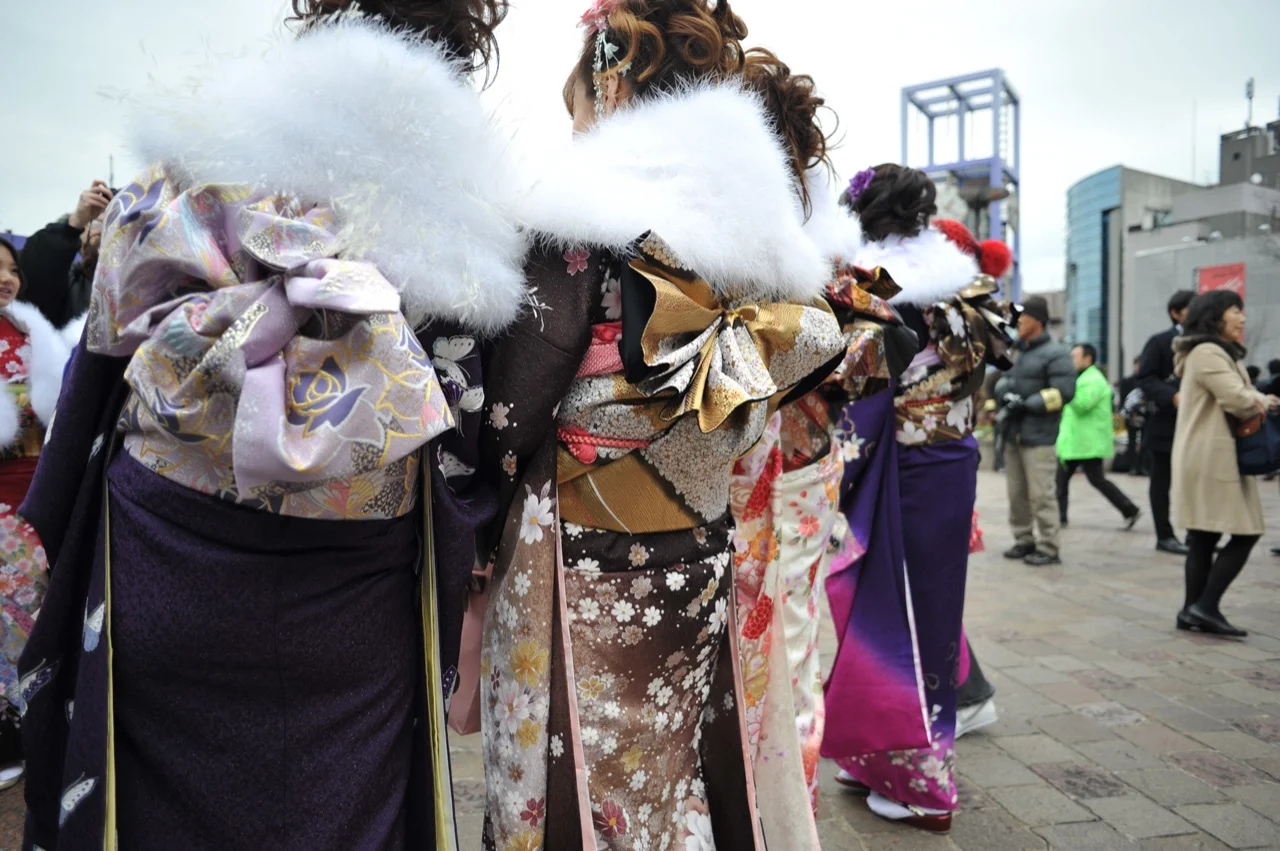
Coming of Age Day is one of Japan’s national holidays. The Cabinet Office lists it on the second Monday of January. Its stated purpose is to celebrate and encourage young people who are aware that they have become adults and who want to make their own way in life. Because it is always a Monday, it makes a three-day weekend. See our Japan public holidays guide for the full calendar.
The day is not tied to a religion. It is a civic holiday. The central event is the seijin-shiki, a ceremony held by the local government.
Who Is Counted as an Adult?
In Japan, the legal age of adulthood used to be 20. The Ministry of Justice says it had been 20 since the Civil Code was enacted in 1896. A law passed in 2018 lowered it to 18, and it took effect on April 1, 2022. At 18, a person can sign contracts alone and is no longer under parental authority, says the ministry.
The holiday and the ceremonies did not disappear after the change. Each city or ward decides who it invites and how to hold its ceremony. We could not confirm one rule that all Tokyo wards follow, so ask the local office or check its website if you need exact details.
Furisode and Formal Dress
Furisode means “swinging sleeves.” It is a kimono with very long sleeves, worn by young unmarried women on formal occasions. Many women wear one on Coming of Age Day, and some add a shawl in the cold season.
Our kimono rental guide explains how renting a kimono works for visitors. Note that rental shops and formal furisode are different things, and shops may be very busy on this holiday, so check before you go.

What Visitors May See in Tokyo
Tokyo’s ceremonies are run by each of its wards and cities, for people who live there. Visitors cannot join them. You may notice groups of young people in kimono or suits near ward offices, halls and train stations on the morning of the holiday. If you visit a shrine such as Meiji Jingu on a holiday, check the opening hours first. For how to behave at a shrine, read our shrine and temple etiquette guide.
As one example, the official Taito Ward page says its 2027 ceremony (called Hatachi no Tsudoi, a gathering of 20-year-olds) is on Monday, January 11, 2027 at Asakusa Public Hall. Doors open at 10:00, the ceremony starts at 10:30, and it is planned to end at 11:30. It is for residents born from April 2, 2006 to April 1, 2007, and for people who used to live in the ward. The hall has no parking, and the ward asks parents not to come. The ward page is in Japanese.
We did not find an official English page that lists the 2027 ceremony times for every Tokyo ward. Check the website of the ward or city you plan to visit.
Tips for Visitors
- Treat it as a family day. The people in formal dress are celebrating with family and friends. Be polite and give them space.
- Ask before taking close photos. A smile and a gesture are enough. Do not block paths or entrances.
- Check hours. It is a national holiday. Some offices and places may close or change hours, and trains and shops can be crowded. See Tokyo in January for the month’s events.
- Learn the seasonal calendar. New Year events come just before this holiday. Read our New Year in Tokyo guide and Shichi-Go-San guide for more life-stage customs.
FAQ
When is Coming of Age Day in Japan?
On the second Monday of January every year. In 2027 it is Monday, January 11, according to the Cabinet Office.
Is Coming of Age Day for 18-year-olds or 20-year-olds?
The legal age of adulthood is 18 since April 1, 2022. Each city or ward decides who it invites to its ceremony, so the group can differ by place. Check the local website.
What is a furisode?
A furisode is a kimono with long sleeves. Young unmarried women wear it on formal occasions, and many wear one on Coming of Age Day.
Can tourists attend a coming-of-age ceremony?
The ceremonies are held by local governments for their own residents, so they are not tourist events. You may see people in formal dress near the venues.
Is Coming of Age Day a public holiday?
Yes. It is a national holiday, so many offices are closed and some places change their hours. Check opening hours before you go.
Keep reading


Sources
Last checked: November 2026 (on November 17, 2026). The holiday date and purpose come from the Cabinet Office. The adult age comes from the Ministry of Justice. The Taito Ward ceremony details come from the ward page. We did not find an official English page on the ceremonies, so local details are marked as check before you go.