Researched guide · Last checked: Nov 15, 2026
Shinto is not only practised at shrines. In many Japanese homes, a small shelf holds sacred plaques for the kami (the sacred beings of Shinto). It is called a kamidana. This guide explains what it is, how it is arranged and how it links to Ise Jingu, using the pages of Jinja Honcho, the Association of Shinto Shrines.
Quick answer
A kamidana is a shelf in the home where a household venerates the kami. Jinja Honcho says people place ofuda (sacred plaques from shrines) on it, and the most important is the Jingu Taima, the ofuda from Ise Jingu.
Each day, the household offers rice, water and salt and says a prayer of thanks. Non-Japanese are welcome to venerate the kami in the same way, says Jinja Honcho.
Overview
| What it is | A shelf in the home for the kami, called a kamidana |
| What it holds | Ofuda (sacred plaques) from shrines, often kept in a small shrine-shaped box called a miyagata |
| Source | Jinja Honcho (the Association of Shinto Shrines), English pages |
| Good for | Visitors who see a shrine shelf in a home, shop or restaurant and want to know what it is |
| Costs | Jinja Honcho says a small offering is required for items from a shrine, and each shrine specifies the amount |
| Last checked | November 2026 (on November 15, 2026) |
What Is a Kamidana?
Jinja Honcho says the kami are venerated not only at shrines but also in ordinary homes. Some kami are honoured in a specific place, such as Kojin in the kitchen, who guards against fire. Others are honoured at a certain time, such as Toshi-gami at New Year. A shelf is set aside as a sacred space for these kami. The shelf for the kami who watch over the home all year is simply called the kamidana.
Jinja Honcho traces the idea to the Kojiki, the old record from the year 712. In that story, Izanagi gives his daughter Amaterasu-Omikami a string of jewels, and she honours it on a shelf. Today, people honour the kami through ofuda, which are plaques they receive at shrines. For more on ofuda and other items from shrines, see our guide to omamori, omikuji, ema and goshuin.
What Goes on the Shelf
Jinja Honcho says the most important ofuda is the Jingu Taima, from Ise Jingu, through which people honour Amaterasu-Omikami. It says every kamidana should have one. People also keep the ofuda of their local shrine, called the ujigami, and often the ofuda of other shrines they feel a link to.
Some people stand the ofuda on the shelf. Most put them in a miyagata, a small version of the shrine sanctuary buildings. Jinja Honcho says the Jingu Taima has the place of greatest honour, then the ofuda of the local shrine, then those of other shrines. In a miyagata with three spaces, the Jingu Taima goes in the centre, the local shrine’s ofuda on the right as the household looks at it, and the others on the left.
Where to Put It
- Jinja Honcho says the kamidana is placed somewhere clean and bright, where the household can easily gather.
- If possible, it is set slightly above eye level, facing east (toward the rising sun) or south.
- The most important thing is that it is easy to reach. Jinja Honcho says the kami should be sincerely honoured, and the exact form of the kamidana matters less. There are many styles, including ones for modern and western-style rooms.
Daily Offerings
Ideally, the household gathers every day to offer rice, water and salt to the kami, along with prayers of thanks. Jinja Honcho says the offerings are placed in order of honour, as with the ofuda. Rice goes in the centre, closest to the ofuda. Salt goes to the right as the household looks at it, and water to the left, usually behind the rice. Sake may also be offered, and it comes right after the rice in honour. Seasonal fruits and vegetables, or gifts from far away, may also be presented to the kami before the family enjoys them.
The Link to Ise
Ise Jingu, formally called Jingu, is one of the most important sacred sites in Shinto, says Jinja Honcho. About ten million people visit each year. It includes 125 shrines, centred on Kotaijingu (Naiku), dedicated to Amaterasu-Omikami, and Toyo’uke-daijingu (Geku), dedicated to the kami who looks after Amaterasu’s food offerings. Every twenty years the main sanctuaries are rebuilt, in a ritual called the Shikinen Sengu, next due in 2033. Ise is in Mie Prefecture, far from Tokyo, so this is background for your trip, not a day out.
Two Tokyo shrines tied to Ise
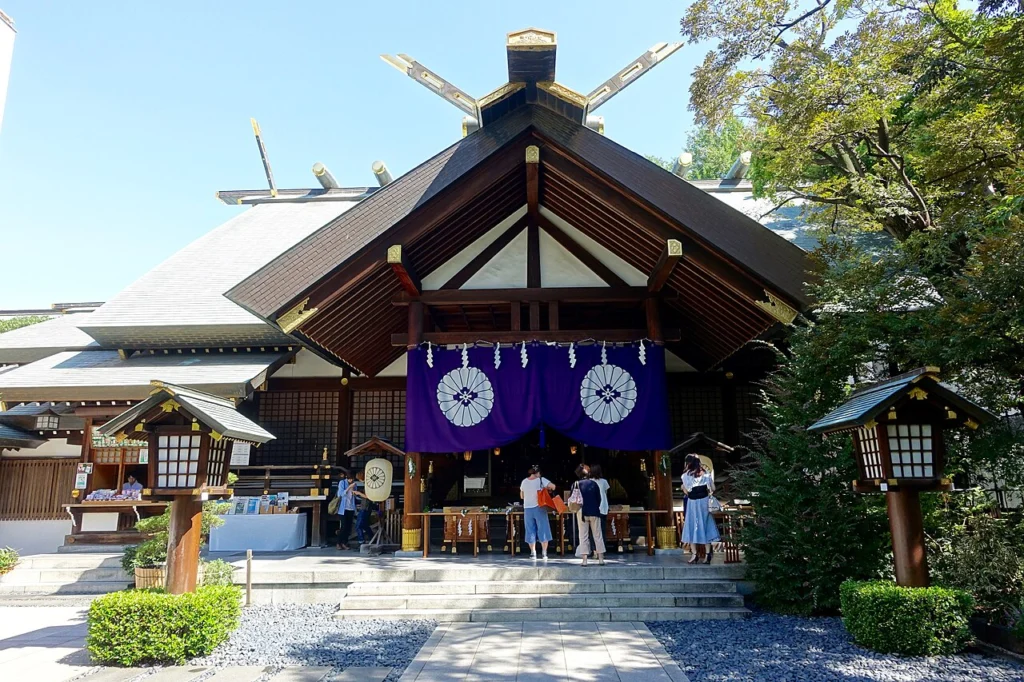
- Tokyo Daijingu near Iidabashi Station was founded in 1880 as a place in Tokyo to pray toward Ise Jingu. It honours Amaterasu and Toyouke, and people call it the Ise of Tokyo.
- Shiba Daijingu in Minato City is about 1 minute on foot from Daimon Station. The shrine says it was founded in 1005 and was known as the Ise Shrine of the Kanto in the Edo period. It honours Amaterasu Omikami and Toyouke Omikami.
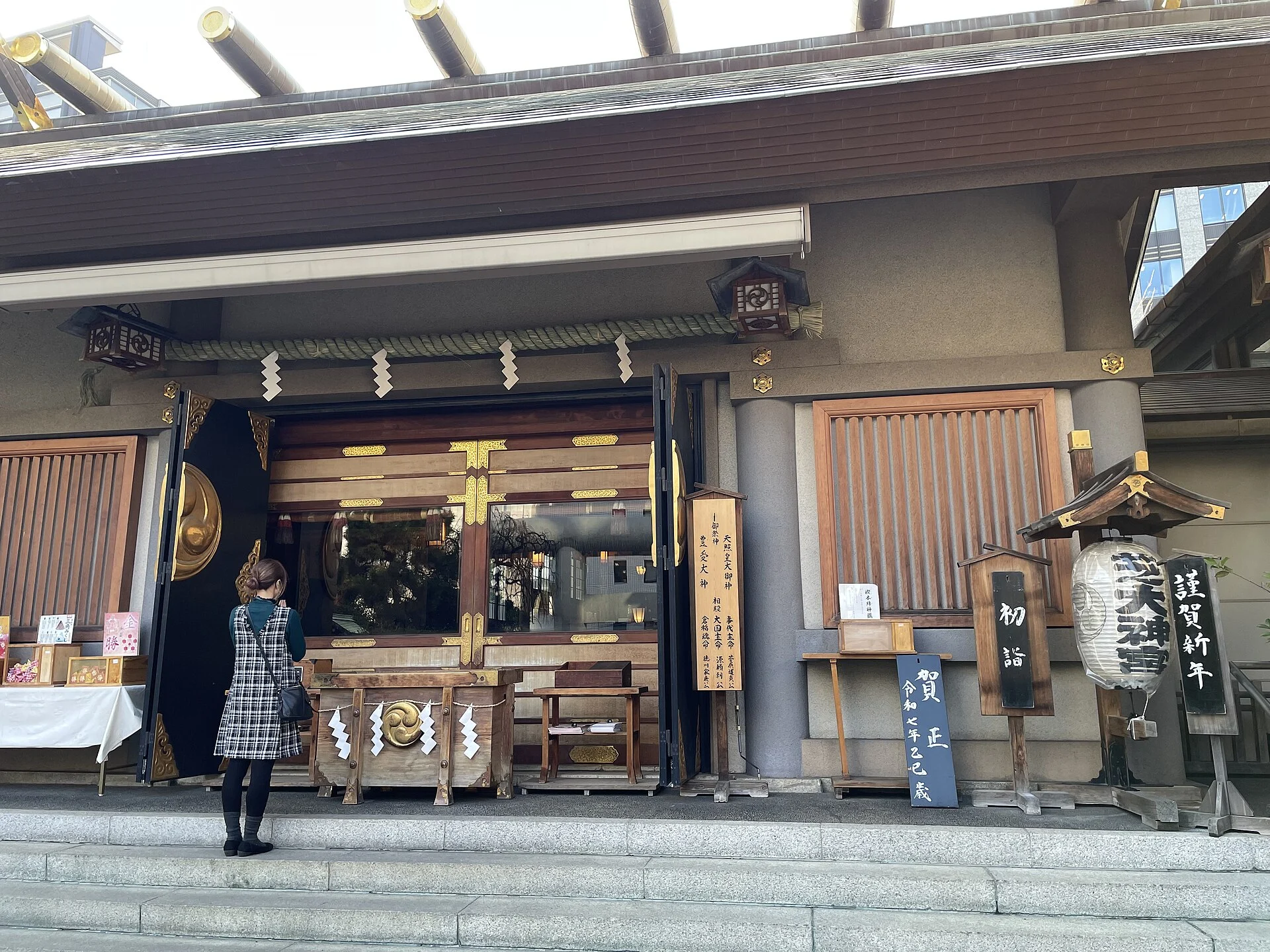
Our pages on these two shrines do not say whether they give out the Jingu Taima, so ask at the shrine office if you want to know.
Tips for Visitors
- If you see a shelf with a small shrine box at a home, shop or restaurant, it is probably a kamidana. Treat it with respect.
- Treat ofuda as sacred items. Jinja Honcho says omamori and similar items are not simple souvenirs, and it is appropriate to keep them or give them to family or friends.
- Ofuda are generally renewed every year at the shrine, according to Jinja Honcho.
- See our guide to shrine and temple etiquette for how to behave at a shrine.
FAQ
What is a kamidana?
A shelf in the home for the kami. Jinja Honcho says the shelf for the kami who watch over the home all year is simply called the kamidana.
What is the Jingu Taima?
The ofuda from Ise Jingu, used to honour Amaterasu-Omikami. Jinja Honcho says every kamidana should have one.
What do people offer at a kamidana?
Ideally rice, water and salt every day, with prayers of thanks. Sake and seasonal fruits and vegetables may also be offered.
Can visitors from other countries have a kamidana?
Jinja Honcho says non-Japanese are welcome to venerate the kami in the same way.
Which Tokyo shrines are linked to Ise?
Tokyo Daijingu and Shiba Daijingu. Both honour Amaterasu and Toyouke, the kami of Ise Jingu.
Keep reading
Sources
The kamidana and Ise descriptions are based on the Jinja Honcho pages below. The facts about the Tokyo shrines come from the official pages listed on our own shrine pages, not from a visit. Last checked: November 2026 (on November 15, 2026). Please check each shrine before you go.
Comments
[…] Also nearby: Kamidana: the Shinto household shrine […]
[…] Also nearby: Kamidana: the Shinto household shrine […]