Researched guide · Last checked: Nov 15, 2026
Purity is one of the first ideas you meet at a Japanese shrine. You pass a torii gate, find a water basin and rinse your hands before you pray. This guide explains where that habit comes from, using the old myth of Izanagi and the explanations of Jinja Honcho, the Association of Shinto Shrines.
Quick answer
In Shinto, water and ritual clean away impurity before you meet the kami (the sacred beings of Shinto). Jinja Honcho links the custom to a myth in the Kojiki, an old record from the year 712, in which the kami Izanagi washes himself in the sea after a visit to the land of the dead.
At the shrine, rinse your hands and mouth at the water basin (temizuya or chozuya). Many shrines also hold purification rites at the end of June and December, called Oharae.
Overview
| What it is | The Shinto idea of purification (harae) and the water basin (temizuya) at a shrine |
| Source | Jinja Honcho (the Association of Shinto Shrines), English pages |
| Good for | First-time shrine visitors who want to know why they wash their hands |
| Costs | Jinja Honcho lists no fee for using the water basin. A formal ceremony needs an offering, and the amount depends on the shrine |
| When to see rites | Oharae is held at the end of June and December at many shrines |
| Last checked | November 2026 (on November 15, 2026) |
The Myth Behind the Custom
Jinja Honcho tells the story from the Kojiki. The kami Izanami, wife of Izanagi, died after giving birth to many kami. Izanagi followed her to Yomi-no-Kuni, the land of the dead. He broke a promise not to look at her, was frightened by what he saw and fled. At the border between the worlds, the two parted in anger.
Izanagi felt polluted by his visit to Yomi-no-Kuni. He went to the seashore and washed himself. As he took off his clothes and entered the water, many kami were born. The first were kami of defilement, but they were followed by kami of purification. When he washed his left eye, Amaterasu-Omikami was born. When he washed his right eye, Tsukuyomi was born. When he washed his nose, Susano’o was born. For the next part of the story, see our Amaterasu cave myth.
Jinja Honcho says the ancient roots of purification are tied to this story. Washing the whole body in water, such as a waterfall or a stream, continues today for people who want to wash away misfortune and impurity.
The Water Basin: Purification at the Gate
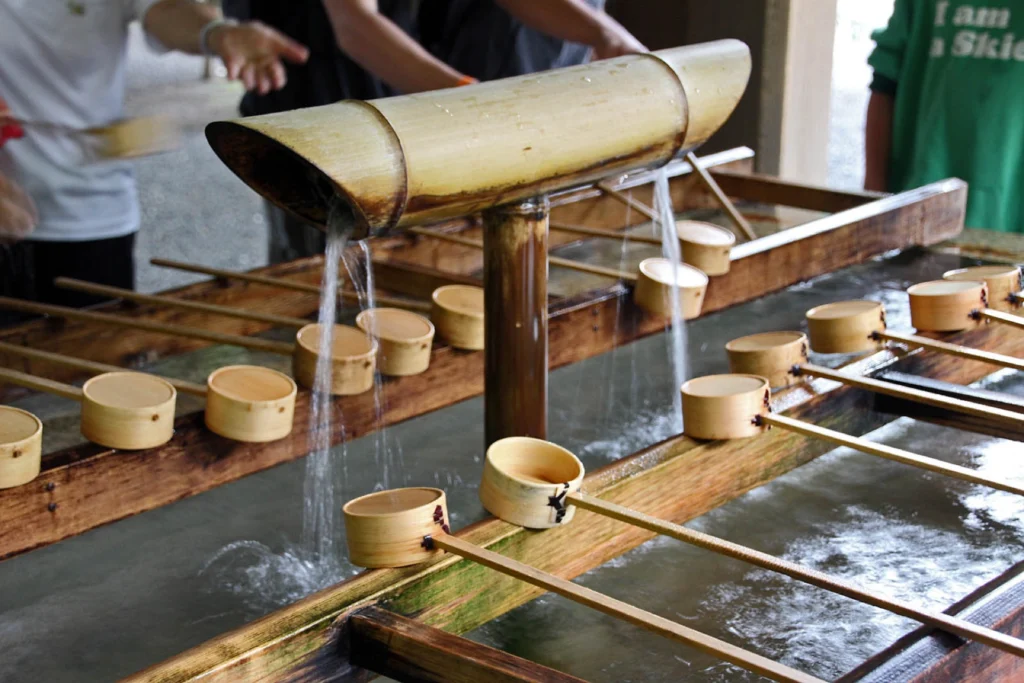
Jinja Honcho says purity is very important in Shinto, so most shrines have a covered water font and basin near the entrance. You use it before you pay your respects. It is a small version of Izanagi’s washing in the sea. The shrine grounds start at the torii gate, which marks the border between the sacred space and the everyday world. Many people pause and bow a little before they walk through.
How to use it
- Take the ladle in your right hand and scoop up some water.
- Rinse your left hand, then pass the ladle to your left hand and rinse your right hand.
- Pass the ladle back to your right hand. Pour a little water into your left palm and rinse your mouth. Do not touch the ladle to your mouth, and spit the water out at the base of the basin, not into it.
- Rinse your left hand once more, then put the ladle back.
Jinja Honcho describes these four steps. If the priests at a shrine ask you to do it differently, follow them. For the full visit, see our shrine and temple etiquette guide.
Purification at Other Times
Purification is not only for the gate. Jinja Honcho says that at the end of June and the end of December, many shrines hold a purification ceremony called Oharae. It removes the impurities that people have built up over the previous six months. Some shrines also set up a chinowa, a large ring made of kaya grass, on special purification days, usually in summer. Visitors walk through it to purify themselves and avoid misfortune in the coming months.
Jinja Honcho also says that the sound of the bell at the prayer hall is said to purify you, and that the ceremonies themselves include purification rites for the people who take part. It is a theme that runs through all Shinto practice.
Where to See This in Tokyo
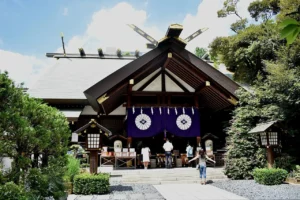
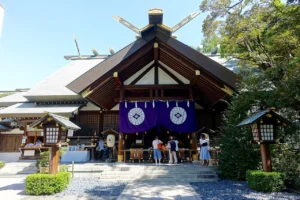
- Meiji Jingu describes the water-basin steps in three parts: wash your hands, rinse your mouth, and wash your hands again. The photo above shows its basin.
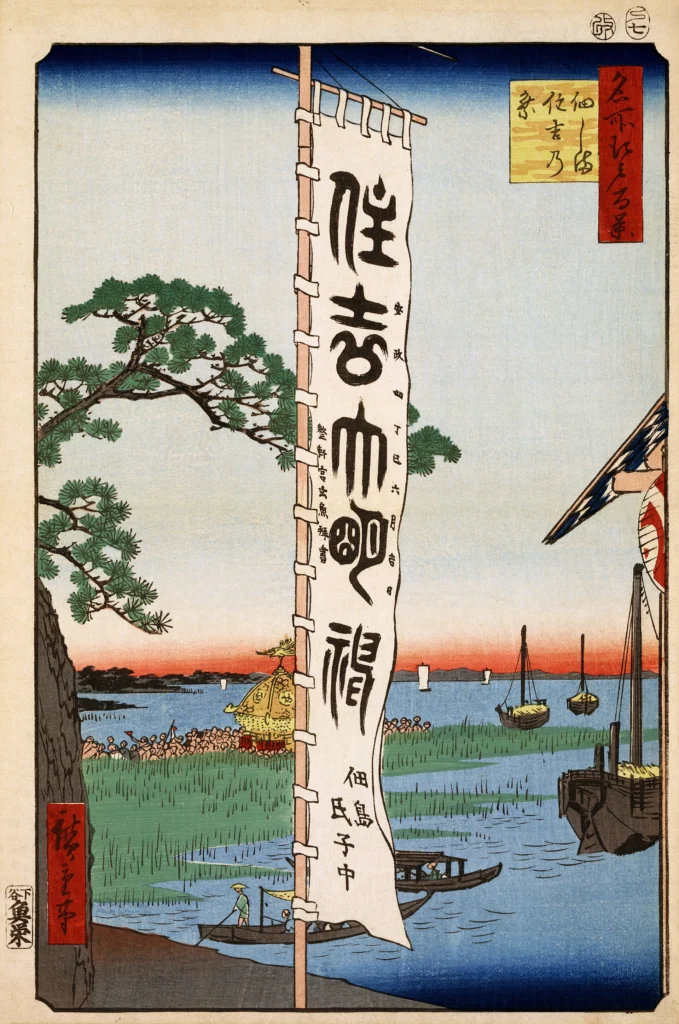
- Tsukudajima Sumiyoshi Shrine in Chuo City holds purification rites (Nagoshi and Toshikoshi Oharai) on June 30 and December 31 at 14:00 and 17:00, according to its official site. The shrine’s water basin hall was built in 1869.
- Otori Shrine in Asakusa has a water basin (temizuya) that was rebuilt in November 1999.
Tips for Visitors
- Use the water basin before you pray, and put the ladle back where you found it.
- Follow any sign at the basin. Some shrines have their own instructions.
- Check the shrine’s own page for the date and time of Oharae. Times differ at each shrine.
- Jinja Honcho says visitors are welcome at a shrine whatever their nationality, age, sex, race or religion. Keep quiet and be kind to people who are praying.
FAQ
Why do you wash your hands at a Japanese shrine?
Purity is important in Shinto. Jinja Honcho says most shrines have a water basin so that visitors cleanse their hands and mouth before they pay their respects.
Where does the idea come from?
Jinja Honcho links it to the Kojiki myth in which Izanagi returns from the land of the dead and purifies himself in the sea.
What is Oharae?
A purification ceremony held at many shrines at the end of June and the end of December. It removes the impurities built up over the previous six months, according to Jinja Honcho.
What is a chinowa?
A large ring of kaya grass set up at some shrines on special purification days, usually in summer. Visitors pass through it to purify themselves.
Do I have to use the water basin?
Jinja Honcho says you should use it before you pray, if the shrine has one. If you are not sure how, copy what other visitors do or follow the sign.
Keep reading
Sources
The myth and the customs are based on the Jinja Honcho pages below. The facts about the Tokyo shrines come from the official pages listed on our own shrine pages, not from a visit. Last checked: November 2026 (on November 15, 2026). Please check each shrine before you go.
Comments
[…] Also nearby: Shinto purification: Izanagi and the temizuya […]
[…] Also nearby: Shinto purification: Izanagi and the temizuya […]