Researched guide · Last checked: Nov 14, 2026
Meguro and Shirokanedai are a quiet area for gardens, museums and old temples, two stops south of Shibuya on the JR Yamanote Line. On the east side of Meguro Station are the Teien Art Museum, the woods of the Institute for Nature Study and the Happo-en garden. On the west side, the old Gyoninzaka slope goes down past Daienji temple to the Meguro River and on to Meguro Fudo temple. Plan half a day to a full day.
Quick answer
Top things to do: see the Art Deco rooms and gardens of the Teien Art Museum, walk in the woods of the Institute for Nature Study, visit Happo-en’s Japanese garden, and walk down Gyoninzaka to Daienji’s stone Buddhas and Meguro Fudo.
Allow half a day for one side of the station, or a full day for both. Meguro Station is on the JR Yamanote Line, Tokyu Meguro Line, Namboku Line and Mita Line. Shirokanedai Station is one stop from Meguro on the Namboku and Mita lines.
Overview
| Getting there | Meguro Station (JR Yamanote, Tokyu Meguro, Tokyo Metro Namboku, Toei Mita lines); Shirokanedai Station (Namboku, Mita lines) |
| Time needed | Half a day for one side of the station; a full day for both |
| Best time | Daytime. Most gardens and museums close by 16:30 to 18:00, and several close on Mondays |
| Good for | Gardens, museums, old temples, quiet walks |
| Costs | Teien gardens ¥200 (adults), Institute for Nature Study ¥320 (adults, cash only), Meguro Parasitological Museum free, Daienji free |
| Last checked | November 2026 (on November 14, 2026) |
What Meguro and Shirokanedai Are Like
This is a calm part of Tokyo with homes, embassies and green spaces, not a big shopping or nightlife area. The two sides of Meguro Station feel different. East of the station, along Meguro-dori avenue toward Shirokanedai, there are museums and large gardens. West of the station, the land drops steeply to the Meguro River, and old temples line the streets below.
A fun fact: Meguro Station is not in Meguro City. Meguro City’s own history page says the station stands in Shinagawa City. It opened in 1885 on the line that later became the Yamanote Line. The museums around Shirokanedai are in Minato City.
Best Things to Do
Tokyo Metropolitan Teien Art Museum
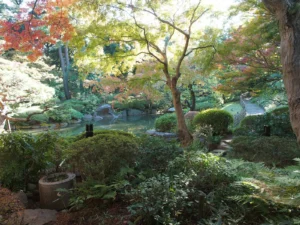
The museum is the former home of the Prince Asaka family, built in 1933 in the Art Deco style. The rooms themselves are part of the visit, and there are three gardens: a lawn, a Japanese garden with a tea house, and a Western garden.
- Hours: 10:00 to 18:00 (last entry 17:30). Closed on Mondays (if Monday is a holiday, it opens and closes the next day) and over the New Year.
- Tickets: exhibition prices change. Gardens only: adults ¥200, university students ¥160, high school students and 65+ ¥100, junior high and younger free.
- Good to know: between exhibitions, only the gardens are open. From October to March, some paths in the Japanese garden close at 16:30.
- Access: 7 minutes on foot from Meguro Station (JR East Exit, Tokyu Main Exit), or 6 minutes from Shirokanedai Station, Exit 1.
Current exhibition and more: see our Teien Art Museum guide.
Institute for Nature Study
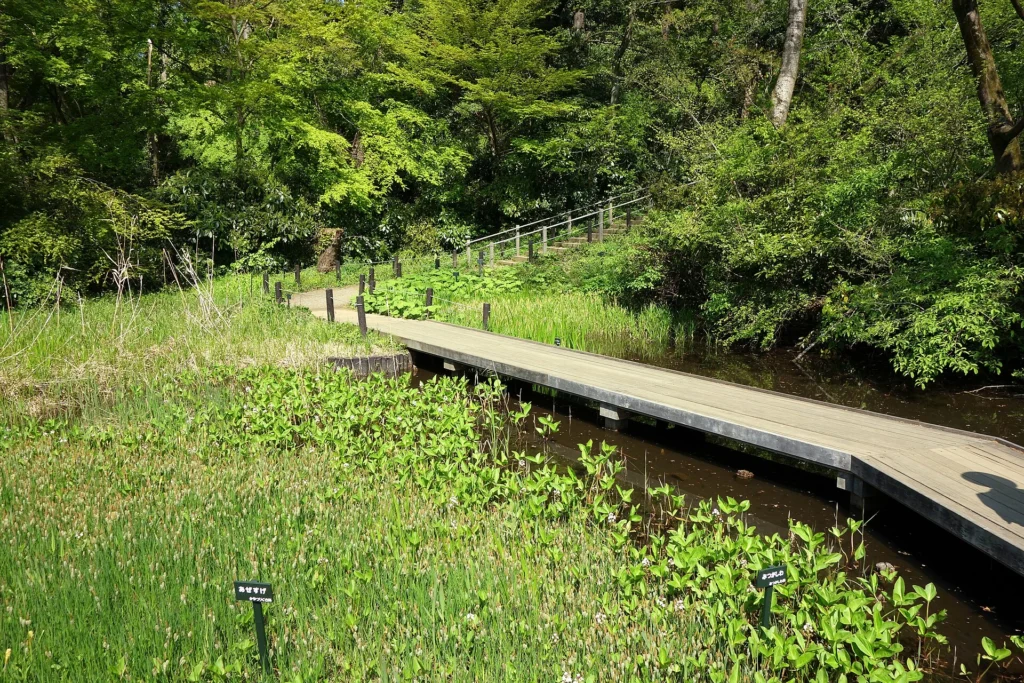
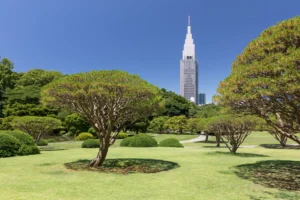
On the same block as the Teien Art Museum is a large patch of woods, ponds and grassland. It is part of the National Museum of Nature and Science. People have lived here since ancient times. From 1664 it was the garden of a feudal lord’s estate, and later it became a gunpowder store and then imperial land. In 1949 it was made a national Natural Monument and Historic Site. Many plants have name boards, and the paths let you see seasonal flowers, insects and birds.
- Hours: 9:00 to 16:30 from September to April, 9:00 to 17:00 from May to August. Last entry is 30 minutes before closing.
- Closed: Mondays (if Monday is a holiday, it opens and closes on Tuesday), the day after a national holiday (except Saturdays and Sundays), and December 28 to January 4.
- Tickets: adults and university students ¥320, cash only. Free for high school age and younger and for 65+ (bring ID that shows your age). Free for everyone on May 4, May 18 and November 3.
- Access: 9 minutes on foot from Meguro Station (JR East Exit, Tokyu Main Exit) along Meguro-dori, or 7 minutes from Shirokanedai Station, Exit 1. There is no parking.
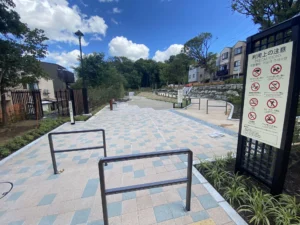
It is a protected natural site. Check the rules shown at the entrance before you walk in.
Happo-en and Zuishoji around Shirokanedai Station
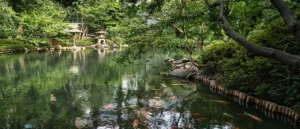
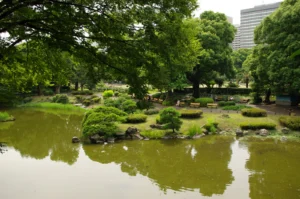
Happo-en is a Japanese garden with a history of about 400 years, back to the Edo period. Today it is also a wedding and event venue, but visitors can walk in the garden. The teahouse Muan was built by a Yokohama silk merchant and moved here whole. It is 1 minute from Shirokanedai Station, Exit 2. Check what is open on the day, and see our Happo-en guide for seasonal light-ups.
Zuishoji is a Zen temple 1 minute from Shirokanedai Station, Exit 2. GO TOKYO, Tokyo’s official travel guide, says its main hall is an Important Cultural Property and that the grounds are pretty when the cherry trees bloom in spring. Entry is free, 9:00 to 16:30 (last entry 30 minutes before closing).
Gyoninzaka slope and Daienji’s stone Buddhas
From Meguro Station’s West Exit, a narrow, steep slope called Gyoninzaka goes down toward the Meguro River. In the Edo period (1603–1868) this was a busy path for people walking to Meguro Fudo temple. Partway down is Daienji, about 3 to 4 minutes from the station.
- Stone Buddhas: about 520 stone statues stand in rows along the hillside. They were made to honor the people who died in the Great Meiwa Fire of 1772, one of the three great fires of Edo (old Tokyo), which is said to have started at this temple. The statues are a Tokyo Metropolitan Cultural Property.
- Toroke Jizo: next to the main hall stands a stone Jizo (a guardian Buddha) whose face looks melted. Meguro City says people pray to it to “melt away” their worries.
- Visiting: free, 8:00 to 17:00 according to GO TOKYO (hours change by season).
Daienji is also a stop on the Yamate Seven Lucky Gods walk, a route of temples for good-luck gods. Please be quiet and polite: these are working temples. See Temples and shrines in Tokyo for basic manners.
Meguro Parasitological Museum
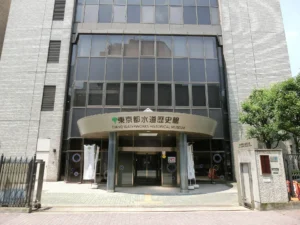
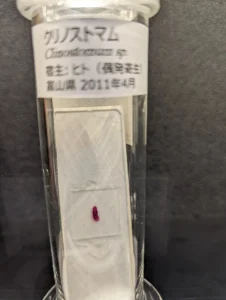
This small private research museum about parasites is free (donations welcome). It shows about 300 specimens on two floors, and most visits take 30 to 40 minutes. It is open 10:00 to 17:00 and closed on Mondays and Tuesdays. Walk about 12 minutes from Meguro Station’s West Exit along Meguro-dori, or take a bus to the second stop, Otori-Jinja-mae. See our Meguro Parasitological Museum guide.
Meguro Fudo (Ryusenji) and the temples around it
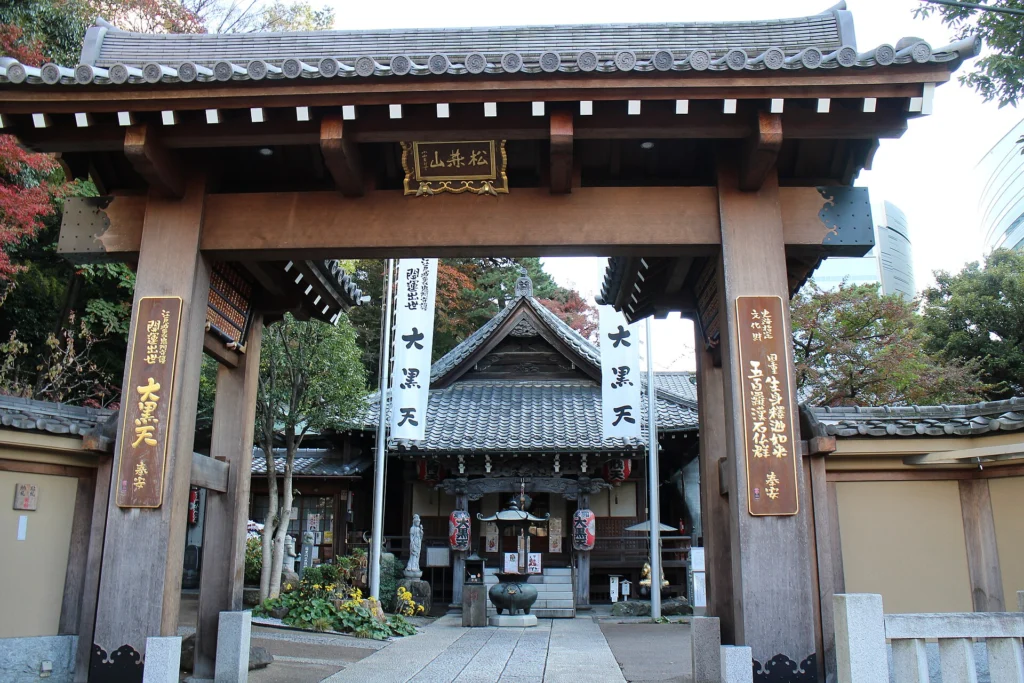
Meguro Fudo, officially Ryusenji, is a Tendai Buddhist temple. Temple tradition says it was founded in 808. In the Edo period it was a popular place to visit for everyone from shoguns to ordinary people. Things to look for:
- Tokko-no-taki: a small waterfall in the grounds. To its left is the Mae-Fudo-do hall, built in the middle of the Edo period and a Tokyo Metropolitan Cultural Property.
- Aoki Konyo’s grave: in the cemetery behind the temple is the grave of the scholar who spread sweet potato farming in Japan. It is a national Historic Site.
- Lucky god: the temple’s Ebisu, the god of business, is part of the Yamate Seven Lucky Gods.
Close by are Jojuin, called “Tako Yakushi” (octopus Yakushi) because three octopuses hold up the seat of its Buddha, and Gohyaku Rakanji, where 305 Buddhist statues are a Tokyo Metropolitan Cultural Property. Opening hours and any fees are not listed in one official place, so check before you go.
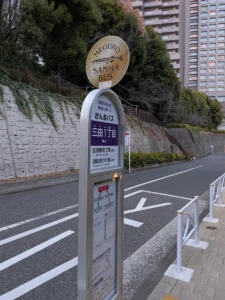
- Getting there: Tokyu bus stop “Meguro Fudoson”, right by the temple (route 渋72 between Shibuya Station and Gotanda Station), or 15 minutes on foot from Fudo-mae Station on the Tokyu Meguro Line.
Seasonal Events
- Meguro Sanma Festival (October): free charcoal-grilled sanma (Pacific saury) at the Meguro Citizens’ Festival, held on a Sunday in October. In 2026, the fish was only for people who won tickets in an advance lottery. See Meguro Sanma Festival.
- Tori-no-ichi (November): on the “Rooster days” in November, Otori Shrine on Meguro-dori holds a fair with stalls selling kumade (decorated bamboo rakes for good luck), Meguro City says. Dates change each year.
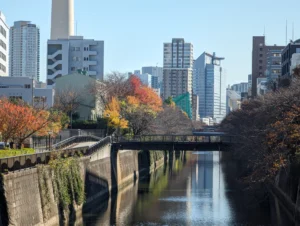
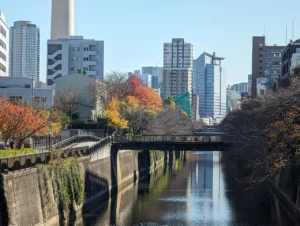
- Cherry blossoms (spring): the Meguro River at the bottom of Gyoninzaka is lined with cherry trees. See Meguro River.
- More dates: Tokyo events calendar.
Food & Coffee
This is not a food-street area like Ebisu, so plan meals around your route. The Teien Art Museum has a café (10:00 to 18:00, last order 17:30) and a restaurant. There are also many restaurants and cafés around Meguro Station and on Meguro-dori. For a bigger choice, Ebisu is one stop away.
New to eating out in Japan? See How to eat out in Tokyo and our Tokyo cafés guide.
Where to Stay
Meguro is on the Yamanote Line, so you can reach it easily from most of central Tokyo. Ebisu is one stop away. See Best hotels in Ebisu and Nakameguro, or compare areas in our Where to Stay guide.
Getting There
- From Shibuya: JR Yamanote Line, two stops (via Ebisu) to Meguro Station.
- From Tokyo Station or Shinagawa: the JR Yamanote Line goes straight to Meguro Station, with no change.
- To Shirokanedai: Tokyo Metro Namboku Line or Toei Mita Line, one stop from Meguro. The Namboku Line also runs on to Azabu-Juban.
- Which exit? For the Teien Art Museum and the Institute for Nature Study, use the JR East Exit (Tokyu: Main Exit). For Gyoninzaka, Daienji and the Parasitological Museum, use the West Exit.
- For Meguro Fudo: Fudo-mae Station on the Tokyu Meguro Line, or the Tokyu bus to “Meguro Fudoson”.
New to Tokyo trains? See Trains in Tokyo and How to use Suica.
Suggested One-Day Route
Gardens in the morning, temples in the afternoon. Walking times are from official sources where we have them; add time for each stop.
- StartMeguro Station, JR East Exit
- 7 minutes on foot
- 1Tokyo Metropolitan Teien Art Museum (gardens or exhibition)
- Short walk along Meguro-dori
- 2Institute for Nature Study (woods and ponds)
- Walk on toward Shirokanedai Station
- 3Happo-en garden and Zuishoji, near Shirokanedai Station
- Namboku or Mita Line, one stop to Meguro
- 4Meguro Station West Exit, down Gyoninzaka to Daienji
- Walk down to the Meguro River and on along Meguro-dori
- 5Meguro Parasitological Museum (closed Mondays and Tuesdays)
- Walk or take a bus
- FinishMeguro Fudo (Ryusenji), then Fudo-mae Station (15 minutes on foot)
Find these places on our Tokyo map.
Combine Meguro with Nearby Areas
- Ebisu and Nakameguro: one stop north on the Yamanote Line. See our Ebisu and Nakameguro guide and the Tokyo Photographic Art Museum.
- Shibuya: two stops north. See our Shibuya guide.
- Azabu-Juban: on the Namboku Line from Shirokanedai. See our Azabu-Juban guide.
- Shinagawa: for Sengakuji temple and aquariums. See our Shinagawa guide and Sengakuji Temple.
Travel Tips
- Check the day. The Teien Art Museum and the Institute for Nature Study close on Mondays, and the Parasitological Museum closes on Mondays and Tuesdays.
- Bring cash. The Institute for Nature Study takes cash only. See Money in Tokyo.
- Gyoninzaka is short but very steep. Take care in rain, and walk it downhill from the station if you can.
- Most places close in the late afternoon. Start in the morning.
- More gardens and museums: Tokyo parks and gardens and Tokyo museums. Comparing areas? See Tokyo neighborhoods compared.
Also nearby: Meguro and Shirokanedai day itinerary
FAQ
Is Meguro worth visiting?
Yes, if you like gardens, museums and old temples more than shopping. In one day you can see the Art Deco Teien Art Museum, the woods of the Institute for Nature Study, Happo-en’s garden, Daienji’s stone Buddhas and Meguro Fudo, all in a quiet part of the city.
How do I get to Meguro from Shibuya?
Take the JR Yamanote Line two stops south, via Ebisu, to Meguro Station. Meguro Station is also on the Tokyu Meguro Line, the Namboku Line and the Mita Line.
Is the Institute for Nature Study free?
No. Adults and university students pay ¥320, cash only. It is free for high school age and younger and for people 65 and over with ID that shows their age. Everyone enters free on May 4, May 18 and November 3.
What is the difference between Meguro and Shirokanedai?
Meguro Station is the main station, on four lines. Shirokanedai Station is one stop away on the Namboku and Mita lines. The Teien Art Museum and the Institute for Nature Study lie between the two stations, and Happo-en and Zuishoji are right by Shirokanedai Station.
Which days should I avoid?
Mondays. The Teien Art Museum and the Institute for Nature Study are closed on Mondays (they open if it is a holiday and close the next day instead), and the Meguro Parasitological Museum is closed on Mondays and Tuesdays. All three close over the New Year.
Keep reading
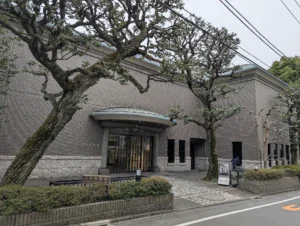
Also nearby: Meguro Museum of Art, Tokyo.
Related guides
Also see: ALL DAY DINING FUDO (Happo-en, Shirokanedai)
Sources
This guide is based on the official information below, not on our own visit. Last checked: November 2026 (on November 14, 2026). Hours, prices and events change, so please check before you go.
- Tokyo Metropolitan Teien Art Museum: Hours and access (official, English)
- Tokyo Metropolitan Teien Art Museum: Gardens (official, English)
- Institute for Nature Study: Admission (official, Japanese)
- Institute for Nature Study: Access (official, Japanese)
- Institute for Nature Study: About and history (official, Japanese)
- GO TOKYO: The Institute for Nature Study
- GO TOKYO: Zuishoji Temple
- Happo-en: Garden (official, Japanese)
- Meguro Parasitological Museum: Plan your visit (official)
- GO TOKYO: Daienji
- Meguro City: Daienji (Japanese)
- Meguro City: Daienji stone Buddhas (Japanese)
- Meguro City: Ryusenji Mae-Fudo-do (Japanese)
- Meguro City: Cultural walk around Meguro Fudo (Japanese)
- Meguro City: Ryusenji (Meguro Fudo) (Japanese)
- Meguro City: Railways in Meguro (Japanese)
- Meguro City: Meguro Citizens’ Festival and Sanma Festival (Japanese)