Researched guide · Last checked: Nov 15, 2026
Kawasaki Daishi is the common name of Heikenji, a Buddhist temple in Kawasaki, Kanagawa. It was founded in 1128. Its main statue shows Kobo Daishi (the monk Kukai), and a fisherman is said to have pulled it from the sea. Many people come here to pray for protection from bad luck, especially in their yakudoshi (unlucky years in life). The temple holds a goma (fire) prayer in the Main Hall every day. Entry to the grounds is free.
Quick answer
A Shingon Buddhist temple (Chisan school) known for prayers against bad luck.
Hours: Main Hall, February 1 to December 30: April to September 5:30 to 18:00; October to March 6:00 to 17:30 (5:30 to 17:30 on the 21st). Open until 21:00 on the 20th of each month. Hours differ in the New Year period. Admission: Free to visit the grounds. Goma prayer from 5,000 yen. Closed: Open every day.
Quick facts
| What it is | A Shingon Buddhist temple (Chisan school) known for prayers against bad luck |
| Hours | Main Hall, February 1 to December 30: April to September 5:30 to 18:00; October to March 6:00 to 17:30 (5:30 to 17:30 on the 21st). Open until 21:00 on the 20th of each month. Hours differ in the New Year period |
| Admission | Free to visit the grounds. Goma prayer from 5,000 yen |
| Closed | Open every day |
| Address | 4-48 Daishimachi, Kawasaki-ku, Kawasaki, Kanagawa |
| Nearest station | Kawasaki-daishi Station (Keikyu Daishi Line), 8 minutes on foot |
| From Tokyo | Keikyu Line from Shinagawa to Keikyu Kawasaki, then change to the Keikyu Daishi Line |
| Last checked | November 2026 |
What to see
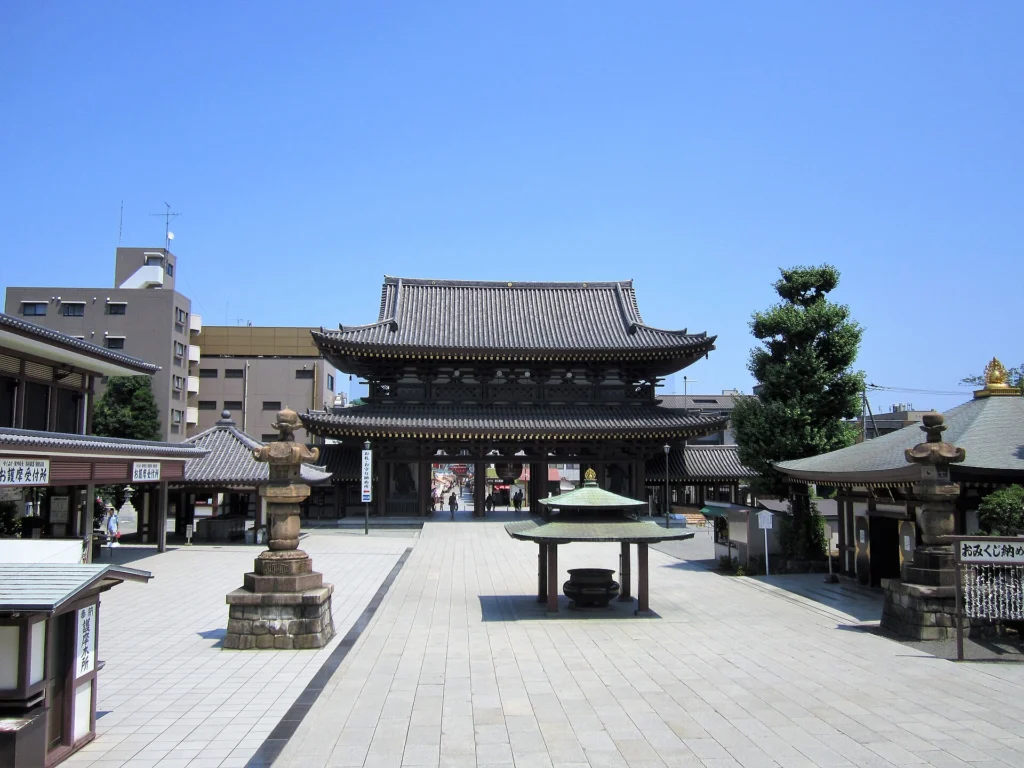
- Daihondo (Main Hall): the center of prayer at the temple. The statue of Kobo Daishi is kept here, and the goma prayer is held here every day.
- Dai-Sanmon gate and the Octagonal Five-Story Pagoda: two landmarks named on the temple’s grounds map.
- Inari-do: the temple says this is the only hall that survived the war.
- Stone monuments: the grounds have many old stones with poems and records. One has a haiku by the poet Masaoka Shiki, who visited on November 3, 1894.
- Nakamise: a shopping street on the way to the temple. Kanagawa’s official tourism site says many visitors enjoy it after their visit.
Goma fire prayer
- What it is: a priest burns wooden sticks in a sacred fire in front of the main statue. It stands for burning away worldly troubles. Each prayer is for one wish, such as protection from bad luck, family safety or good health.
- How to join: fill in a form at the Goma reception to the right of the Main Hall, 10 to 15 minutes before the prayer time. No booking is needed. A priest gives a short talk in the hall before the prayer. During the prayer, you can go close to the statue with a priest’s guidance.
- Times (Monday to Saturday, including holidays): 6:30 (6:00 from April to September), 9:00, 10:30, 11:30, 13:00, 14:30 and 15:30.
- Times (Sunday): 6:30 (6:00 from April to September), 9:00, 10:30, 11:30, 13:00, 14:00, 15:00 and 16:00. The 21st of each month has its own schedule, and on the 20th there is an extra evening prayer at 19:00. Times can change for events.
- Fees: 5,000, 7,000 or 10,000 yen. The large goma is 20,000 yen. You receive a goma charm (a blessed wooden or paper talisman) after the prayer.
Before you go
- Go early: the temple opens early in the morning. Kanagawa’s official tourism site suggests the morning, when it is less crowded.
- New Year: many people visit for hatsumode (the first temple visit of the year). Hours are different from December 31 to January 31, so check the official site.
- Pets: pets cannot go inside the halls.
- Accessibility: there is a barrier-free toilet.
- English: the official site has a short English page with the temple’s history and access.
Getting there from Tokyo
- Train: from Shinagawa, take the Keikyu Line to Keikyu Kawasaki Station. Change to the Keikyu Daishi Line and get off at Kawasaki-daishi Station. The temple is 8 minutes on foot.
- From Haneda Airport: the temple suggests taking a Keikyu Airport Express toward Yokohama, then changing at Keikyu Kawasaki.
- Bus: from JR Kawasaki Station East Exit, stop 7, take the Kawasaki Tsurumi Rinko Bus (route Kawa 23) bound for Daishi. Get off at Daishi and walk 8 minutes.
- Car: use the Daishi exit of the Shuto Expressway. Free parking (about 700 cars) is next to the Traffic Safety Prayer Hall, and you walk from there.
Kawasaki Daishi belongs to the same Shingon Chisan school as Naritasan Shinshoji and Yakuoin Temple on Mt Takao. In Tokyo, Nishiarai Daishi is also known for prayers against bad luck. Read our temple etiquette guide or find more day trips from Tokyo.
FAQ
How do I get to Kawasaki Daishi from Tokyo?
Take the Keikyu Line from Shinagawa to Keikyu Kawasaki, then change to the Keikyu Daishi Line. From Kawasaki-daishi Station, the temple is 8 minutes on foot.
Is Kawasaki Daishi free?
Yes. Visiting the grounds is free. A goma prayer starts from 5,000 yen.
Do I need to book the goma prayer?
No. Apply at the Goma reception to the right of the Main Hall 10 to 15 minutes before a prayer time.
What time does Kawasaki Daishi open?
From February 1 to December 30, the Main Hall opens at 5:30 from April to September and at 6:00 from October to March. Hours are different in the New Year period.
What is yakudoshi?
Yakudoshi are ages that are thought to bring bad luck in Japan. Many people visit Kawasaki Daishi in these years to pray for protection.
Keep reading
Sources
Facts come from the official Kawasaki Daishi Heikenji website (access, history, goma prayer and English pages) and Kanagawa Prefecture’s official tourism site. They are based on official sources, not our own visit. Hall hours, prayer times and fees can change, especially around the New Year, so check before you go. Last checked: November 2026 (on November 17, 2026).

Comments
[…] Kawasaki Daishi: Temple for Warding Off Bad Luck, Kanagawa (Access from Tokyo) […]