Researched guide · Last checked: Nov 11, 2026
Hase-dera (Hase Kannon) is a temple on the slopes of Kannon-yama in Kamakura, about 5 minutes on foot from the Great Buddha. The temple says it was founded in 736 and that its main image, an eleven-headed Kannon, is one of the largest wooden Buddhist statues in Japan at 9.18 m tall. Its grounds are known as a garden of flowers through the seasons, with views over the sea and the town of Kamakura. This page covers hours, fees, what to see and access. For a full day in the city, see our Kamakura day trip guide.
Quick answer
Hours: Usually 8:00 to 16:30 for entry (gates close 17:00). April to June: 8:00 to 17:00 for entry (gates close 17:30).
Admission: Adults ¥400, elementary school children ¥200.
Address: 3-11-2 Hase, Kamakura, Kanagawa.
Quick facts
| Hours | Usually 8:00 to 16:30 for entry (gates close 17:00). April to June: 8:00 to 17:00 for entry (gates close 17:30) |
| Admission | Adults ¥400, elementary school children ¥200 |
| Hydrangea season | About 2,500 hydrangeas of 40 kinds bloom along the view path in the rainy season. Check the official site for hydrangea tickets |
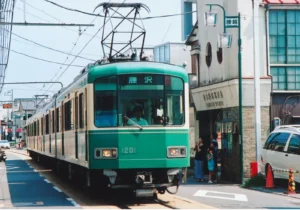
| Nearest station | Hase Station (Enoshima Electric Railway, Enoden), 5 minutes on foot |
| Address | 3-11-2 Hase, Kamakura, Kanagawa |
| Last checked | November 2026 |
What to see
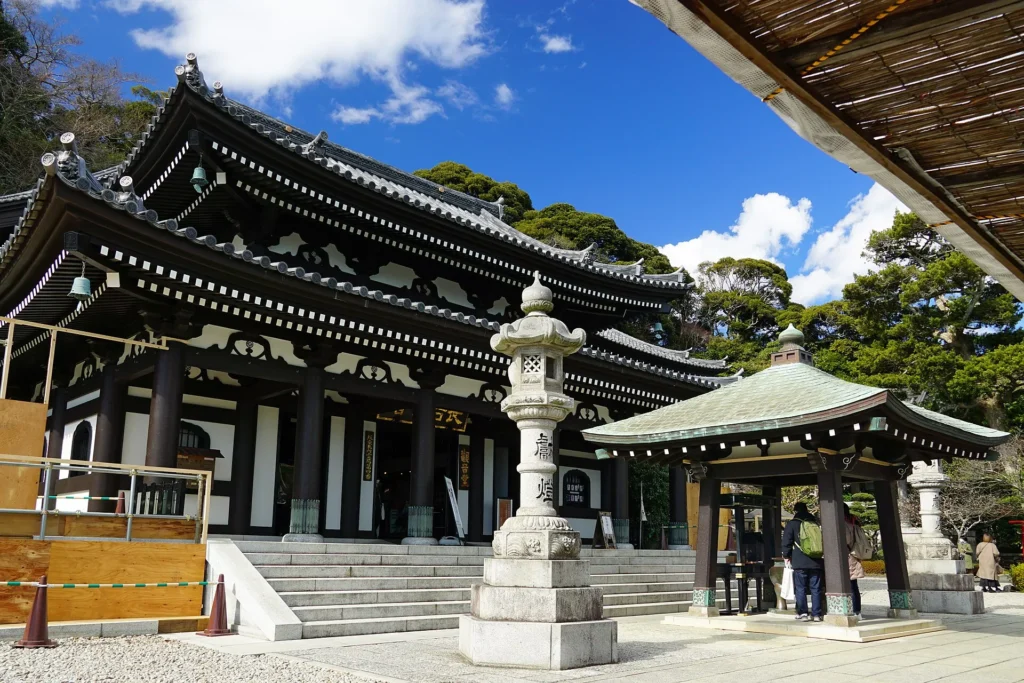
- Kannon-do (Kannon Hall): home to the main image, an eleven-headed Kannon statue 9.18 m tall, holding a staff in its right hand and a vase in its left. The current hall was rebuilt in 1986 after damage in the Great Kanto Earthquake.
- Amida-do: a seated Amida Buddha that, by tradition, Minamoto no Yoritomo, the first Kamakura shogun, had made to ward off bad luck in his 42nd year.
- Benten-kutsu (Benten Cave): a cave said to be where the monk Kobo Daishi stayed. Figures of the goddess Benzaiten and her sixteen attendants are carved into the walls.
- Kyozo (sutra hall): it holds a revolving bookcase of Buddhist scriptures. It can be turned only on the 18th of each month, January 1 to 3, April 8 and August 10. The 18 prayer wheels outside can be turned every day.
- Jizo-do: a hall surrounded by many small Jizo statues.
- Kaiko Terrace: a viewpoint over the sea and the streets of Kamakura.
The Kannon Museum on the grounds explains the teachings of Kannon. The temple also offers sutra copying every day, mostly with chair seating.
Flowers through the year
The temple calls its grounds the “Western Paradise of Kamakura”, with flowers in every season. The best known are the hydrangeas: about 2,500 plants of 40 kinds bloom along the view path in the rainy season, with Sagami Bay in the distance. This is the busiest time of year, so check the official site for hydrangea tickets and opening hours before you go. The temple posts a monthly flower guide on its website.
Rules and tips
- Pets: not allowed, except fully inside a closed carrier or pet cart, and never inside the halls. Assistance dogs are welcome.
- Steps: the upper grounds are reached by stairs up the hillside.
- Parking: the car park is small (30 cars) and for temple visitors only, so use public transport.
- Temple manners: see our shrine and temple etiquette guide.
Getting there
- From Kamakura Station (JR Yokosuka Line): take the Enoden to Hase Station and walk 5 minutes, or take a bus to “Hase Kannon” and walk 5 minutes.
- From Fujisawa Station (Odakyu Line): take the Enoden to Hase Station and walk 5 minutes.
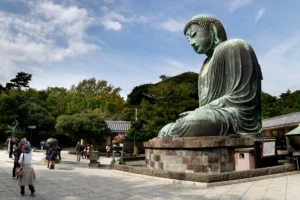
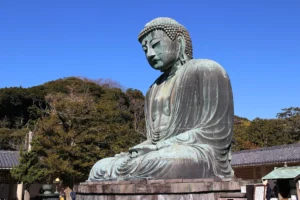
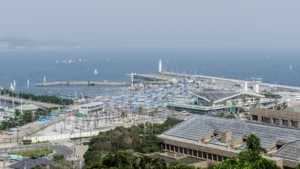
Hase-dera is a short walk from the Great Buddha of Kamakura, so many visitors see both. Continue to Enoshima on the Enoden.
Also nearby: Kamakura Area Guide: Kita-Kamakura, Central Kamakura and Hase Explained
Also nearby: Kamakura to Enoshima by Enoden: A Day Itinerary
Nearby places to visit
Distances are in a straight line, not walking routes.
Where to stay nearby
FAQ
How much is Hase-dera?
Adults ¥400 and elementary school children ¥200.
What are Hase-dera’s opening hours?
Usually 8:00 to 16:30 for entry, with the gates closing at 17:00. From April to June, entry is until 17:00 and the gates close at 17:30.
When do the hydrangeas bloom at Hase-dera?
In the rainy season, when about 2,500 hydrangeas bloom along the view path. Check the official site for hydrangea tickets.
How far is Hase-dera from the Great Buddha?
About 5 minutes on foot, according to the Great Buddha’s temple, Kotoku-in.
How do I get to Hase-dera?
Take the Enoden to Hase Station and walk 5 minutes.
Where to stay: to visit early before the crowds, see our best hotels in Kamakura.
Keep reading
Sources
This page is based on Hase-dera’s official site, not on our own visit. Last checked: November 2026 (on November 11, 2026). Hours, fees and flower timing can change, so please check before you go.