Researched guide · Last checked: Nov 11, 2026
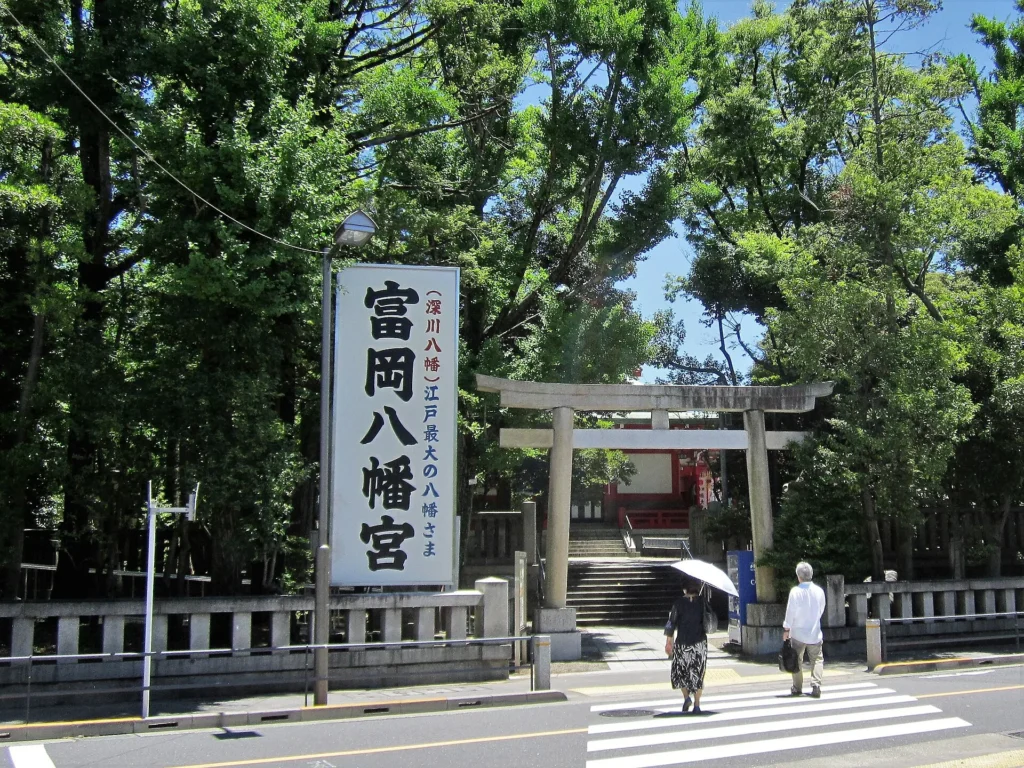
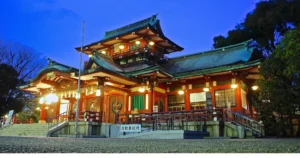
Tomioka Hachimangu, known locally as “Fukagawa no Hachiman-sama”, is a large shrine in Monzen-nakacho, founded in 1627. The shrine calls itself the largest Hachiman shrine of Edo. It is where Edo’s official sumo tournaments began, and its summer festival is one of the Three Great Festivals of Edo. This page covers what to see, how to visit, the festival and access. For the rest of the area, see our Fukagawa guide.
To see sumo up close, read about sumo experiences in Tokyo or a sumo morning practice visit.
Quick answer
Visiting: The grounds are free to visit. Prayer (gokito) reception at the shrine office is 9:30 to 16:30 daily, with changes on festival days.
Main hall renovation: The main hall is under major renovation from March 2026 to June 2027 (planned) and is covered by temporary fencing. From May 2026, the new guest hall is used as a temporary main hall for about a year.
Fukagawa Hachiman Festival: Held around August 15 every year. Every three years is the main festival (honmatsuri), when 53 neighborhood mikoshi (portable shrines) parade together.
Quick facts
| Visiting | The grounds are free to visit. Prayer (gokito) reception at the shrine office is 9:30 to 16:30 daily, with changes on festival days |
| Main hall renovation | The main hall is under major renovation from March 2026 to June 2027 (planned) and is covered by temporary fencing. From May 2026, the new guest hall is used as a temporary main hall for about a year |
| Fukagawa Hachiman Festival | Held around August 15 every year. Every three years is the main festival (honmatsuri), when 53 neighborhood mikoshi (portable shrines) parade together |
| Monthly events | Shrine festivals on the 1st, 15th and 28th of each month. Antique market on the 1st, 2nd, 4th and 5th Sundays (sunrise to sunset), and a flea market on the 15th and 28th |
| Nearest stations | Monzen-nakacho Station: 3 minutes on foot from the Tokyo Metro Tozai Line, 6 minutes from the Toei Oedo Line |
| Last checked | November 2026 |
What to see
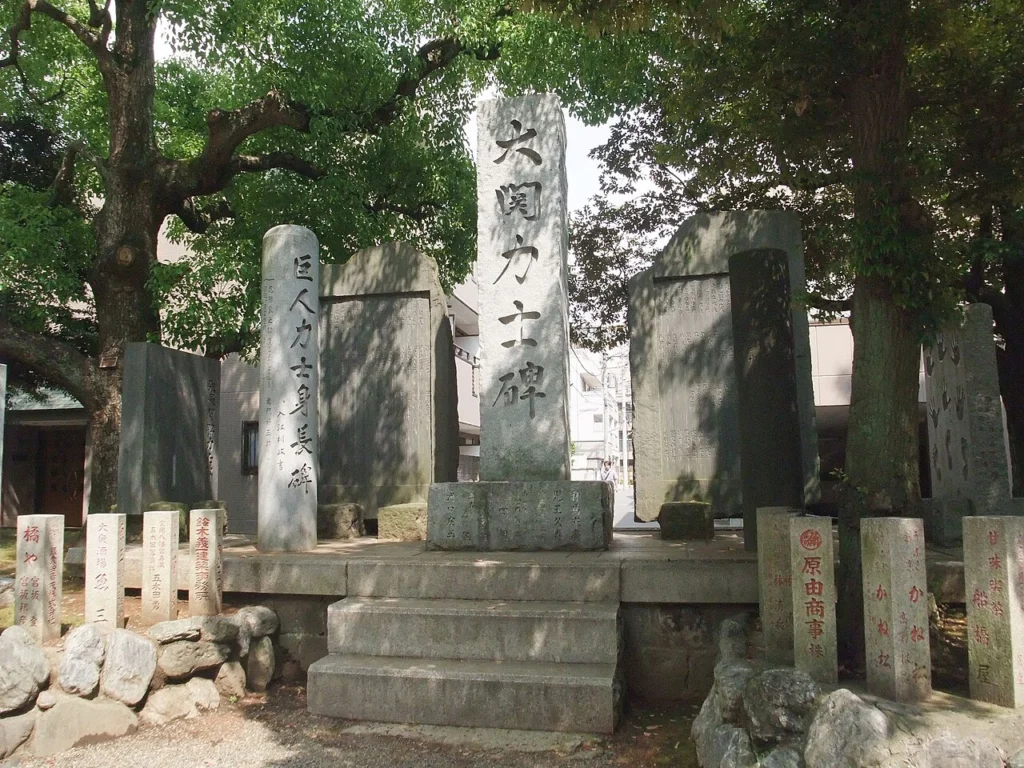
- Yokozuna Monument: the shrine was where Edo’s official kanjin sumo tournaments were held for about 100 years from 1684, and the system of regular tournaments and rankings took shape here. The Yokozuna Monument, put up in 1900, is about 3.5 meters tall and 20 tons, and carries the names of every yokozuna (grand champion). When a new yokozuna is promoted, a name-carving ceremony is held with the Japan Sumo Association.
- Japan’s largest golden mikoshi: the shrine’s great portable shrine, made in 1991, has a roof covered in 24 kg of pure gold and is decorated with diamonds and rubies. The shrine calls it Japan’s No. 1 golden mikoshi.
- Statue of Ino Tadataka: the mapmaker Ino Tadataka lived nearby and visited the shrine before setting out on his survey journeys. A bronze statue of him stands beside the main torii gate, with a national survey point next to it.
- Antique market: on the 1st, 2nd, 4th and 5th Sundays of the month, stalls sell books, toys, old Imari porcelain and more, from sunrise to sunset.
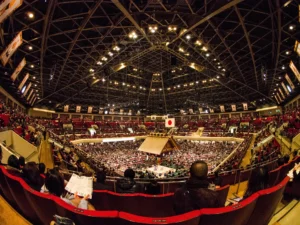
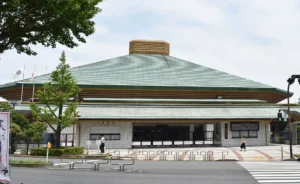
Sumo fans can continue to Ryogoku Kokugikan, today’s sumo arena. See also sumo in Tokyo.
How to visit
- Pass through the torii gate and walk to the front of the hall. While the main hall is being renovated, follow the signs to the temporary hall.
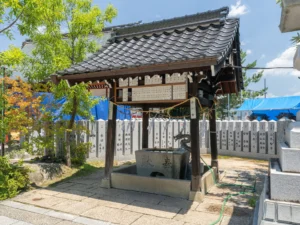
- Purify your hands and mouth at the water basin.
- Pray: drop a coin in the offering box, bow twice, clap twice, make your wish, and bow once more.
- Prayers and charms: if you would like a formal prayer (gokito), the shrine office takes them from 9:30 to 16:30 every day, with no booking needed. On weekends and holidays, weddings can affect the times.
New to shrine manners? See our shrine and temple etiquette guide.
Fukagawa Hachiman Festival
The shrine’s main festival takes place around August 15. It is counted among the Three Great Festivals of Edo, with the Sanno Festival of Hie Shrine and the Kanda Festival of Kanda Myojin. It is also called the “water-throwing festival”: crowds along the road splash water over the people carrying the mikoshi, to the traditional chant of “Wasshoi, wasshoi”. In the main festival held every three years, 53 neighborhood mikoshi parade together.
Check the shrine’s official site for this year’s schedule, and see Tokyo events by month.
Getting there
- Monzen-nakacho Station (Tokyo Metro Tozai Line): 3 minutes on foot.
- Monzen-nakacho Station (Toei Oedo Line): 6 minutes on foot.
- Etchujima Station (JR Keiyo Line): 15 minutes on foot.
- Parking is limited during the shrine’s 400th-anniversary construction work, so use public transport.
FAQ
Is Tomioka Hachimangu free to visit?
Yes. The grounds are free. Formal prayers (gokito) at the shrine office have a fee.
Can I see the main hall?
The main hall is under renovation from March 2026 to June 2027 (planned) and is covered by fencing. A temporary main hall is used during the work.
When is the Fukagawa Hachiman Festival?
Around August 15 every year. The main festival, with 53 neighborhood mikoshi, is held every three years.
Why is the shrine connected to sumo?
Edo’s official kanjin sumo tournaments were held at the shrine for about 100 years from 1684. The Yokozuna Monument lists every grand champion.
How do I get to Tomioka Hachimangu?
It is 3 minutes on foot from Monzen-nakacho Station on the Tokyo Metro Tozai Line, or 6 minutes from the Toei Oedo Line station.
In August: see Fukagawa Hachiman Matsuri for dates and the three-year cycle.
Next door: Fukagawa Fudo-do, a temple with goma fire prayers five times a day.
Keep reading
Sources
This page is based on the shrine’s official site, not on our own visit. Last checked: November 2026 (on November 11, 2026). Event dates and times can change, so please check before you go.
- Tomioka Hachimangu (official, Japanese)
- Tomioka Hachimangu: History (official, Japanese)
- Tomioka Hachimangu: Sumo and the shrine (official, Japanese)
- Tomioka Hachimangu: Fukagawa Hachiman Festival (official, Japanese)
- Tomioka Hachimangu: Golden mikoshi (official, Japanese)
- Tomioka Hachimangu: Statue of Ino Tadataka (official, Japanese)
- Tomioka Hachimangu: Monthly events (official, Japanese)
- Tomioka Hachimangu: Prayers (official, Japanese)
- Tomioka Hachimangu: Main hall renovation notice (official, Japanese)
- Tomioka Hachimangu: Access (official, Japanese)