Researched guide · Last checked: Nov 16, 2026
Akasaka is a business district, but it also has a grand palace, a temple full of stone foxes and two old shrines. All four are free or low cost and close to each other. This plan links them in one easy day.
Quick answer
Start at the State Guest House, Akasaka Palace, at 10:00 (¥1,800 for the main building and gardens). Then visit Toyokawa Inari, have lunch, and walk to Hie Shrine and Akasaka Hikawa Shrine. The base total is ¥1,800. Food and train fares are extra.
The palace is closed every Wednesday and on days with state guests, so check its calendar first. Hie Shrine closes at 17:00 and Hikawa Shrine at 17:30. The route and times are our own suggestion, not an official course.
Overview
| Best for | History, grand buildings, shrines and temples, and a calm day in central Tokyo |
| Best time | A weekday or a weekend morning, on a day when the palace is open. Hikawa Shrine says its great ginkgo tree turns yellow in late November |
| Start and finish | Yotsuya Station (JR, Marunouchi and Namboku lines). You can finish at Akasaka Station (Chiyoda Line), which is also the station for Hikawa Shrine |
| Admission | State Guest House: ¥1,800 for the main building and gardens, or ¥300 for the gardens only. Toyokawa Inari and Hie Shrine: free. Hikawa Shrine: no fee is listed on its official pages, so check before you go |
| Closed days | Palace: every Wednesday and on state-guest days. For example, it is closed on November 18, 20, 24 and 25, 2026, and from December 29 to 31. Temple and shrine gates close at different times (see the stops below) |
| Tip | The palace does a bag check at the gate and does not allow photos inside the main building. Leave sharp tools at your hotel |
| Last checked | November 2026 (on November 16, 2026) |
The Route at a Glance
The times below are our suggested pace. The walks between stops are short, but the official pages do not give minutes, so check a map on the day.
| Time (suggested) | Stop | Adult cost | Notes |
|---|---|---|---|
| 9:45 to 10:00 | Yotsuya Station, then the West Gate | Train fare: check before you go | About 7 minutes on foot, according to the palace |
| 10:00 to 11:45 | State Guest House, Akasaka Palace | ¥1,800 | Open 10:00 to 17:00. Last entry: main building 16:00, gardens 16:30 |
| 11:50 to 12:40 | Toyokawa Inari Tokyo Betsuin | Free | Gates 5:00 to 20:00 on its Japanese site |
| 12:40 to 13:40 | Lunch near Hie Shrine | Not included | Sanno Saryo at the shrine: lunch 11:00 to 15:00, last order 14:30 |
| 13:40 to 14:40 | Hie Shrine | Free | Gates 6:00 to 17:00. Amulet counter 8:00 to 16:00 |
| 15:00 to 16:15 | Akasaka Hikawa Shrine | Check before you go | Gates 6:00 to 17:30. Office 9:00 to 17:00 |
| 16:15 onward | Akasaka streets, tea or dinner | Optional | See the Akasaka guide for the area |
Stop by Stop
1. State Guest House, Akasaka Palace
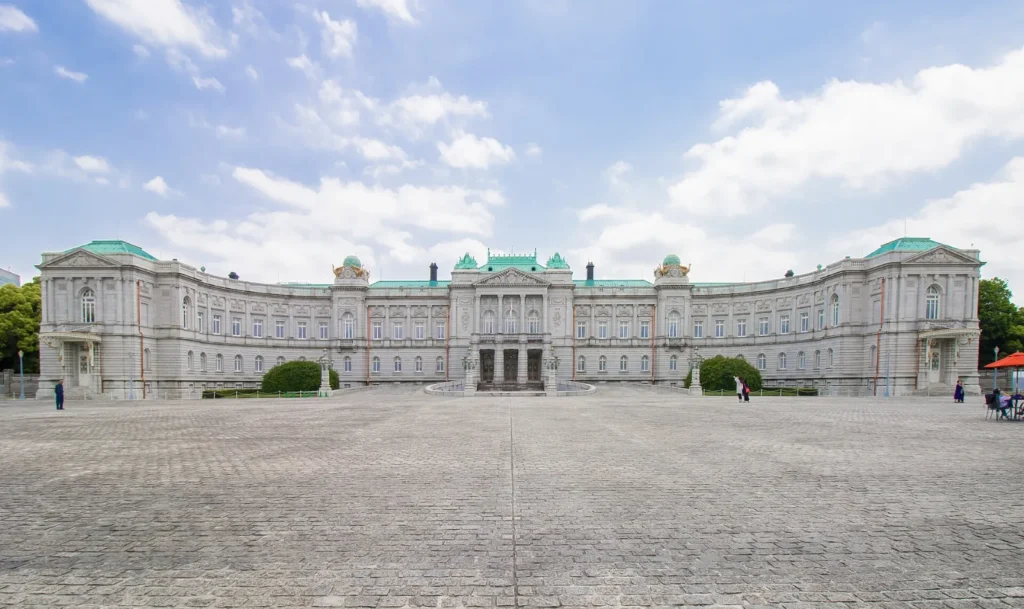
The State Guest House is the building where Japan welcomes official guests from other countries. On days without events, the public can go in. Use the West Gate, and line up on the west side of the main gate if you arrive before 9:50. The palace says the main building and gardens need no reservation. The main building is a neo-Baroque palace, and the official page names its entrance hall, the central staircase and four main rooms as the sights.
Adults pay ¥1,800 for the main building and the gardens (main garden and front garden). University students pay ¥1,000, junior high and high school students ¥500, and elementary school children and younger are free. If you want the gardens only, adults pay ¥300 and university students and younger are free. The premium route costs ¥400 extra. There is also a Japanese Annex, but it needs a reservation and costs ¥2,300 with the main building and gardens, so we left it out of the base plan. Please read the palace notice about the changed visitor area for the ceiling restoration before you go.
Do not take photos inside the main building. Do not bring professional cameras, tripods or alcohol. The palace may refuse visitors who have been drinking.
2. Toyokawa Inari Tokyo Betsuin
Toyokawa Inari is a Buddhist temple of the Soto Zen school, not a Shinto shrine. It honors Toyokawa Dakini-shinten, who is shown riding a white fox. The temple says its main deity was enshrined here in 1887. GO TOKYO says the grounds have hundreds of fox statues. The path to the inner hall (Okunoin) is lined with banners, and there is a tomb of Ooka Tadasuke, a famous Edo-period judge. The nearest stations are Akasaka-mitsuke (Exit B) and Nagatacho (Exit 7), each about 5 minutes on foot.
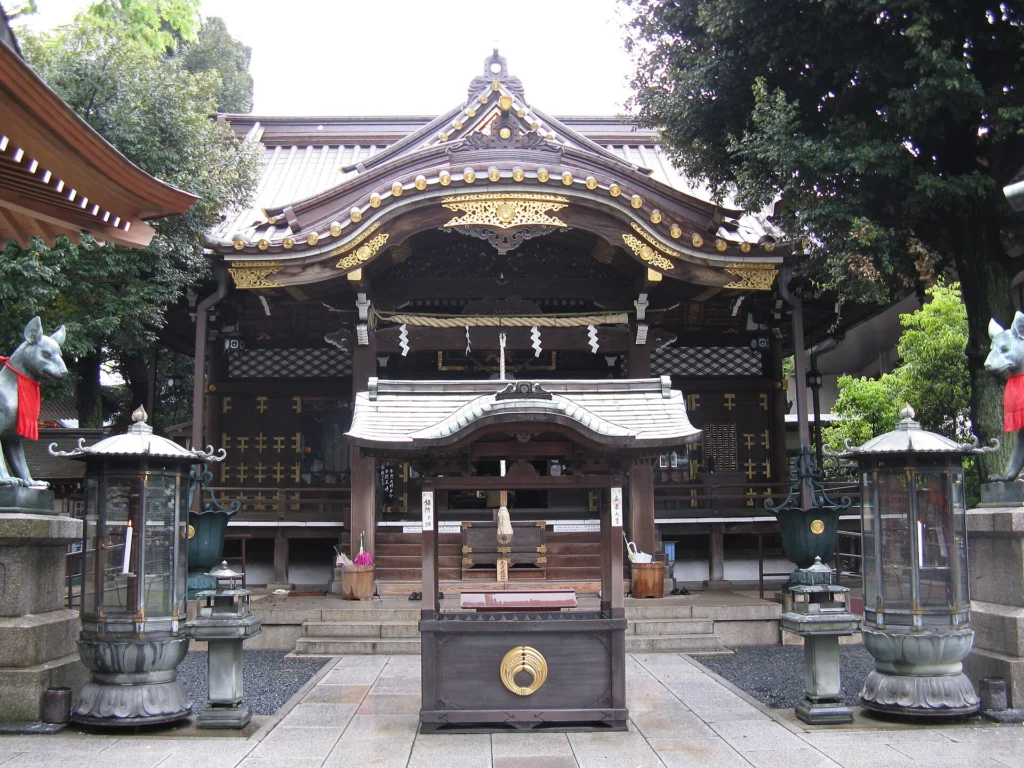
The temple asks visitors not to take photos in the praying areas. Eating and drinking are only allowed in set places. The first floor of the cultural hall has a cafeteria for visitors, but we could not confirm its hours or prices.
3. Lunch and Hie Shrine
The Hie Shrine restaurant, Sanno Saryo, serves lunch from 11:00 to 15:00 (last order 14:30), and tea from 15:00 to 17:00 (last order 16:30). It closes on irregular days, so check before you go. We could not find the prices, so lunch is not in the budget. You can also pick a lunch place from our Akasaka guide.
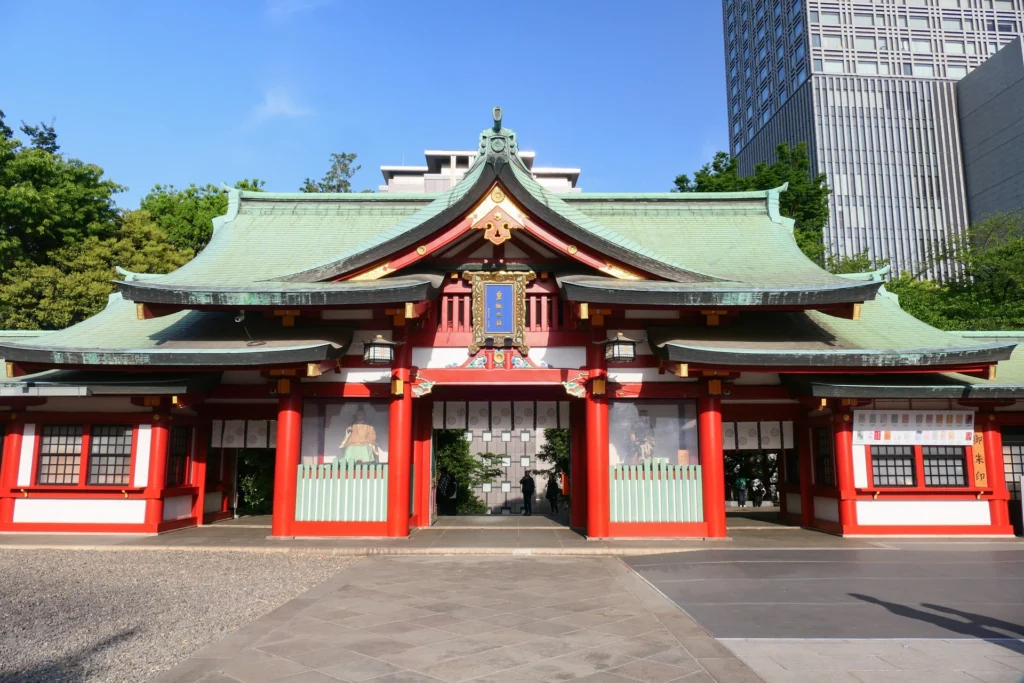
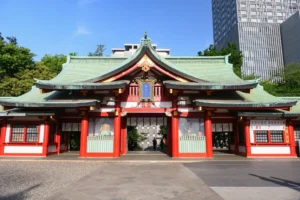
Hie Shrine guarded Edo Castle and the Tokugawa shoguns. The shrine says its present buildings date from 1958, after the 1945 air raids. Entry is free, and the gates are open from 6:00 to 17:00. The nearest stations are Akasaka (Exit 2) and Tameike-Sanno (Exit 7), each about 3 minutes on foot. The shrine page lists the treasure hall as open 9:00 to 16:00 with swords including a National Treasure, but the closed days are not clear, so check before you go.
4. Akasaka Hikawa Shrine
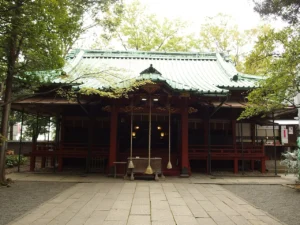
Akasaka Hikawa Shrine is a quieter shrine among old trees. The shrine says its main hall was built in 1729 on the order of the eighth shogun, Tokugawa Yoshimune, and survived earthquakes and the wartime raids. It is a Tokyo Metropolitan Tangible Cultural Property. The grounds have seven pairs of guardian dogs (komainu) and a great ginkgo tree. The shrine says the ginkgo turns yellow in late November. The gates open at 6:00 and close at 17:30, so you have time even if you run a little late. The nearest station is Akasaka (Chiyoda Line), Exit 5.
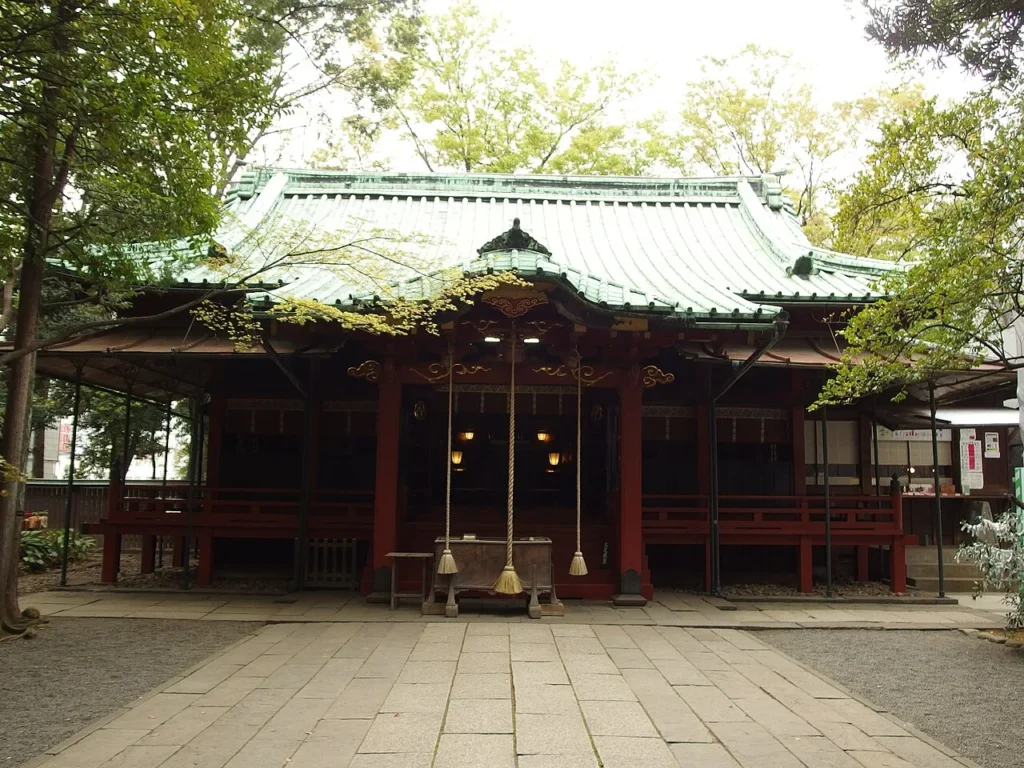
The shrine has rules for taking photos in the grounds. Read them on the official site before you take pictures. For how to pray and bow at each place, see our shrine and temple etiquette guide.
5. Tea, dinner or the way back
Akasaka Station is on the Chiyoda Line, and Akasaka-mitsuke Station is on the Ginza and Marunouchi lines. If you want more time in the area, our Akasaka guide lists the backstreets and evening options. For train help, see how to use a Suica card and Trains in Tokyo.
Budget for the Day
| Item | Adult |
|---|---|
| State Guest House: main building and gardens | ¥1,800 |
| Toyokawa Inari Tokyo Betsuin | Free |
| Hie Shrine | Free |
| Base total | ¥1,800 |
| Gardens only (instead of the main building) | ¥300 (base total becomes ¥300) |
| Optional: premium route at the palace | +¥400 |
| Optional: Japanese Annex with main building and gardens (reservation) | ¥2,300 instead of ¥1,800 |
| Akasaka Hikawa Shrine | No fee listed, check before you go |
| Lunch, tea and train fares | Not included, check before you go |
Ticket prices are the official prices of each place. University students pay ¥1,000 at the palace, junior high and high school students pay ¥500, and elementary school children and younger are free.
Tips for This Route
- Check the palace calendar first. It changes at short notice for state guests. Pick your day from the open dates.
- Start with the palace. It opens at 10:00 and has a bag check, while the shrines open earlier and close later.
- Mind the gate times. Hie Shrine closes at 17:00, so visit it before Hikawa Shrine, which closes at 17:30.
- Rainy day? The palace halls give cover, but the rest is outside. See our rainy day itinerary for other ideas.
Combine This Route with Nearby Places
- More in the area: the Akasaka guide.
- Next door: Roppongi art museums and night view itinerary. Roppongi Station is also an exit route for Hikawa Shrine.
- More history: the Imperial Palace and the National Diet Building.
- More about shrines: Shinto sacred forests and trees.
- Autumn plans: Tokyo in November and Autumn leaves in Tokyo.
- If you need a base, see Best Hotels in Akasaka.
- See all of our day plans on the Tokyo itineraries page.
Also nearby: Nagatacho Guide: The Diet Building Tour, Hie Shrine and a Half-Day Plan
Also see: Toraya Akasaka (Akasaka)
FAQ
How much does this route cost?
The base total is ¥1,800 for an adult, which is the palace ticket for the main building and gardens. Toyokawa Inari and Hie Shrine are free. Akasaka Hikawa Shrine does not list a fee, so check before you go. Meals and train fares are extra.
How long does this route take?
About 7 hours at an easy pace, with lunch. It is our own suggestion, so you can drop a stop.
When is the State Guest House closed?
Every Wednesday and on days with state guests. In 2026 it is closed on November 18, 20, 24 and 25, and from December 29 to 31. Check the official calendar, because open days can change at short notice.
Do I need a reservation for the palace?
Not for the main building and gardens, or for the gardens only. The Japanese Annex needs a reservation.
Can I do this in the rain?
You can, but most of the route is outside. The palace halls give some cover. Check the weather and bring an umbrella.
Keep reading
Related guides
 Asakusa in the Evening: Senso-ji Light-Up, Hoppy Street and the Sumida River (Itinerary)
 Nakano Broadway and Koenji in One Day: Anime Shopping and Vintage Streets (Times and Budget)
 Jiyugaoka and Todoroki Valley: A Half-Day Itinerary on the Tokyu Oimachi Line
 Todoroki Valley and Gotoh Museum: A Setagaya Half-Day Itinerary
Sources
Last checked: November 2026 (on November 16, 2026). Hours, prices and closed days come from the official pages of each place. Meals, train fares and the Hikawa Shrine fee are not listed, so check before you go.
- State Guest House, Akasaka Palace: Visit overview and fees (official, English)
- State Guest House, Akasaka Palace: Public opening schedule (official, English)
- State Guest House, Akasaka Palace: Access (official, English)
- Toyokawa Inari Tokyo Betsuin (official, English)
- Toyokawa Inari Tokyo Betsuin (official, Japanese)
- Hie Shrine (official, Japanese)
- Hie Shrine (official, English)
- Akasaka Hikawa Shrine: Grounds (official, Japanese)
- Akasaka Hikawa Shrine: Access (official, Japanese)
- GO TOKYO: Toyokawa Inari Temple (official, English)