Researched guide · Last checked: Nov 15, 2026
Amaterasu, the sun kami of Shinto, hides in a cave and the world goes dark. The other kami then find a way to bring her out. It is one of the best known Japanese myths, and it helps explain a few things you see at shrines. Here is the story in plain English.
Quick answer
In the myth, Amaterasu-Omikami shuts herself in the Cave of the Heavens and darkness covers the world. The kami gather, hold a celebration with a mirror, jewels, a sacred tree and a dance, and she looks out. A sacred rope is then stretched across the cave so she cannot go back in.
In Tokyo you can visit Tokyo Daijingu, a shrine that honours Amaterasu. The story is told by Jinja Honcho, the Shinto shrine association.
Overview
| What it is | A short retelling of two linked Shinto myths about Amaterasu |
| Main figures | Amaterasu-Omikami (the sun kami), her brother Susano’o, and the kami who gather to help |
| Source | Jinja Honcho (the Association of Shinto Shrines), English pages on Japanese myths |
| Good for | Visitors who want the story behind the best known kami |
| See it in Tokyo | Tokyo Daijingu, a shrine that honours Amaterasu |
| Last checked | November 2026 (on November 15, 2026) |
Part 1: Amaterasu and Susano’o
Jinja Honcho tells it this way. Susano’o, Amaterasu’s brother, cries so hard that the mountain forests wither. Their father Izanagi asks why. Susano’o says he wants to go to his mother’s land, and Izanagi angrily sends him away.
Before leaving, Susano’o visits his sister Amaterasu in Takamanohara, the High Plains of the Heavens. She fears he has come to invade, so she arms herself. Susano’o says he has no ill intent, and the two settle the question by having children. Each reads the result in their own favour.
Amaterasu lets Susano’o stay, but he breaks the dikes of her rice fields and spoils the hall where grain is offered to the kami. She still defends him. Then a death happens in her sacred weaving hall. Stricken, Amaterasu hides in the Cave of the Heavens and seals herself inside. Jinja Honcho’s page ends there.
Part 2: The Cave of the Heavens
With Amaterasu gone, darkness covers the heavens and the earth. In the story, the many kami gather on a riverbank and ask the kami Omoikane for advice. Their plan has several parts:
- Crowing cockerels: long-calling cockerels are made to crow.
- A mirror and jewels: one kami makes a mirror from stone and metal, and another makes strings of jewels.
- A sacred tree: a sakaki tree is uprooted. The jewels hang on the upper branches, the mirror on the middle branches, and white and blue cloth on the lower branches.
- A prayer: one of the kami recites a prayer of celebration before the cave.
- A dance: the kami Amenouzume decorates herself with plants, holds bamboo leaves and dances on an upturned vessel, pounding it as she goes.
The kami laugh. Inside the cave, Amaterasu is puzzled and asks why they are happy in the darkness. Amenouzume answers that a greater kami has arrived. Two kami hold the mirror up to the opening. Curious, Amaterasu pushes the door open a little to look. The strong kami Tajikarao takes her by the arm and pulls her out. At once a sacred rope is stretched across the entrance so she cannot return, and light comes back to the world.
Why the Story Matters at Shrines
The myth gives Amaterasu her central place. Jinja Honcho says she is the ancestral kami of the Emperor and the Imperial family and the patron kami of the whole of Japan, and that she is enshrined at Ise Jingu. For her place among the other major kami, see four kami you will meet at Tokyo shrines.
Some objects in the story also appear in Shinto today. A shimenawa is a twisted straw rope that marks sacred space, and the sakaki is a tree used in Shinto. We do not know from these pages whether today’s practices come from this story, so we only point out the link. For manners at a shrine, see shrine and temple etiquette.
Visit Amaterasu in Tokyo
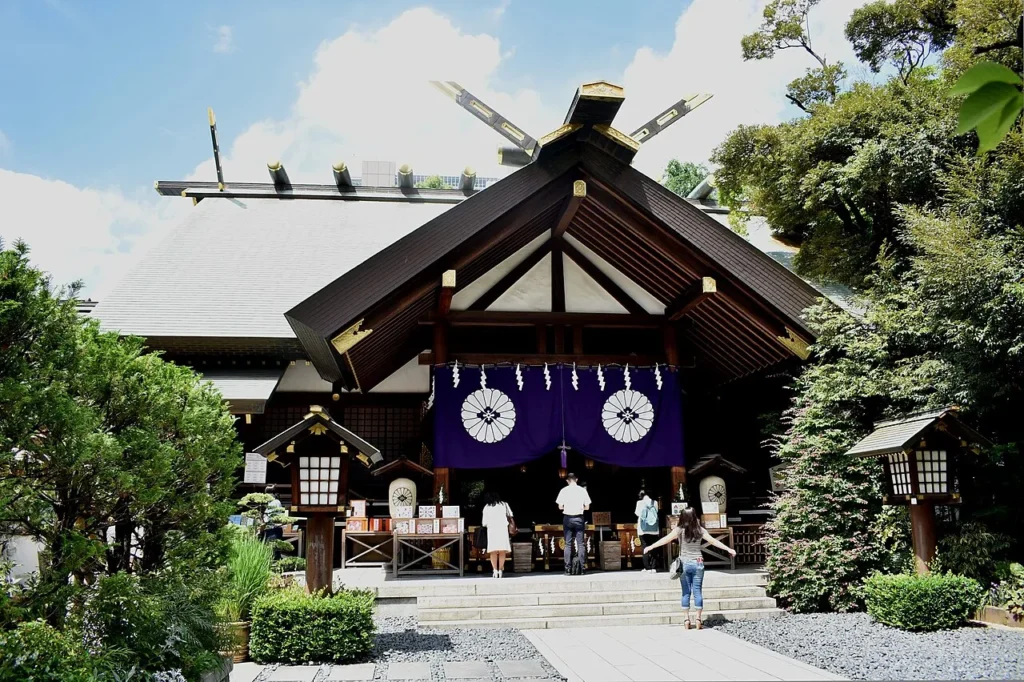
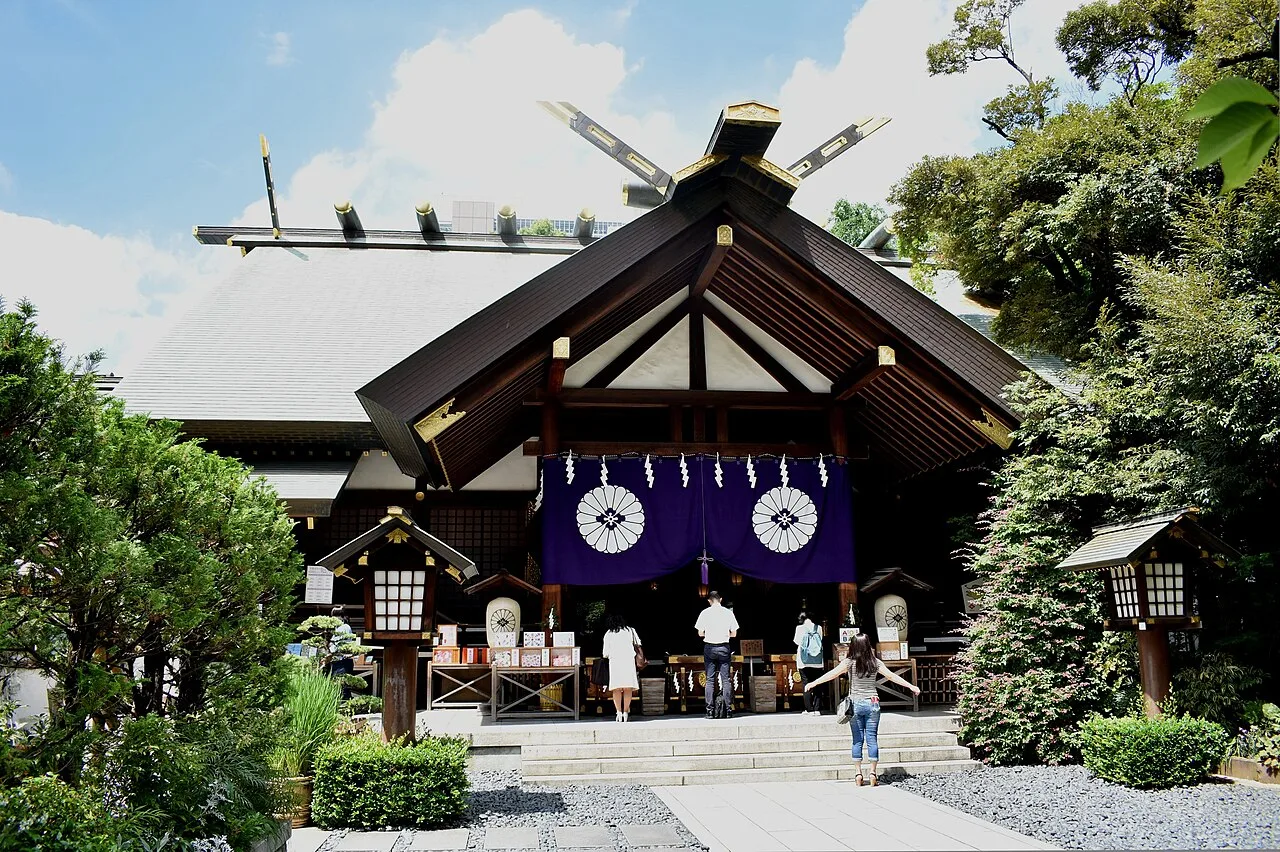
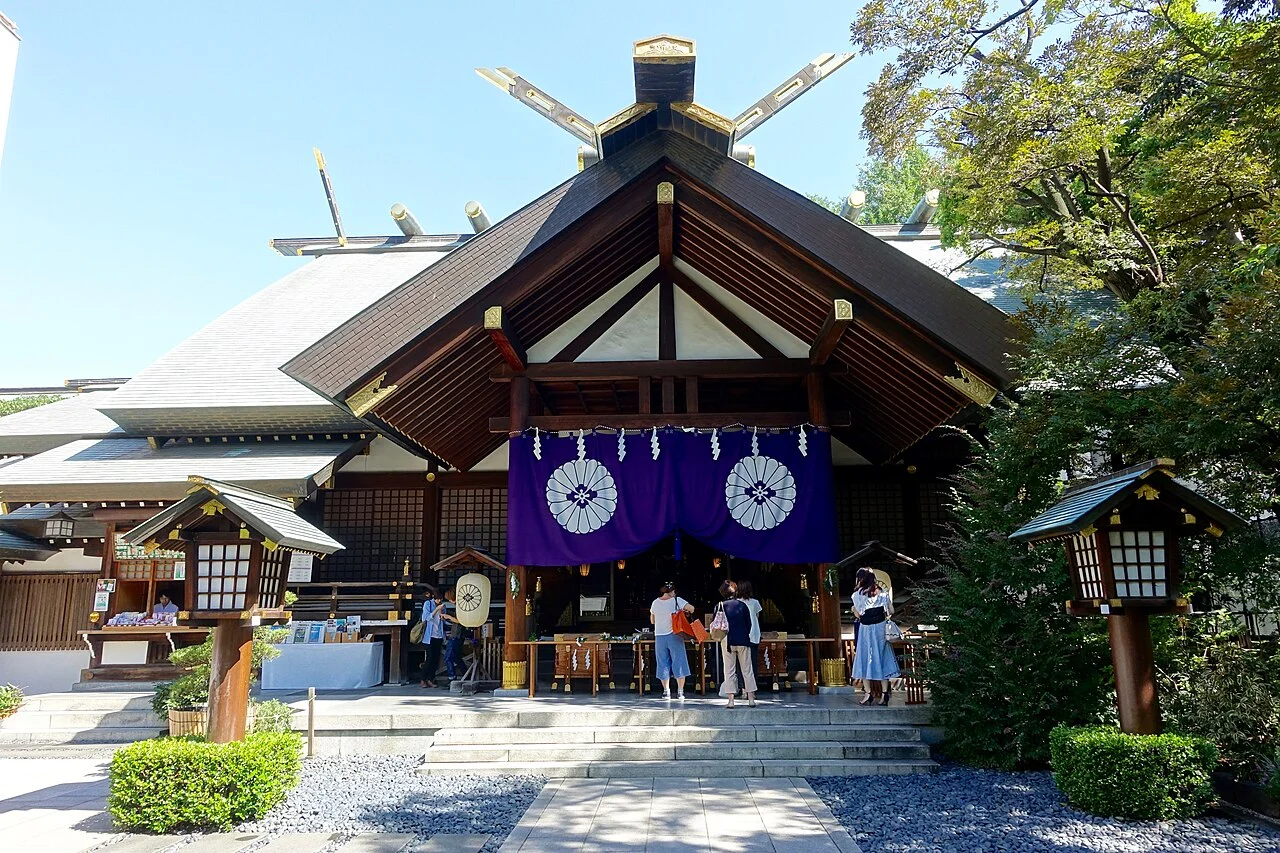
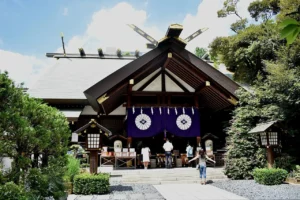
Tokyo Daijingu near Iidabashi Station honours the gods of Ise Jingu, Amaterasu and Toyouke. It was founded in 1880 as a place in Tokyo to pray toward Ise Jingu, and people call it the Ise of Tokyo. It is about 5 minutes on foot from Iidabashi Station. Check the shrine’s official site for hours before you go.
FAQ
Who is Amaterasu?
Amaterasu-Omikami is the sun kami, the ancestral kami of the Imperial family and the patron kami of Japan, according to Jinja Honcho. She is enshrined at Ise Jingu.
Why did Amaterasu hide in the cave?
In the myth she hides after her brother Susano’o damages her rice fields and sacred hall and a death happens in her weaving hall.
How did the kami bring her out?
They held a celebration outside the cave with a mirror, jewels, a sakaki tree and a dance. Amaterasu looked out, and a kami pulled her from the cave.
Is this story true history?
It is a myth, a traditional sacred story. Jinja Honcho presents it as one of the Japanese myths of Shinto.
Where can I visit a shrine for Amaterasu in Tokyo?
Tokyo Daijingu near Iidabashi honours Amaterasu. It was founded in 1880 as Tokyo’s place to pray toward Ise Jingu.
Keep reading

Sources
The story is retold from the Jinja Honcho pages below. The facts about Tokyo Daijingu come from the shrine’s official pages listed on our own guide, not from a visit. Last checked: November 2026 (on November 15, 2026). Please check the shrine before you go.
Also nearby: Shinto purification: Izanagi and the temizuya
Comments
[…] Also nearby: The Amaterasu cave myth […]
[…] Also nearby: The Amaterasu cave myth […]
[…] Also nearby: The Amaterasu cave myth […]
[…] Also nearby: The Amaterasu cave myth […]