Researched guide · Last checked: Nov 15, 2026
Otori Shrine (Washi Jinja, also called Otori-sama) is a small shrine in Senzoku, Taito City, a short walk north of Asakusa. It is best known for the Tori-no-Ichi, a lucky-charm fair held on the Days of the Rooster in November. In 2026 the shrine lists two fair days, November 7 and November 19, and the fair runs for the full 24 hours of each day. The first day has passed, so the second is the one still ahead.
Quick answer
A Shinto shrine famous for the November Tori-no-Ichi fair.
Admission: The official site does not list an entry fee.
Quick facts
| What it is | A Shinto shrine famous for the November Tori-no-Ichi fair |
| 2026 fair days | First Rooster: Saturday, November 7. Second Rooster: Thursday, November 19 (the shrine says there is no third Rooster this year) |
| Fair hours | Midnight to midnight (24 hours). The fair opens with the first drum at 0:00 |
| Enshrined | Ame-no-Hiwashi-no-Mikoto and Yamato Takeru-no-Mikoto |
| Admission | The official site does not list an entry fee |
| Address | 3-chome Senzoku, Taito City, Tokyo |
| Nearest station | Iriya Station (Hibiya Line), about 7 minutes on foot |
| Last checked | November 2026 |
What the Tori-no-Ichi is
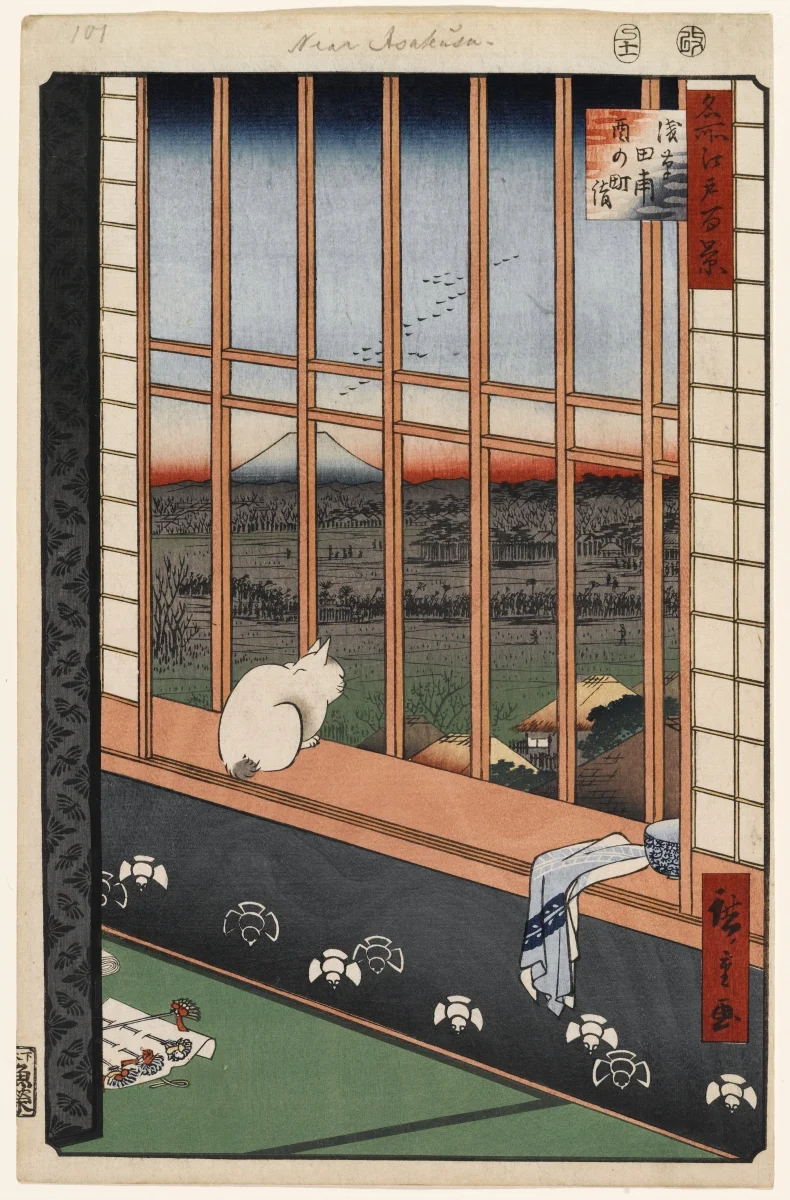
- The date: the fair is the shrine’s main yearly festival. It is held on the Day of the Rooster in November. When there are two Rooster days in a month, the second is called Ni-no-Tori; with three, the last is San-no-Tori.
- The start: the festival begins with the First Drum struck at midnight, and the shrine says the festival then runs all day.
- The goods: the shrine’s own history page says people pray at the festival for a good year ahead, with luck, happiness and success in business. The shrine sells kumade (decorated rake) charms and posts a map of the kumade stalls in its grounds.
- Prayers at the hall: you can have a prayer said in the main hall on the day. The shrine starts the fee at 5,000 yen, takes a family or group of up to 5 people, and also accepts advance bookings.
- The “first luck” prize: the shrine says that whoever first buys its kumade charm after the First Drum can get a First Luck ticket and swap it for a 24-karat gold koban charm. It does not say where the charm is sold.
History
- The gods: the shrine says Ame-no-Hiwashi-no-Mikoto is a god of opening land, good luck and business. Yamato Takeru was added after the legend below.
- The legend: on a campaign to the east, Yamato Takeru stopped at the shrine to pray for victory. On the way home he hung his weapon, a rake (kumade), on a pine tree in front of the shrine and gave thanks. The shrine says that day was a Day of the Rooster in November, so it was set as the festival day.
- Edo period: the shrine cites a record saying the festival was already busy in the 1750s and 1760s. Edo-period people called the shrine Otori, and it is still Otori-sama today.
- Writers and the festival: the shrine lists works that mention the fair, including Higuchi Ichiyo’s novel Takekurabe.
In the grounds
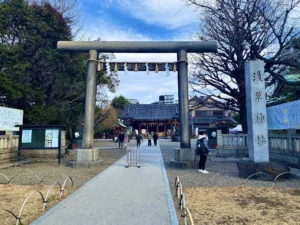
- Main hall: the shrine’s hall stands behind a Myojin-style torii gate.
- Haiku monuments: one carries a verse by the poet Kikaku, and another a verse by Masaoka Shiki, set up in February 2000.
- Higuchi Ichiyo monuments: a stone with an unpublished letter from the novelist, and a literature monument.
- Water basin: the temizuya was rebuilt in November 1999.
Tips
- The 2026 fair ends with the second Rooster. The shrine says there is no third day this year. The 2027 dates are not yet on the official site, so check its “This year’s Tori-no-Ichi” page.
- The shrine lists nearby parking for fair days and a layout of the kumade stalls. Both are in Japanese.
- The shrine says its Shitamachi Hachifukujin pilgrimage has been paused since 2024.
- The page lists two dates for the second-day ceremony in 2026 (a Thursday and a Wednesday for November 19). November 19, 2026 is a Thursday, so check the shrine’s page before planning a time.
Getting there
- Hibiya Line, Iriya Station: about 7 minutes on foot from the north side, exit 3.
- Tsukuba Express, Asakusa Station: about 8 minutes on foot.
- Ginza Line, Tawaramachi Station: about 15 minutes on foot.
- JR Uguisudani Station, south exit: about 20 minutes on foot.
- Bus: from JR Nippori Station east exit, take a Toei bus bound for Kinshicho Station and get off at Senzoku. It is about 2 minutes on foot. The Taito City loop bus Minami-Meguri also runs here.
Otori Shrine is a short way from Senso-ji and Asakusa Shrine. Read our Asakusa guide, our guide to Tokyo in November and the Tori-no-Ichi second-day event page.
FAQ
When is the Tori-no-Ichi in 2026?
The shrine lists Saturday, November 7 and Thursday, November 19. The festival runs 24 hours on each day.
Is there a third Rooster day in 2026?
No. The shrine says the 2026 festival ends with the second Rooster.
What is a kumade?
A decorated rake sold as a lucky charm at the fair. The shrine ties it to the legend of Yamato Takeru hanging his rake on a pine.
Can I pray in the main hall?
Yes. The shrine starts the prayer fee at 5,000 yen, takes up to 5 people per family or group and accepts advance bookings.
How do I get there from Asakusa?
Walk about 8 minutes from Asakusa Station on the Tsukuba Express. Iriya Station on the Hibiya Line is about 7 minutes on foot.
Sources
Facts come from the official Otori Shrine website (in Japanese), last checked on November 15, 2026. They are based on official sources, not our own visit. Last checked: November 2026 (on November 15, 2026).
Also nearby: Shinto purification: Izanagi and the temizuya