Researched guide · Last checked: Nov 11, 2026
Tsurugaoka Hachimangu is the great shrine at the heart of Kamakura, dedicated to Hachiman, the guardian deity of Kamakura and of the samurai. The shrine explains that Minamoto no Yoriyoshi first enshrined Hachiman by the beach at Yuigahama, and that in 1180 Minamoto no Yoritomo, founder of the Kamakura shogunate, moved it to its present site. It has been the cultural center of Kamakura for more than 800 years. This page covers what to see, festivals, hours and access. For a full day in the city, see our Kamakura day trip guide.
Quick answer
Hours: Open 6:00 to 20:00 all year.
Admission: Free to visit the grounds. The Treasure Hall and Kamakura Bunkakan Tsurugaoka Museum have their own fees and hours.
Getting there: Kamakura Station (JR Yokosuka Line, JR Shonan-Shinjuku Line, East Exit; Enoden), 10 minutes on foot.
Quick facts
| Gates | Open 6:00 to 20:00 all year |
| Admission | Free to visit the grounds. The Treasure Hall and Kamakura Bunkakan Tsurugaoka Museum have their own fees and hours |
| Treasure Hall | 9:00 to 16:00 (may close when exhibits change) |
| Main festival | September 14 to 16, with yabusame (horseback archery) as part of the festival |
| Nearest station | Kamakura Station (JR Yokosuka Line, JR Shonan-Shinjuku Line, East Exit; Enoden), 10 minutes on foot |
| Last checked | November 2026 |
What to see
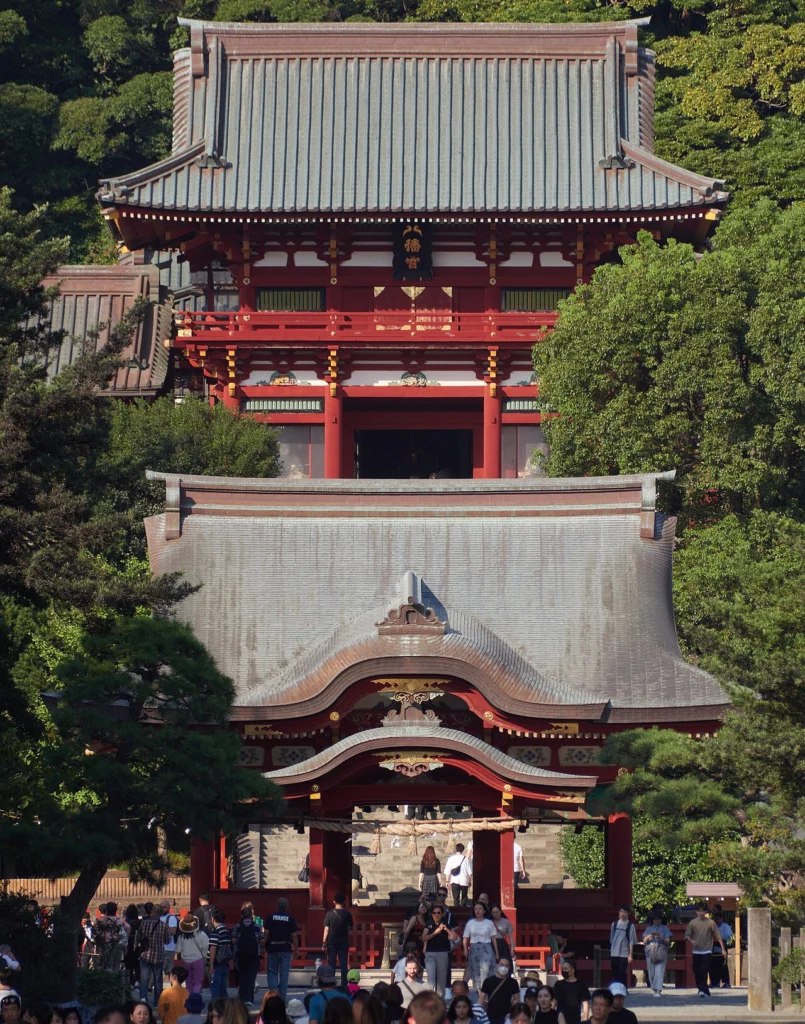
- Hongu (Upper Shrine): the main shrine at the top of the great stone steps, an Important Cultural Property of Japan.
- The great stone steps: one of the symbols of the shrine. From the top you look down over Kamakura, and on clear days the shrine says you can see the Pacific Ocean and Izu Oshima island.
- The “parent” and “child” ginkgo: the shrine’s sacred ginkgo tree fell in strong wind on March 10, 2010. Today a young tree grows from its roots next to the replanted trunk.
- Maiden (Dance Stage): built where, by legend, Shizuka Gozen danced for her lover Minamoto no Yoshitsune. Weddings are held here throughout the year.
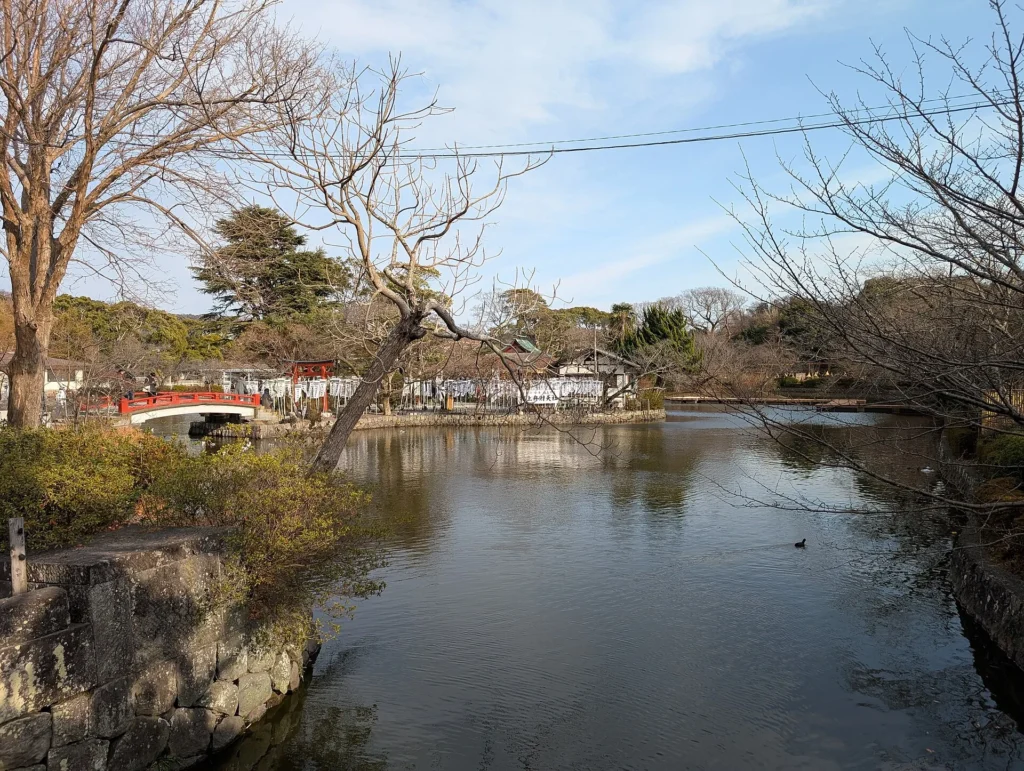
- Genji Pond and Hataage Benzaiten: a small shrine to Benzaiten on an island in the pond, rebuilt in 1980 from an old plan.
- Shirahata Shrine: a black-lacquered shrine to Yoritomo and Sanetomo, visited for luck in winning and in study.
- Peony garden: the shrine’s garden of peonies.
History
The shrine began when Minamoto no Yoriyoshi brought Hachiman from Iwashimizu Hachimangu in Kyoto and enshrined him by the sea at Yuigahama. In 1180, Minamoto no Yoritomo set up his government in Kamakura and moved the shrine to its present site. He held ceremonies here such as yabusame, sumo and court dance, which are still carried on today. Wakamiya-oji, the straight avenue of about 2 km from Yuigahama beach to the shrine, is said to have been built under Yoritomo’s own direction.
Festivals
- Reitaisai (main festival): September 14 to 16, the shrine’s most important festival, with yabusame, horseback archery in Kamakura-period hunting dress.
- Bonbori Festival: for three days in August, from the day before Risshu (the start of autumn in the old calendar) to August 9 (four days in some years).
- Spring yabusame: a yabusame ceremony is also held in late April.
- New Year: many visitors come for hatsumode, the first shrine visit of the year.
Check the shrine’s official site for this year’s dates and times. For how to pray, see our shrine and temple etiquette guide.
Getting there
- Kamakura Station (JR Yokosuka Line, JR Shonan-Shinjuku Line): 10 minutes on foot from the East Exit.
- Kamakura Station (Enoshima Electric Railway): 10 minutes on foot.
- Parking is limited, so use public transport.
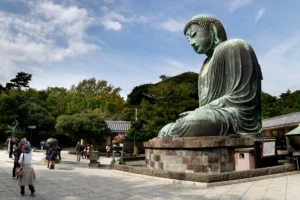
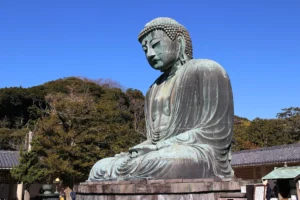
From the station, walk up Komachi-dori or along Wakamiya-oji to the shrine. Then continue to the Great Buddha and Hase-dera. See our Komachi-dori guide.
Also nearby: Kamakura Area Guide: Kita-Kamakura, Central Kamakura and Hase Explained
FAQ
Is Tsurugaoka Hachimangu free?
Yes, the grounds are free to visit. The Treasure Hall and the museum have their own fees.
What are the opening hours?
The gates are open from 6:00 to 20:00 all year.
When is yabusame at Tsurugaoka Hachimangu?
During the main festival from September 14 to 16, and at a spring ceremony in late April. Check the official site for exact dates.
Who founded Tsurugaoka Hachimangu?
Minamoto no Yoriyoshi first enshrined Hachiman at Yuigahama, and Minamoto no Yoritomo moved the shrine to its present site in 1180.
How do I get to Tsurugaoka Hachimangu?
Walk 10 minutes from the East Exit of JR Kamakura Station.
Where to stay: see our best hotels in Kamakura, including hotels a short walk from Kamakura Station.
Keep reading
Also nearby: Kamakura-gu Shrine.
Sources
This page is based on the shrine’s official site, not on our own visit. Last checked: November 2026 (on November 11, 2026). Festival dates and hours can change, so please check before you go.