Researched guide · Last checked: Nov 14, 2026
Ekoin (Eko-in) is a Jodo-sect Buddhist temple in Ryogoku, Sumida City. It was founded in 1657, after the Great Fire of Meireki killed more than 100,000 people in Edo. The shogun gave this land to bury the many victims nobody could name. The temple prays for all living things, people and animals alike. From 1833 to 1909 it was the regular home of sumo tournaments.
Quick facts
| What it is | A Buddhist temple (Jodo sect) founded in 1657 |
| Known for | Its sumo history, the Chikarazuka monument and the grave of Nezumi Kozo |
| Hours | Gate hours are not listed on the official website; check before you go |
| Admission | No entry fee is listed on the official website |
| Address | 2-8-10 Ryogoku, Sumida City |
| Nearest station | Ryogoku Station (JR Sobu Line), West Exit, about 3 minutes on foot |
| Last checked | November 2026 |
What to see
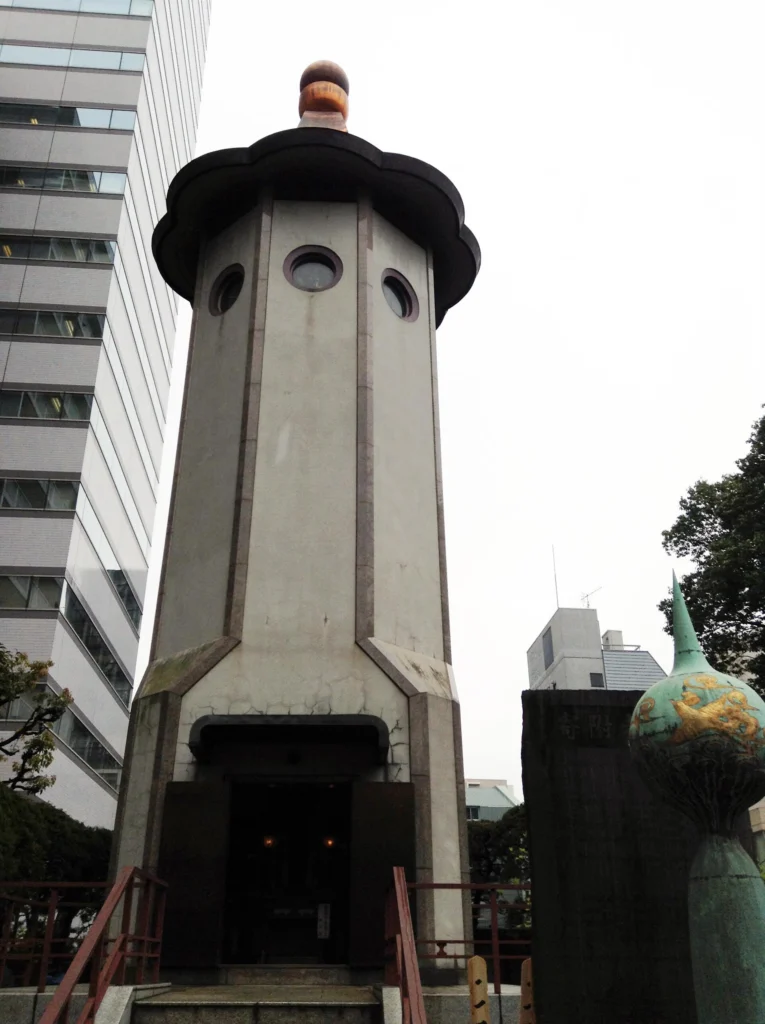
- Chikarazuka (Strength Mound): a stone monument built by the Sumo Association in 1936 to honor sumo elders. The temple says new wrestlers still pray here for strength.
- Grave of Nezumi Kozo: the grave of a famous Edo-period thief. Because he was not caught for many years, people have long taken a little of his gravestone as a lucky charm. Today many students visit to pray for passing exams.
- Amida Buddha: the temple’s main image, a large bronze seated Buddha made in 1705. It once sat outdoors and is a Tokyo-designated cultural property.
- Mizuko-zuka: a stone memorial from 1793 for babies who died before birth. The temple says it is the origin of mizuko memorial services in Japan.
- Bato Kannon: a Kannon (Buddhist deity of mercy) with a horse head. Its hall was first built after the shogun’s horse was buried here. Today it is No. 4 on the Showa-era Edo 33 Kannon pilgrimage.
- Shio Jizo (Salt Jizo): an old stone Jizo statue. People offered salt to it when their wishes came true.
Sumo at Ekoin
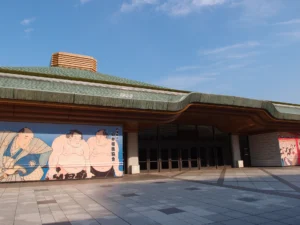
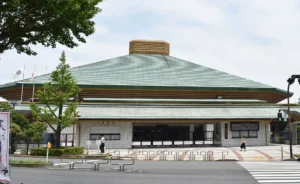
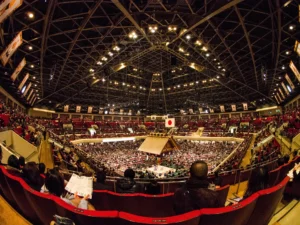
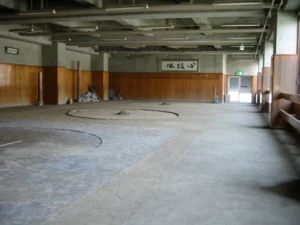
Sumo in the Edo period was often held to raise money for public works. The first such sumo event at Ekoin was in 1768. From 1833, the temple held tournaments twice a year, in spring and autumn. This “Ekoin sumo” period lasted 76 years, until the first Ryogoku Kokugikan arena opened in 1909. Today’s Ryogoku Kokugikan is a short walk away.
Tips
- This is an active temple with graves. Keep your voice low and be respectful around graves and memorials.
- The evening service at 16:00 is held every day and anyone can join.
- The temple also holds memorial services for pets and other animals.
Getting there
- Ryogoku Station (JR Sobu Line): West Exit, about 3 minutes on foot.
- Ryogoku Station (Toei Oedo Line): about 10 minutes on foot.
Plan the rest of your day with our Ryogoku guide, or see sumo in Tokyo for tournament dates and tickets. Before you visit, read our shrine and temple etiquette guide.
FAQ
Why is Ekoin linked to sumo?
Sumo events were held at Ekoin from 1768. From 1833 to 1909 the temple was the regular sumo venue, held twice a year.
Where is Nezumi Kozo’s grave?
It is at Ekoin Temple in Ryogoku. Many students visit it to pray for passing exams.
Is there an entry fee?
The temple’s official website does not list an entry fee.
Can visitors join a service?
Yes. The temple says anyone can join the daily evening service at 16:00.
What is the nearest station?
Ryogoku Station on the JR Sobu Line. From the West Exit it is about 3 minutes on foot.
Keep reading
Sources
Facts come from Ekoin Temple’s official website (Last checked: November 14, 2026). This page is based on official sources, not our own visit. Last checked: November 2026 (on November 14, 2026).