Researched guide · Last checked: Nov 14, 2026
Tokyo’s best street shopping is not in malls. It is in shotengai (local shopping streets), market lanes and yokocho (narrow alleys of tiny bars and eateries). This page compares 15 of them, so you can pick by mood: old-town snacks, fashion, food or a drink in a six-seat bar. Each one links to our full guide with hours, access and official sources.
Quick answer
For a first visit: Ameyoko (Ueno) and Nakamise-dori (Asakusa) are big, busy and easy to reach.
For old-Tokyo local life: Yanaka Ginza, Togoshi Ginza, Sugamo Jizo-dori, Jujo Ginza and Sunamachi Ginza.
For fashion: Takeshita Street and Cat Street in Harajuku, and Shibuya Center Gai.
For evening drinks: Harmonica Yokocho (Kichijoji), Nonbei Yokocho (Shibuya), and Golden Gai and Omoide Yokocho (Shinjuku).
All of them are free to walk. Each shop sets its own hours, so check the shop you want before you go.
At a glance
| Street | Area | Good for | Nearest station |
|---|---|---|---|
| Ameyoko | Ueno | Market stalls, snacks, bargains | JR Ueno / Okachimachi |
| Nakamise-dori | Asakusa | Souvenirs, traditional snacks | Asakusa |
| Yanaka Ginza | Yanaka | Old-town street food | Nippori / Sendagi |
| Togoshi Ginza | Shinagawa | Long local street (1.3 km) | Togoshi-Ginza |
| Sugamo Jizo-dori | Sugamo | Old-style shops, temple | JR / Toei Sugamo |
| Jujo Ginza | Kita City | Covered arcade, cheap deli food | JR Jujo |
| Sunamachi Ginza | Koto City | Oden, yakitori, ¥100 snacks | Nishi-Ojima |
| Tsukishima Monja Street | Tsukishima | Monjayaki restaurants | Tsukishima |
| Takeshita Street | Harajuku | Crêpes, youth fashion | JR Harajuku |
| Cat Street | Harajuku–Shibuya | Boutiques, vintage | Meiji-jingumae / Shibuya |
| Shibuya Center Gai | Shibuya | Shops, food, nightlife | Shibuya |
| Daiba Itchome Shotengai | Odaiba | Indoor retro Showa street | Odaiba-kaihinkoen |
| Harmonica Yokocho | Kichijoji | Tiny bars, morning market | JR Kichijoji |
| Nonbei Yokocho | Shibuya | About 40 tiny bars | Shibuya |
| Golden Gai and Omoide Yokocho | Shinjuku | Bars and yakitori counters | Shinjuku |
Busy classics for a first visit
If you have only one afternoon, start here. Both streets are next to major sights and stations.
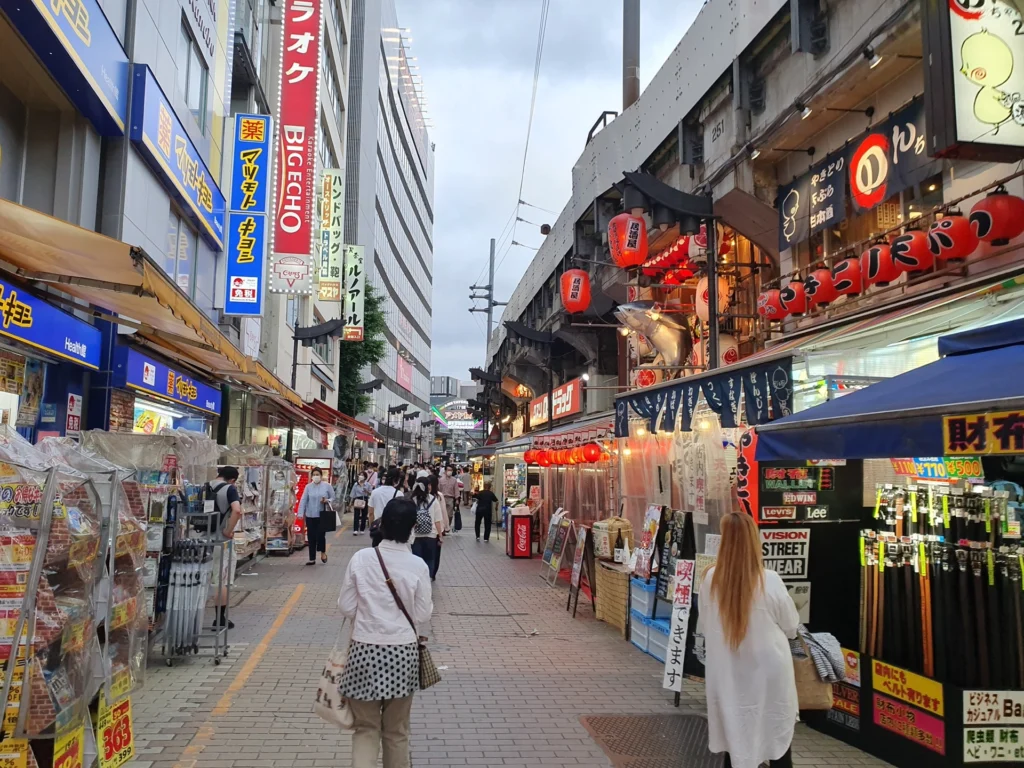
Ameyoko (Ueno)
- A market street between JR Ueno Station (Shinobazu Exit) and JR Okachimachi Station (North Exit).
- Free to walk. Each shop sets its own hours.
- Extremely busy at the end of December, when people shop for New Year food.
Pair it with Ueno Park and the museums. See our Ueno and Akihabara guide.
Nakamise-dori (Asakusa)
- About 250 m from Kaminarimon to Hozomon gate, on the approach to Senso-ji, with about 87 shops (shopping street association).
- Free. It is the approach to the temple.
- About 5 minutes on foot from Asakusa Station.
Combine it with Senso-ji and the rest of Asakusa.
Old-Tokyo shotengai: local life and street snacks
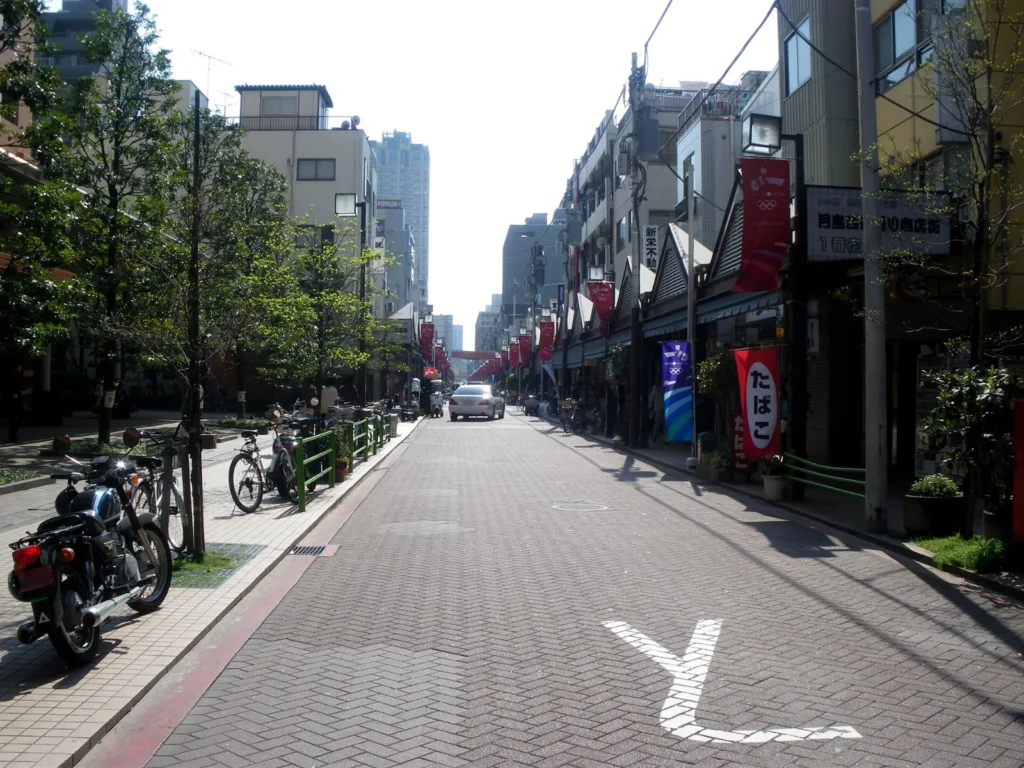
These streets serve local residents first. Come for small family shops, deli food and a slower pace. Many shops close one day a week and some take cash only, so carry some yen.
Yanaka Ginza
- About 170 m with about 60 shops, between Nippori and Sendagi stations (each about 5 minutes on foot).
- No parking. Use public transport.
Walk it with the temples of Yanaka and the Yanaka Cemetery.
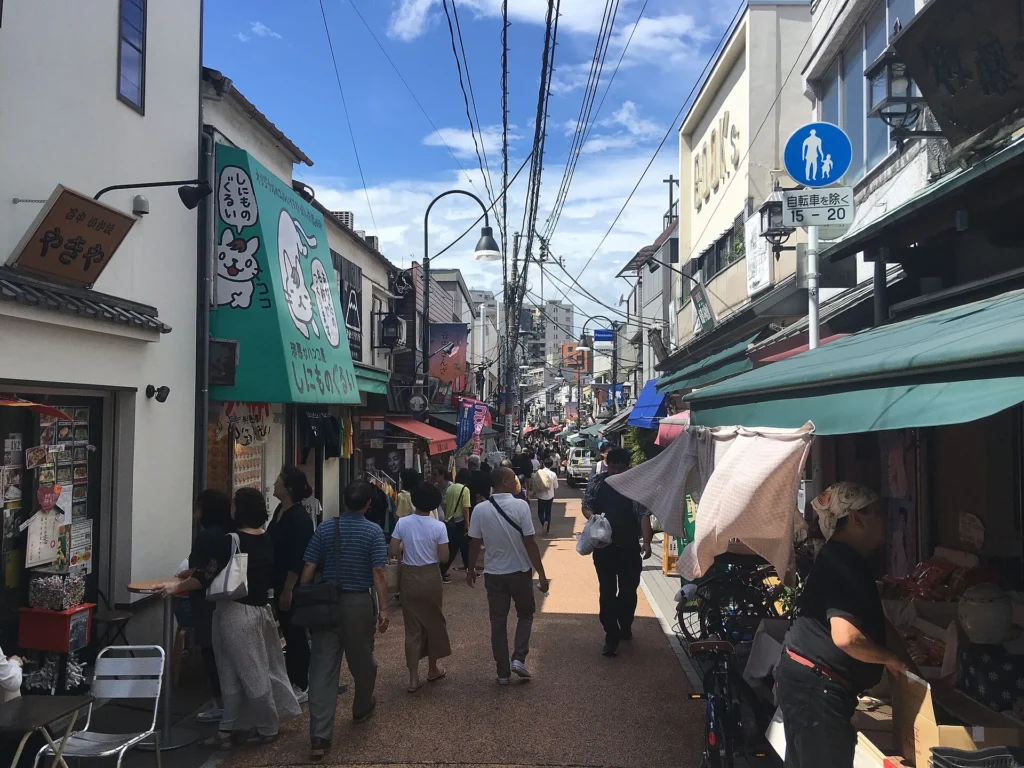
Togoshi Ginza
- About 1.3 km with more than 300 shops in Shinagawa City.
- Togoshi-Ginza Station (Tokyu Ikegami Line) is next to the street; Togoshi Station (Toei Asakusa Line) is also nearby.
Its official site calls it one of the longest shopping streets in the Kanto region, so walk one way and take the train back.
Sugamo Jizo-dori
- An old-style street running from near JR Sugamo Station toward Koshinzuka, centered on Koganji Temple (Togenuki Jizo).
- About 5 minutes from JR Sugamo Station; about 2 minutes from Toei Mita Line Sugamo Station Exit A3.
More in our Sugamo guide.
Jujo Ginza
- A covered shopping arcade with about 180 shops, stalls and restaurants, about 30 seconds from JR Jujo Station (North Exit).
- Shops open about 9:30–18:00, depending on the shop.
A good rainy-day choice because the street has a roof.
Sunamachi Ginza
- About 670 m of family-run food shops in Koto City: oden, yakitori and snacks that mostly cost around ¥100.
- Shops open about 10:00–19:00, depending on the shop. Bring cash.
- Nishi-Ojima Station (Toei Shinjuku Line) is the nearest, but it is some distance on foot.
Come hungry and graze from shop to shop.
Tsukishima Monja Street
- Nishinaka-dori in Tsukishima, with about 50 member shops of the Tsukishima Monja Promotion Association.
- Right outside Tsukishima Station exit 7. Member shops can be booked on the association’s website.
This is the place to try monjayaki, a runny griddle dish cooked at your table.
Fashion and pop culture streets
Takeshita Street (Harajuku)
- About 350 m, starting across the road from JR Harajuku Station (Takeshita Exit).
- Pedestrians only from 11:00 to 18:00. It gets very crowded on weekends.
Famous for crêpes and youth fashion. See our Harajuku and Omotesando guide.
Cat Street (Harajuku to Shibuya)
- A quieter walking street of boutiques, vintage shops, brand stores and cafés between Harajuku and Shibuya.
- Start at Meiji-jingumae (Harajuku) Station and end at Shibuya Station, or the other way round.
Continue to Omotesando for big-name brands.
Shibuya Center Gai
- The busy shopping and nightlife street across the Scramble Crossing from Shibuya Station (Hachiko Exit).
- The shopping street association counts about 50,000–60,000 people entering on weekdays and 70,000–80,000 on holidays.
More in our Shibuya guide.
Daiba Itchome Shotengai (Odaiba)
- An indoor street on the 4th floor of DECKS Tokyo Beach that recreates a 1950s–60s (Showa 30s) old-town shopping street.
- Free to walk in; shops and attractions are paid. DECKS shops open weekdays 11:00–20:00, weekends and holidays 11:00–21:00.
Fun with kids or on a rainy day. See our Odaiba guide.
Yokocho: tiny bars and eateries for the evening
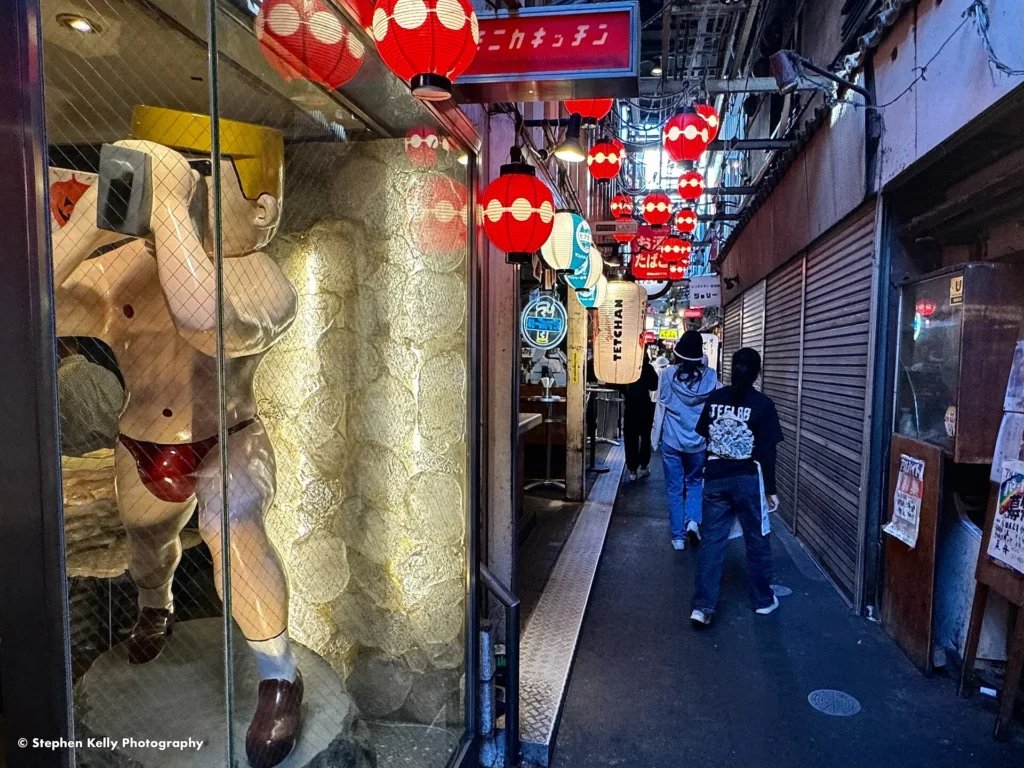
Yokocho alleys are packed with very small bars and counters, often with fewer than ten seats. Each place sets its own prices, and some charge a seating fee, so check the price list before you sit down. Groups of two or three fit best.
Harmonica Yokocho (Kichijoji)
- A maze of covered lanes on the north side of JR Kichijoji Station (North Exit, about 1 minute).
- Daytime shops by day, bars and eateries from sunset. A morning market runs on the second Sunday of each month, 8:00–11:00.
Make a day of it with Kichijoji and Inokashira Park.
Nonbei Yokocho (Shibuya)
- Roughly 40 small bars and eateries right next to Shibuya Station, many with only a few seats.
- Drinking on the street is banned in designated areas around Shibuya Station from 18:00 to 5:00.
A short walk from the Scramble Crossing.
Golden Gai and Omoide Yokocho (Shinjuku)
- Golden Gai: about 300 small bars on the East Exit side of Shinjuku Station (GO TOKYO).
- Omoide Yokocho: about 60 eateries, mostly yakitori and motsuyaki (grilled offal), by the West Exit (official site).
See also our Kabukicho guide and Shinjuku guide.
Tips for shopping streets
- Hours: no street has one opening time. Each shop sets its own hours and days off, so check the shop you want to visit.
- Cash: many small shops on local streets, such as Sunamachi Ginza, take cash only. See money in Tokyo.
- Snacks: on busy streets, eat by the shop if it has a place to stand or sit, instead of walking through the crowd with food.
- Rubbish: there are few public bins. Keep a bag for your trash. See trash in Tokyo.
- Souvenirs: for what to buy, see Tokyo souvenirs and shopping.
Shopping streets on day trips and in Shibuya: MIYASHITA PARK and Shibuya Yokocho, Komachi-dori in Kamakura, Motomachi in Yokohama, Kashiya Yokocho in Kawagoe.
Also see: Nakano Broadway: Floor Guide to Tokyo’s Manga, Figure and Watch Mall · Tsukiji Outer Market: How to Eat Your Way Through It (Hours, Manners, Tips)
FAQ
What is a shotengai?
A shotengai is a local shopping street, often with an arch at the entrance and small family-run shops such as delis, greengrocers and sweet shops. Examples in Tokyo are Togoshi Ginza, Yanaka Ginza and Jujo Ginza.
What is the most famous shopping street in Tokyo?
For visitors, Ameyoko in Ueno, Nakamise-dori in Asakusa and Takeshita Street in Harajuku are the best known. All three are next to major stations.
What is the longest shopping street in Tokyo?
Togoshi Ginza in Shinagawa is about 1.3 km long with more than 300 shops. Its official site calls it one of the longest shopping streets in the Kanto region.
Which shopping street is covered from rain?
Jujo Ginza is a covered arcade, and Daiba Itchome Shotengai is indoors on the 4th floor of DECKS Tokyo Beach.
What is a yokocho?
A yokocho is a narrow alley of small bars and eateries. Harmonica Yokocho in Kichijoji, Nonbei Yokocho in Shibuya and Omoide Yokocho in Shinjuku are well-known examples.
Do shopping streets cost anything?
No. All the streets on this page are free to walk. You only pay for what you buy, and some small bars charge a seating fee.
For a big discount store, see our Don Quijote in Tokyo guide.
Keep reading

Sources
The facts on this page come from our guides to each street, which were checked against the official sources below (shopping street associations, operators, city offices and GO TOKYO, Tokyo’s official travel guide). This page is not based on our own visit to every street. Last checked: November 2026 (on November 14, 2026). Shops and hours change, so please check before you go.
- Ameyoko Shopping Street (official, Japanese)
- Asakusa Nakamise: About Nakamise (official, Japanese)
- Yanaka Ginza Shopping Street (official, Japanese)
- Togoshi Ginza Shotengai: About (official, Japanese)
- Sugamo Jizo-dori Shopping Street (official, Japanese)
- Jujo Ginza Shopping Street (official)
- GO TOKYO: Sunamachi Ginza Shopping District
- Tsukishima Monja Promotion Association (official, Japanese)
- GO TOKYO: Takeshita Street
- GO TOKYO: Harajuku (Cat Street)
- Shibuya Center Shopping Street Association: Center Gai data (official, Japanese)
- Shibuya City: Ban on drinking on the street around Shibuya Station (official, Japanese)
- DECKS Tokyo Beach: Daiba Itchome Shotengai (official, Japanese)
- GO TOKYO: Harmonica Alley
- Shibuya Nonbei Yokocho (official)
- GO TOKYO: Nightlife in Tokyo (Golden Gai)
- Shinjuku Omoide Yokocho (official, English)
- GO TOKYO: A guide to Tokyo’s neighborhood shopping streets