Researched guide · Checked on Oct 19, 2026
Nihonbashi was the commercial heart of Edo, the city that became Tokyo. Its bridge was the starting point of Japan’s five great roads, and distances are still measured from here. Today you will find Japan’s oldest department store, shrines among office towers and old shops that have sold knives, seaweed and gold leaf for generations, all a short walk from Tokyo Station.
Quick answer
Getting there: Nihombashi Station (Tokyo Metro Ginza and Tozai lines, Toei Asakusa Line) or Mitsukoshimae Station. An easy walk from Tokyo Station
Time needed: Half a day
Best time: Daytime, when shops and the shrine are open
Good for: History, department stores, traditional crafts and food gifts
Plan Your Visit to Nihonbashi
Search hotels and things to do in Nihonbashi. You book on the partner site.
Overview
| Getting there | Nihombashi Station (Tokyo Metro Ginza and Tozai lines, Toei Asakusa Line) or Mitsukoshimae Station. An easy walk from Tokyo Station |
| Time needed | Half a day |
| Best time | Daytime, when shops and the shrine are open |
| Good for | History, department stores, traditional crafts and food gifts |
Best Things to Do
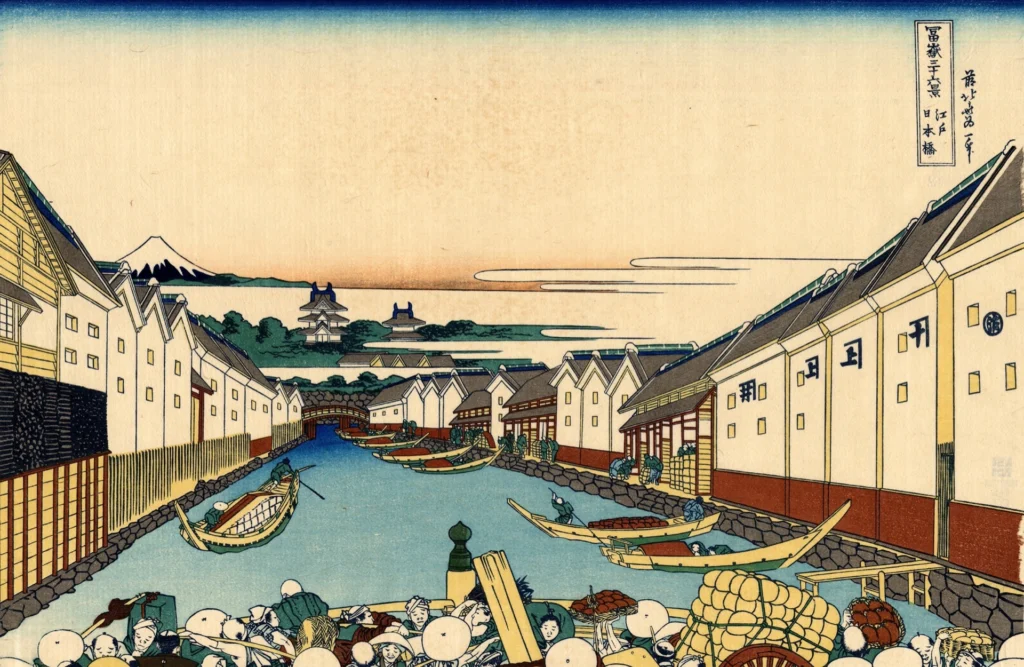
Nihonbashi Bridge
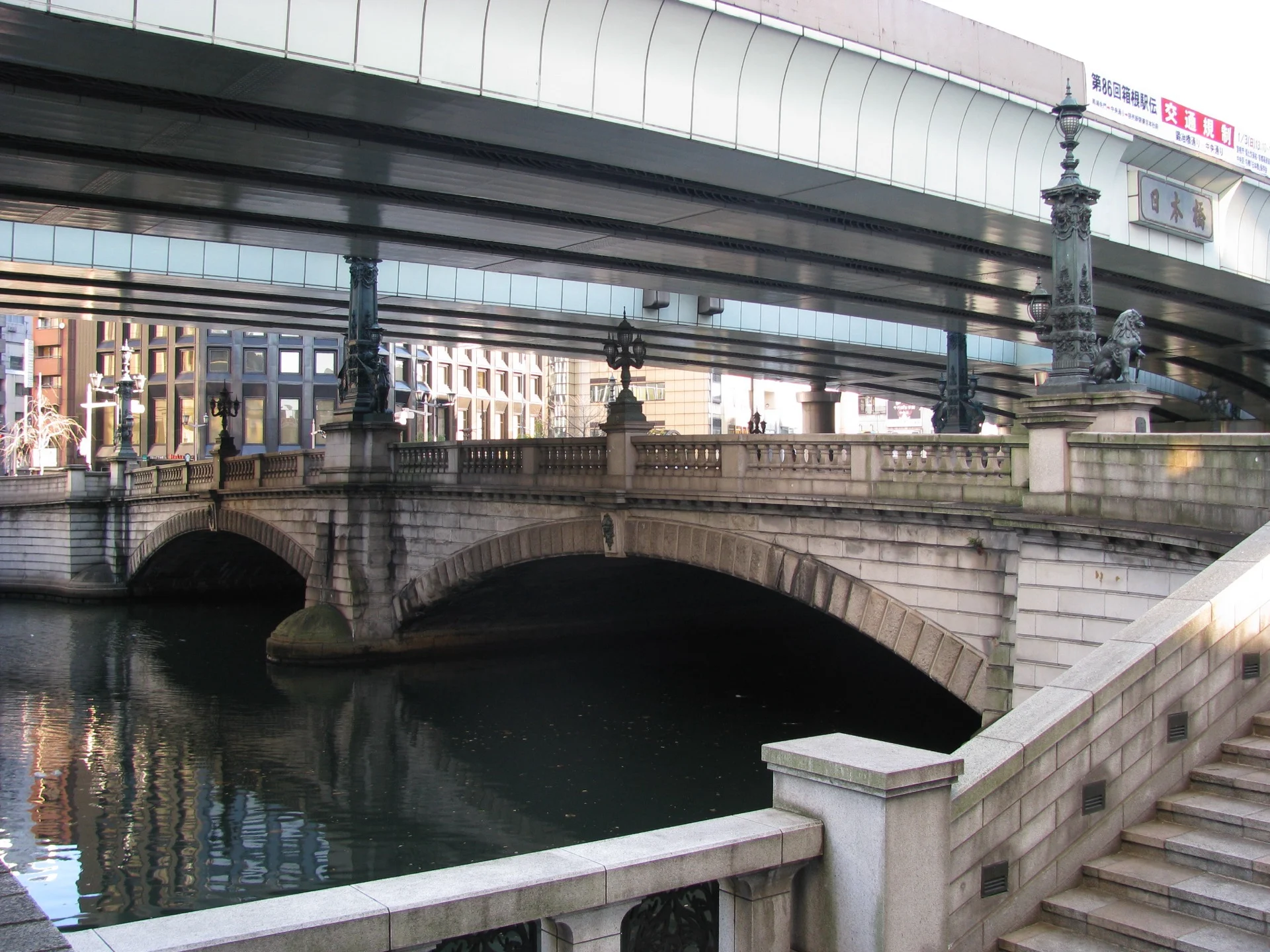
The stone Nihonbashi Bridge carries Chuo-dori over the Nihonbashi River. In the Edo period, it was the starting point of the five major roads across Japan, and it is still Japan’s “kilometer zero”. River cruises start nearby.
Nihombashi Mitsukoshi Main Store
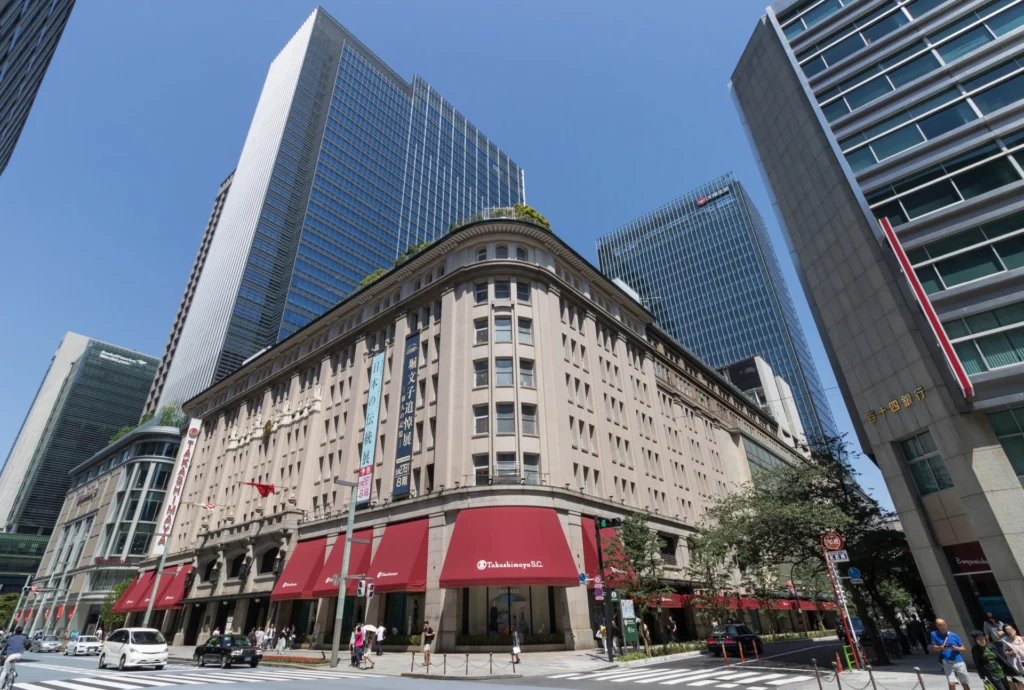
Mitsukoshi began in 1673 as Echigoya, a kimono shop, and became Japan’s first department store in 1904. Its main store is worth a look for its building as well as its shops. Nearby, Nihombashi Takashimaya is another historic department store, in a 1930s building.
Fukutoku Shrine
Also called Mebuki Inari, Fukutoku Shrine dates back to the 9th century. In the Edo period it was one of the few shrines allowed to hold lotteries, and people still visit to pray for luck in the lottery. It is open daily from 10:00 to 17:00, about a minute’s walk from Exit A6 of Mitsukoshimae Station.
Museums
- Mitsui Memorial Museum shows traditional Japanese art.
- The Kite Museum displays kites from all over Japan, including Edo kites.
Food & Drink
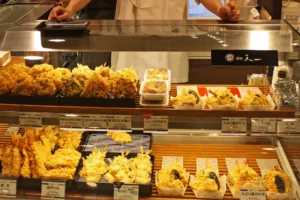
Nihonbashi has been a food district since the Edo period, when the city’s fish market stood by the bridge. Today it is a good place for department store food halls and long-established specialist shops selling seaweed, soy sauce and dried bonito for dashi. Coredo Muromachi has fashionable restaurants, and the backstreets have shops selling traditional sweets.
For a sit-down meal, Ningyocho Imahan serves sukiyaki and shabu-shabu about 2 minutes on foot from Ningyocho Station. It takes reservations only, at least 3 days ahead, through its English website.
See our depachika (department store food hall) guide and Japanese food to try in Tokyo.
Best Restaurants in Nihonbashi
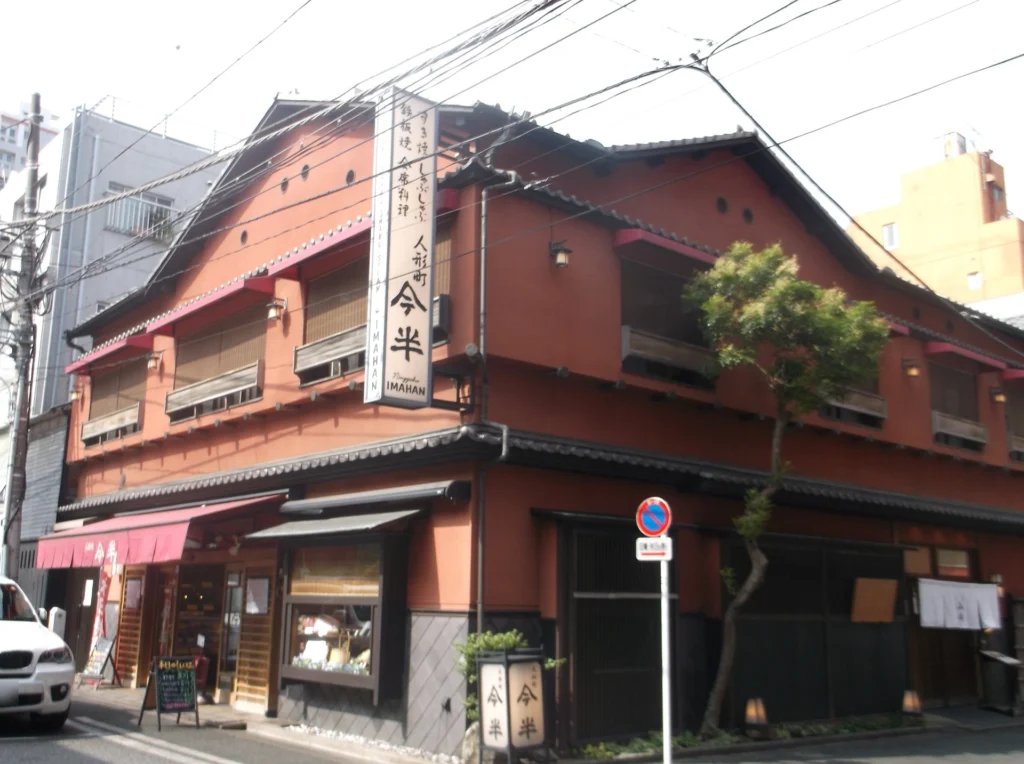
Ningyocho Imahan (Head Restaurant)
Sukiyaki and shabu-shabu at the Nihombashi Ningyocho head restaurant, with an English website and online booking.
- English menu
- Reservations: see details
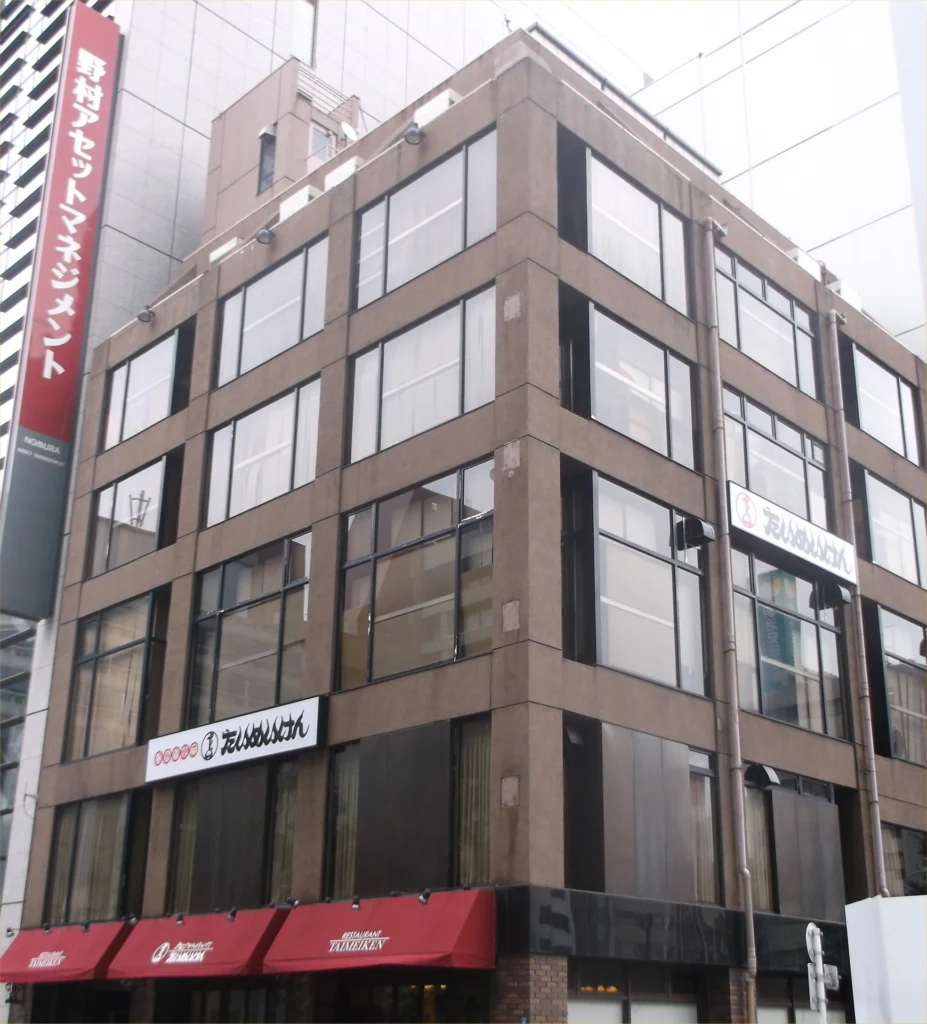
A yoshoku (Japanese-style Western food) restaurant in Nihonbashi since 1931, known for curry and omurice.
- Reservations: see details
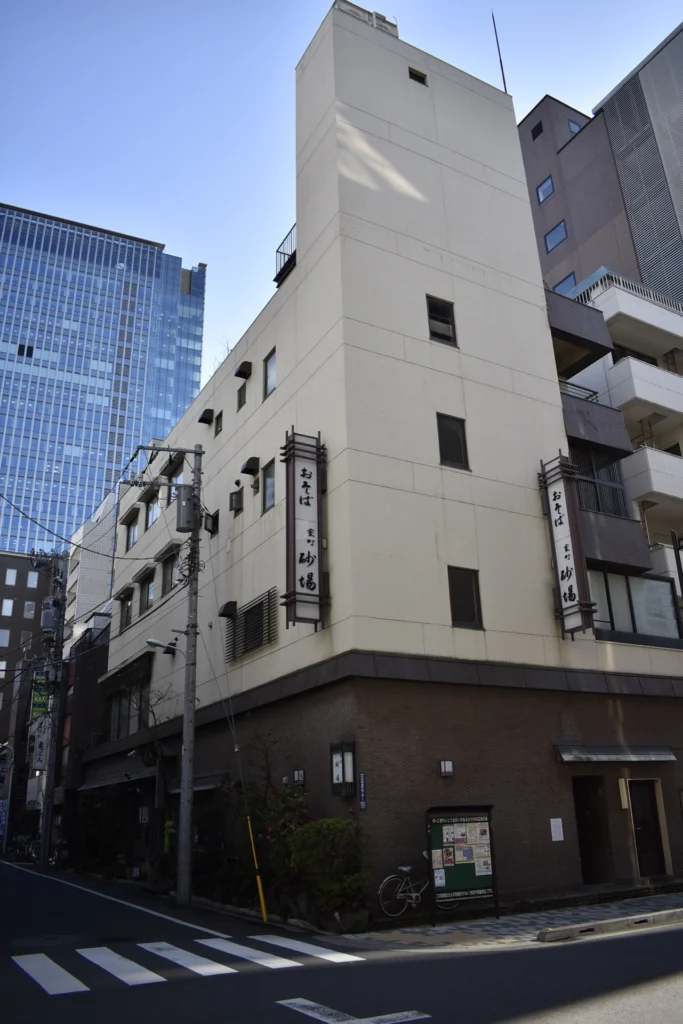
A Nihonbashi soba restaurant founded in 1869 that calls itself the originator of tenzaru.
- Reservations: see details
Shopping
- Department stores: Nihombashi Mitsukoshi and Nihombashi Takashimaya, both with tax-free shopping for visitors.
- Coredo Muromachi: traditional specialist shops and modern crafts. Inside is Nihonbashi Kiya, which started in 1792 and sells kitchen knives, scissors and other cutting tools.
- Backstreet shops: independent shops selling traditional sweets and made-to-order chopsticks.
More ideas in our Tokyo souvenirs and shopping guide and Money in Tokyo (tax-free shopping).
Where to Stay
Nihonbashi is right next to Tokyo Station, so the hotels around Tokyo Station and Ginza are a short walk away. It is a calm, central base with easy trains to the airports and the shinkansen. See Best hotels near Tokyo Station and Ginza.
Getting There
- Subway: Nihombashi Station (Ginza, Tozai and Toei Asakusa lines). Mitsukoshimae (Ginza and Hanzomon lines), Kayabacho (Tozai), Ningyocho (Hibiya and Toei Asakusa) and Suitengumae (Hanzomon) are also nearby.
- From Tokyo Station: an easy walk.
- From Haneda Airport: about 35 minutes by train, or about 25 minutes by airport limousine bus to Tokyo City Air Terminal.
- From Narita Airport: about 80 minutes by train, or about 90 minutes by bus to Tokyo City Air Terminal.
New to Tokyo trains? See Trains in Tokyo and How to use Suica.
Suggested Itinerary
A half-day walk from Tokyo Station through old Edo:
- MorningWalk from Tokyo Station to Nihonbashi Bridge
- Walk
- Late morningNihombashi Mitsukoshi Main Store
- Walk
- MiddayLunch at Coredo Muromachi, then Fukutoku Shrine
- Walk
- AfternoonMitsui Memorial Museum, or a river cruise from near the bridge
Continue to Ginza with our Ginza and Tokyo Station guide.
Travel Tips
- Many shops and the shrine close in the early evening, so come during the day.
- Bring your passport for tax-free shopping at department stores. See Money in Tokyo.
- Nihonbashi, Tokyo Station and Ginza are all within walking distance of each other.
Comparing areas? See 23 Tokyo neighborhoods side by side in Tokyo neighborhoods compared.
FAQ
Why is Nihonbashi famous?
Its bridge was the starting point of Japan’s five great roads in the Edo period, and the area was Edo’s main commercial district. Japan’s first department store, Mitsukoshi, is here.
How far is Nihonbashi from Tokyo Station?
It is an easy walk from Tokyo Station.
What is there to buy in Nihonbashi?
Department store food gifts, knives and cutting tools, traditional sweets, and specialist foods such as seaweed and dried bonito.
Travel Essentials
Airport Transfers
Trains, the monorail, the Airport Limousine Bus and taxis compared.
Train Tickets
How to buy Shinkansen (bullet train) tickets for Kyoto, Osaka and beyond.
JR Pass & Transport Passes
Whether a rail pass or a Tokyo subway ticket will save you money.
Explore More in This Area
Related Articles
Sources
Information comes from the official sources below (checked October 19, 2026). Hours change, so please check before you go.