Researched guide · Checked on Oct 20, 2026
Can you go to an onsen in Japan if you have a tattoo? The honest answer is: it depends on the place. Many baths have long refused people with tattoos, but rules are changing, and some facilities now welcome visitors with tattoos or offer private baths instead. This guide explains why the rules exist, what your options are, and what the facilities we cover actually say.
Quick answer
The rule: each bath or ryokan sets its own policy, and they differ greatly.
Your options: facilities that allow tattoos, cover stickers where accepted, or private baths (kashikiri-buro) and in-room baths.
Always: check the facility’s official website or ask before you go.
Why tattoos are restricted
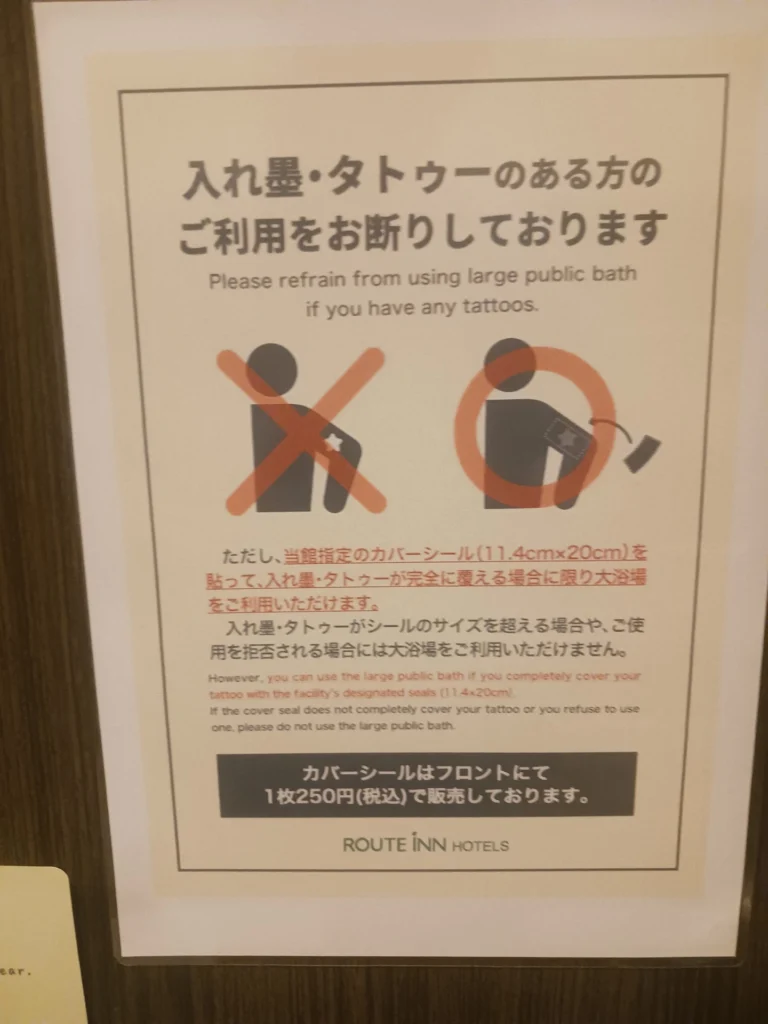
According to the Japan Tourism Agency, the way ryokan treat guests with tattoos differs greatly from place to place. In Japan, tattoos have long been associated with organized crime, so many baths refused guests with tattoos to avoid making other bathers uneasy. More recently, understanding of tattoos worn by foreign visitors has grown, and some ryokan now take one of these approaches:
- No restrictions on tattoos at all.
- Case by case, for example a small single tattoo is fine.
- Private baths or in-room baths, so that guests with tattoos can still enjoy a hot spring.
The Tourism Agency’s advice to travelers is simple: if you are worried, contact the ryokan before you go.
What the places we cover say
| Facility | Tattoo rule (official) |
|---|---|
| Thermae-yu, Shinjuku (24-hour spa, from ¥3,100) | Foreign tourists: men can enter with one cover sticker (¥330) and a passport or flight ticket (passport entry stamp within 90 days). Women: fashion tattoos allowed on a trial basis, with a sticker for tattoos larger than 30 × 30 cm. Japanese men and foreign residents of Japan with tattoos cannot enter. |
| Yugawara Soyu, Yugawara (day-use onsen) | Tattoos are not permitted. |
| Tokyo sento (public bathhouses) | Set by each bathhouse. Ask before you go. |
Rules can change, so check each official page before you visit. See also our guides to Yugawara Onsen, sento in Tokyo and onsen in Tokyo.
Tips if you have a tattoo
- Look for the rule on the official site (search for “tattoo” or the Japanese words タトゥー or 入れ墨), or email the facility.
- Book a private bath: many ryokan have kashikiri (private, reserved by time) baths or rooms with their own bath. Ask at check-in, as time-slot private baths often need a reservation.
- Use a cover sticker only where it is accepted. Some places accept stickers and others do not.
- Carry your passport if a facility has special rules for foreign tourists.
- Follow the usual bathing manners: wash before you get in, no swimsuits, and keep your towel out of the water. See our onsen etiquette guide.
FAQ
Can I go to an onsen in Japan with a tattoo?
It depends on the facility. Some allow tattoos, some accept cover stickers, and some refuse them. Many ryokan offer private baths. Check before you go.
Do all onsen have the same tattoo rule?
No. According to the Japan Tourism Agency, the way ryokan treat guests with tattoos differs greatly, so check each facility.
Which Tokyo spa accepts foreign tourists with tattoos?
Thermae-yu in Shinjuku accepts foreign tourists under its own rules: men with one ¥330 cover sticker and a passport or flight ticket, and women with fashion tattoos on a trial basis.
What is a kashikiri-buro?
A private bath you can reserve for a set time, often found at ryokan. It is a good option if you have tattoos.
Related Articles


Sources
The general guidance comes from the Japan Tourism Agency’s ryokan Q&A. Facility rules come from each facility’s official website (checked October 20, 2026). Rules change, so please check before you go.