Researched guide · Checked on Oct 21, 2026
Climb 365 stone steps lined with old inns, sweet shops and game stalls, soak in iron-rich golden water, and eat a hot spring bun in the town where it was invented. Ikaho, in the mountains of Gunma, has been a hot spring town for more than 400 years, and it is about two hours from Tokyo by train and bus. Here is what to see and where to bathe.
Quick answer
Getting there: limited express Kusatsu-Shima from Ueno to Shibukawa (about 1 hour 40 minutes), then a bus (about 15 minutes).
Must-sees: the 365-step Ishidan-gai stone stairway and the Kajika Bridge.
Day baths: Ikaho Open-Air Bath (¥600) at the source, or Ishidan-no-Yu (¥800) on the stone steps.
Affiliate link
Ishidan-gai: the 365 stone steps
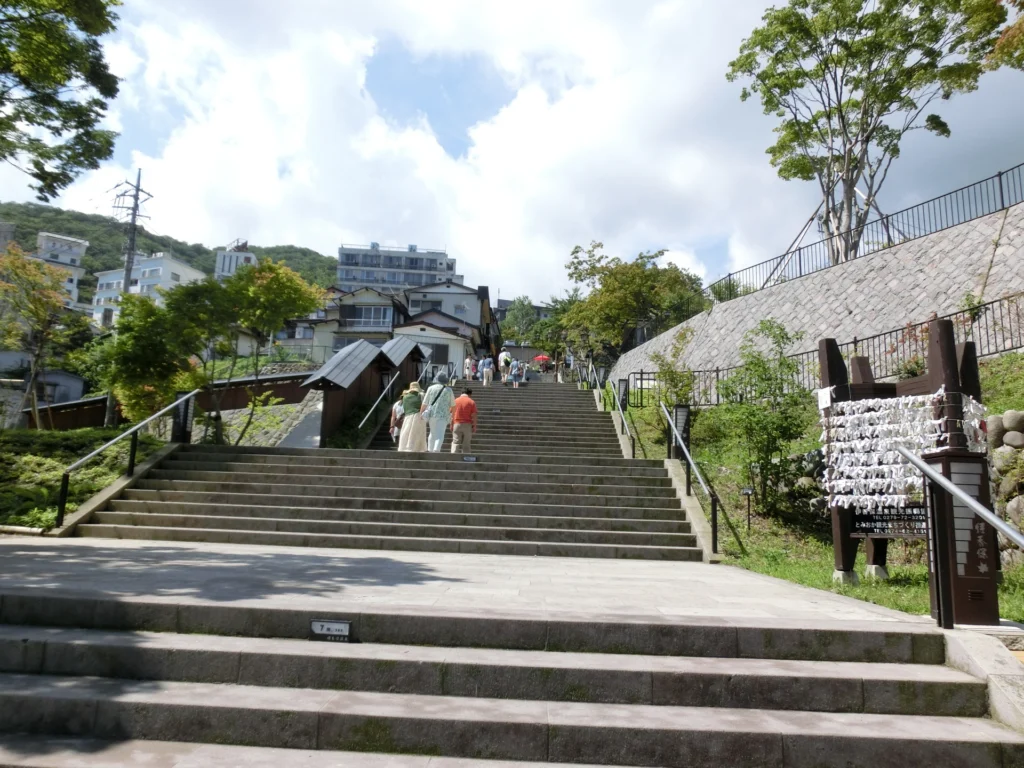
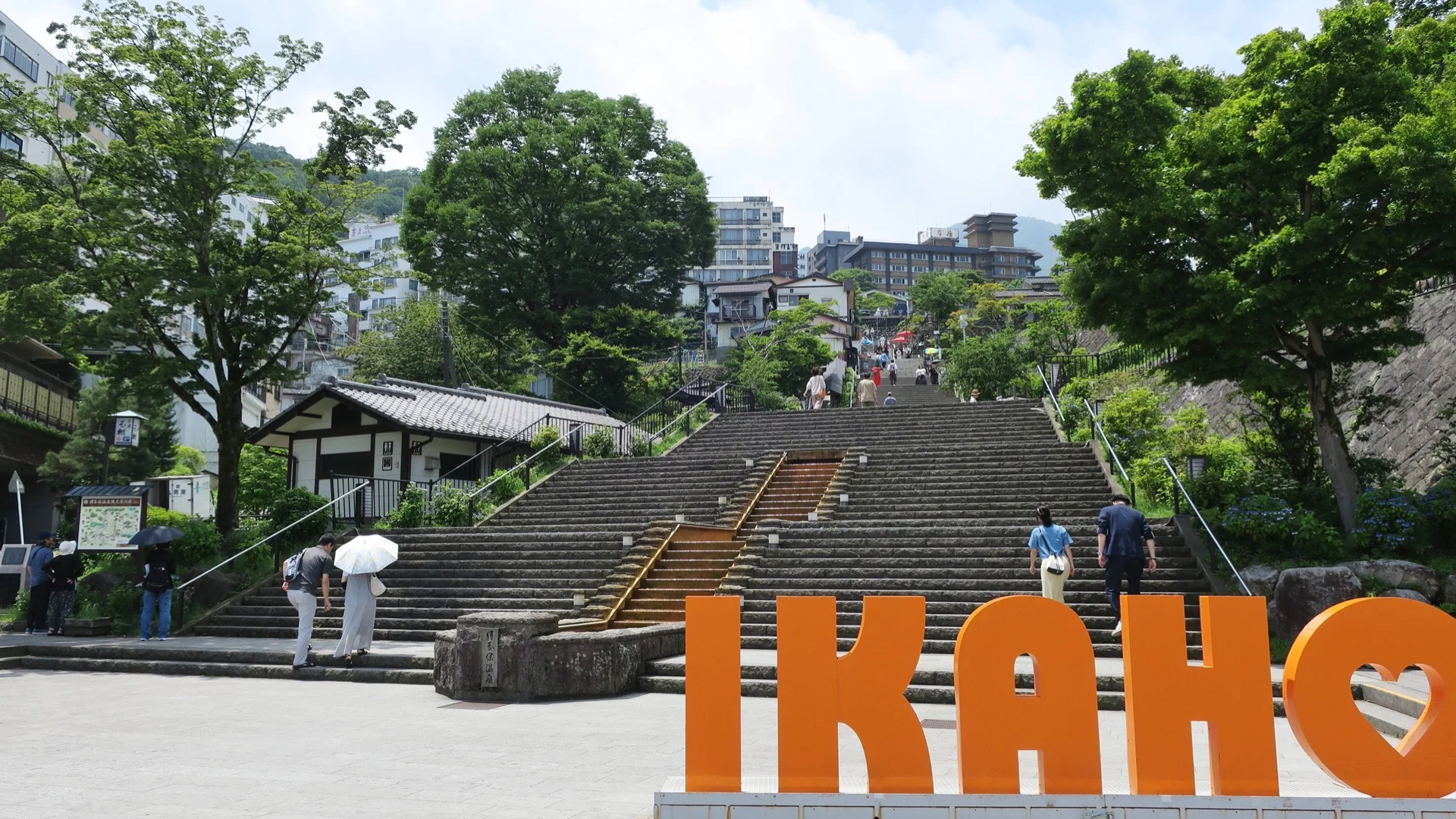
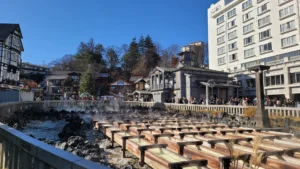
The stone stairway is the symbol of Ikaho. Its history goes back more than 400 years: the local tourism association says it began when the warlord Takeda Katsuyori ordered a place of healing built after his defeat at the Battle of Nagashino. The steps were rebuilt with granite in the 1980s, and new steps added in 2010 brought the total to 365, a wish that the town would be busy every day of the year.
- Zodiac signs: more than 200 years ago, 12 large inns stood along the steps, each linked to an animal of the Chinese zodiac. The signs are now marked on the steps where the inns stood. Look for yours.
- Komaguchi: four spots where the hot spring water is split from the source. You can watch it flow underneath.
- Poems: lines by the poet Yosano Akiko are carved into the steps.
- Game stalls: old-style shooting galleries (shateki), fun for families.
- Footbath: rest your legs at a free footbath along the steps.
Golden water and silver water
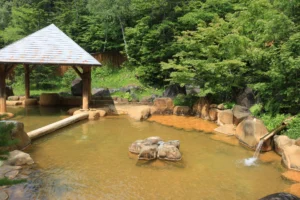
Ikaho has two kinds of hot spring water. Kogane-no-yu (golden water) is the old spring, rich in iron, and warms you to the core. Shirogane-no-yu (silver water) is clear, and is said to help with fatigue.
Where to bathe as a day visitor
| Bath | Good for | Hours | Adult price |
|---|---|---|---|
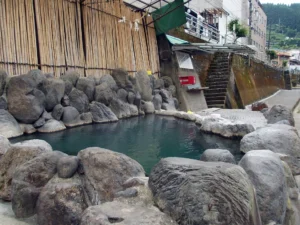
| Ikaho Open-Air Bath (Ikaho Rotenburo) | An outdoor bath of golden water at the source, surrounded by forest. There are no washing areas | Apr–Sep 9:00–18:00, Oct–Mar 10:00–18:00 (last entry 17:30). Closed the 1st and 3rd Thursday (open on holidays and every day in August) | ¥600 (children ¥300) |
| Ishidan-no-Yu | A public bath of golden water right on the stone steps | 10:00–20:00 (last entry 19:30). Closed the 2nd and 4th Tuesday (next day if a holiday) | ¥800 (children ¥400; preschoolers free) |
- Ikaho Open-Air Bath sells towels (¥400) and bath towels (¥1,200).
- Ishidan-no-Yu takes cash, major credit cards, Suica and other IC cards, and QR payments such as PayPay and Alipay.
- On the way to the open-air bath is a drinking fountain where you can taste the golden spring water, the only one in Ikaho.
- Tattoo rules are not listed on the official pages. Ask at the front desk, and see our tattoos and onsen guide.
Kajika Bridge and the autumn light-up
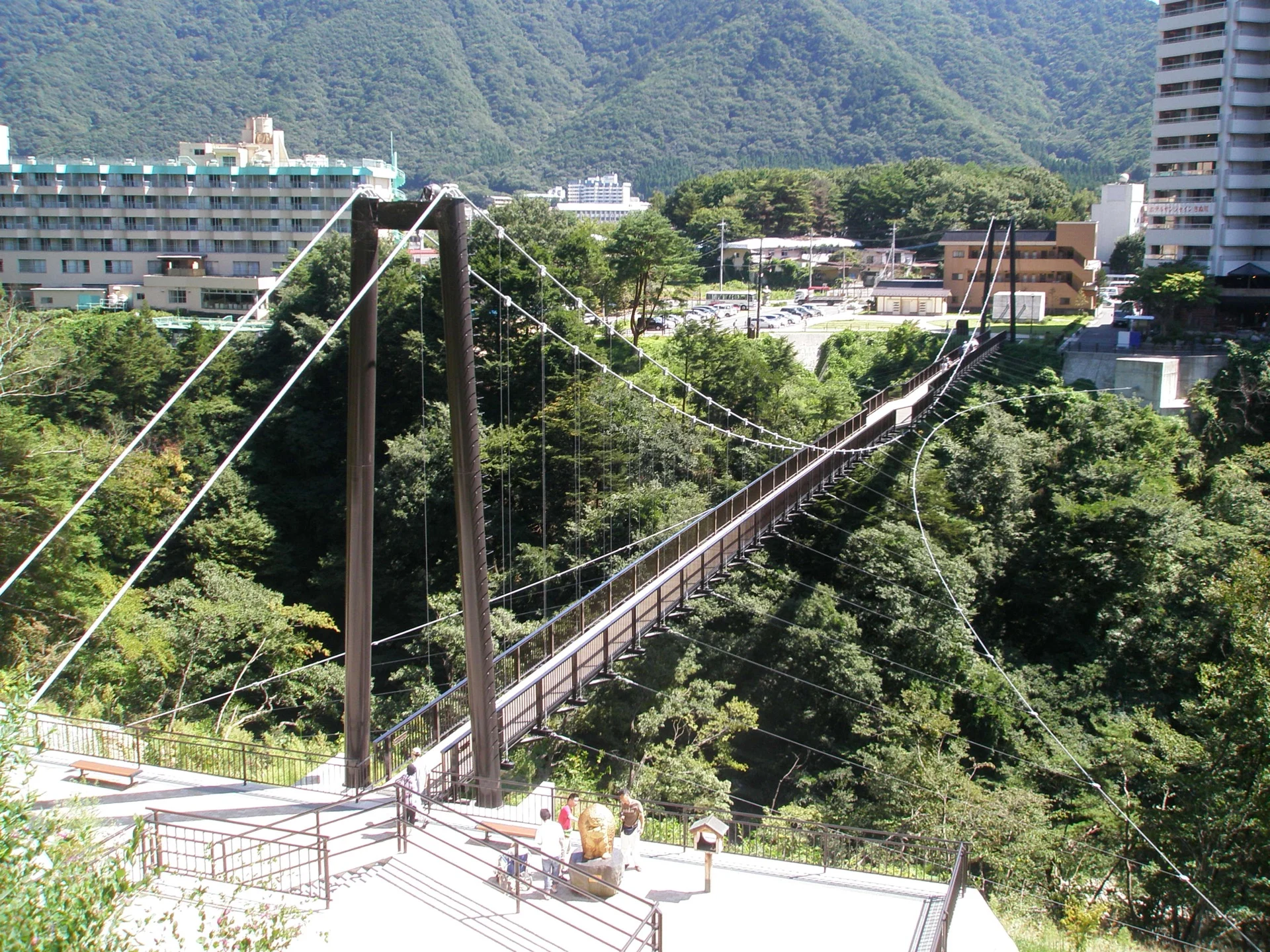
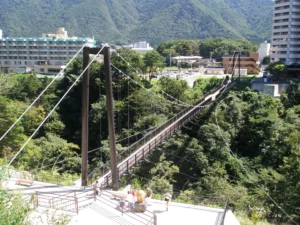
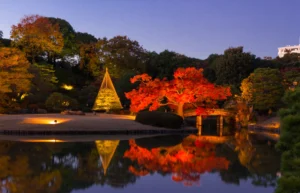
At the top of town, near the source and the open-air bath, the red Kajika Bridge is famous for autumn leaves. In 2026 the bridge is lit up from October 27 to November 15, 16:30 to 22:00. From October 31, the pond by the former Hawaiian Kingdom envoy’s villa (to the right at the top of the steps) and the plaza at the bottom of the steps are also lit. Shuttle buses link the bottom of the steps and the bridge on weekends and holidays during the light-up. The parking lot near the bridge gets very crowded, so walk or take the shuttle.
Onsen manju: born in Ikaho
The brown, glossy steamed buns sold at hot spring towns all over Japan started here. The tourism association says Ikaho’s yu-no-hana manju became famous across the country after it was chosen as a gift for the imperial family. You will find them in shops all along the steps.
Getting there from Tokyo
| Route | Time | Notes |
|---|---|---|
| Limited express Kusatsu-Shima from Ueno to Shibukawa, then bus | About 1 hour 40 minutes by train, plus about 15 minutes by bus | All seats reserved. Get off at Ikaho Onsen or Ishidan-gai-guchi bus stop |
| Direct highway bus from Tokyo (Yumeguri-go) | See the operator’s timetable | No change needed |
Ikaho works as a day trip, but staying a night at a ryokan lets you walk the steps in the evening. For more hot spring towns, see our Kusatsu Onsen guide; Kusatsu is further along the same train line.
Find Ikaho Onsen tours
Opens the search results in a new tab. Prices and availability are set by each site. Some of these are affiliate links: we may earn a commission at no extra cost to you.
FAQ
How do I get from Tokyo to Ikaho Onsen?
Take the limited express Kusatsu-Shima from Ueno to Shibukawa (about 1 hour 40 minutes), then a bus to Ikaho Onsen (about 15 minutes). Direct highway buses also run from Tokyo.
How many steps are there in Ikaho?
365. The number was chosen in 2010 as a wish for the town to be busy every day of the year.
Can I bathe in Ikaho without staying overnight?
Yes. Ikaho Open-Air Bath (¥600) and Ishidan-no-Yu (¥800) are open to day visitors.
When is the Kajika Bridge light-up?
In 2026, from October 27 to November 15, 16:30–22:00.
Related Articles
Sources
History, hours, prices and light-up dates come from the Shibukawa Ikaho Onsen Tourism Association and Shibukawa City; train times come from JR East (checked October 21, 2026).
- Ikaho stone steps (Shibukawa Ikaho Onsen Tourism Association, Japanese)
- Ikaho Open-Air Bath (Shibukawa Ikaho Onsen Tourism Association, Japanese)
- Ishidan-no-Yu (Shibukawa City, Japanese)
- Kajika Bridge autumn light-up (Shibukawa Ikaho Onsen Tourism Association, Japanese)
- Kusatsu-Shima limited express (JR East)