Japan has many earthquakes. Most are small, but knowing a few simple steps before you arrive makes a big difference if the ground does shake. Five minutes of preparation is enough.
Quick answer
Before you go: install the Safety tips app for earthquake and tsunami alerts in English and 14 other languages.
When it shakes: protect yourself first. Get under a sturdy table or away from things that can fall, and do not run outside.
Near the sea: after strong or long shaking, or a tsunami warning, go to high ground at once.
Help: 110 for police, 119 for ambulance and fire, and the Japan Visitor Hotline (050-3816-2787) in English, 24 hours a day.
In an emergency, see our list of official emergency links: phone numbers, warnings in English, train and airport status, and embassies.
Before you travel
- Install the Safety tips app. It comes from the Japan Tourism Agency and sends push alerts for earthquake early warnings, tsunami warnings and other weather warnings in 15 languages, including English. It also has an evacuation flowchart and phrases to ask people around you for information.
- Check your hotel’s evacuation route. Japan’s official tourism guide recommends checking it when you check in, so you know where to go in an emergency.
- Save the emergency numbers: 110 for the police and 119 for an ambulance or the fire department.
- Keep your phone charged and carry a power bank. Your phone is how you get alerts and updates. See staying connected in Tokyo.
Earthquake early warnings
Japan sends earthquake early warnings by phone, TV and radio. The Japan Tourism Agency advises that when you get one, you should stay calm and protect yourself first, even if you do not feel any shaking yet. Do not wait to see how strong it gets.
When the ground shakes
The Tokyo Fire Department’s first rule is simple: protect your life and avoid injury.
| Where you are | What to do |
|---|---|
| Indoors | Get under a sturdy table, or move to a spot where nothing can fall, topple or slide onto you. Wait until the shaking stops. |
| Outdoors | Do not run out of buildings. Roof tiles, window glass and signs can fall. Stay away from concrete block walls. |
| On a train or in a busy place | Stay calm and follow the staff and the announcements. |
| Near the sea or a river | Go to high ground right away (see below). |
Indoors
If you are in a modern building, the Japan Tourism Agency advises staying inside until it is safe, because most buildings in Japan are built to resist earthquakes. On high floors, the Tokyo Fire Department notes that shaking can continue for several minutes. If you are cooking or using a flame, turn it off calmly once the shaking has stopped, not during it.
Outdoors
The Tokyo Fire Department warns that roof tiles, window glass and signs can fall, so do not rush out of a building. Stay away from concrete block walls and wait for the shaking to stop.
On a train or in a busy place
In a station, on a train, in a shop or in a theater, stay calm and follow the staff and the announcements. Japan’s official tourism guide advises following staff instructions when you are inside during a large earthquake.
Near the sea or a river
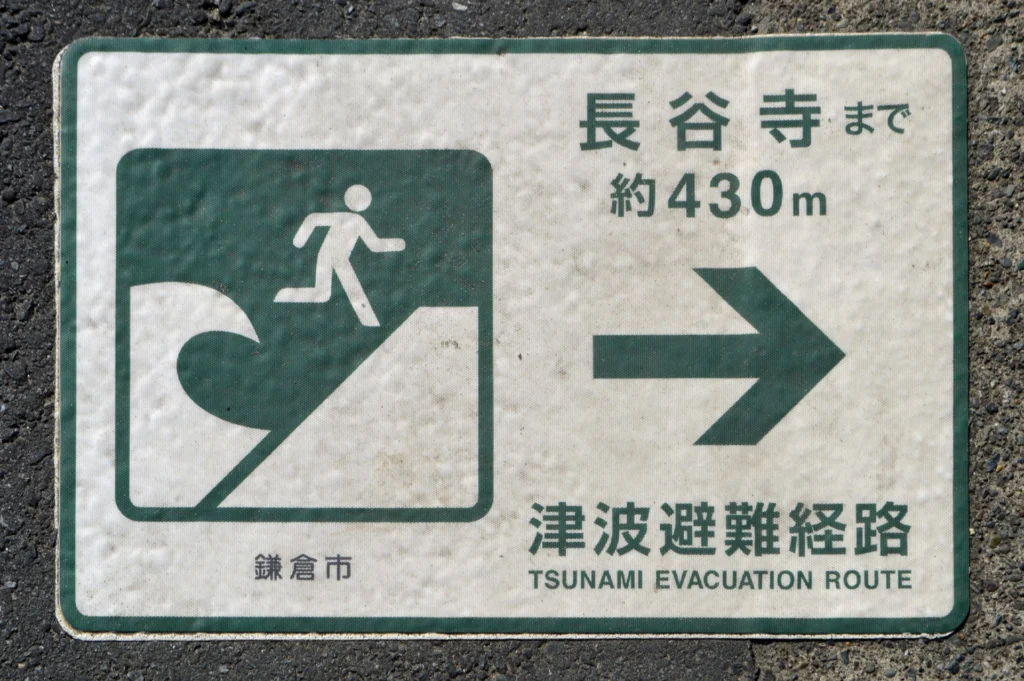
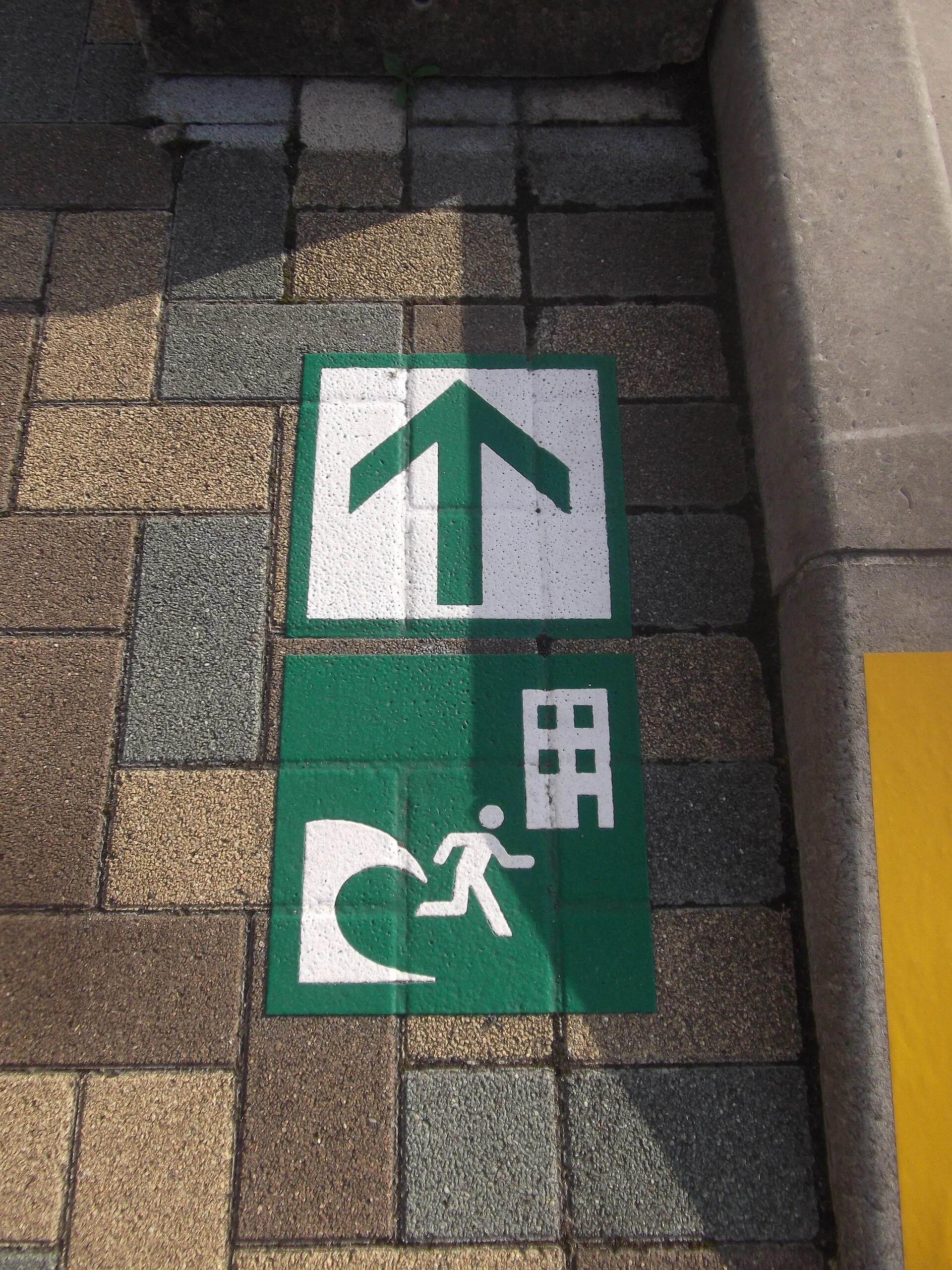
If you are near the coast or a river and feel strong shaking, or weaker shaking that lasts a long time, start moving to high ground immediately. The Japan Tourism Agency says not to judge the danger yourself: just go. If a tsunami warning is issued, waves can come again and again, so stay in a safe place until the warning is lifted.
After the shaking stops
- Check yourself and the people with you for injuries.
- There may be aftershocks.
- Get information from official sources: the authorities, TV and radio, and train companies. The Safety tips app shows alerts in English.
- Indoors, follow the staff’s instructions.
- Let your family know you are safe.
Evacuation signs
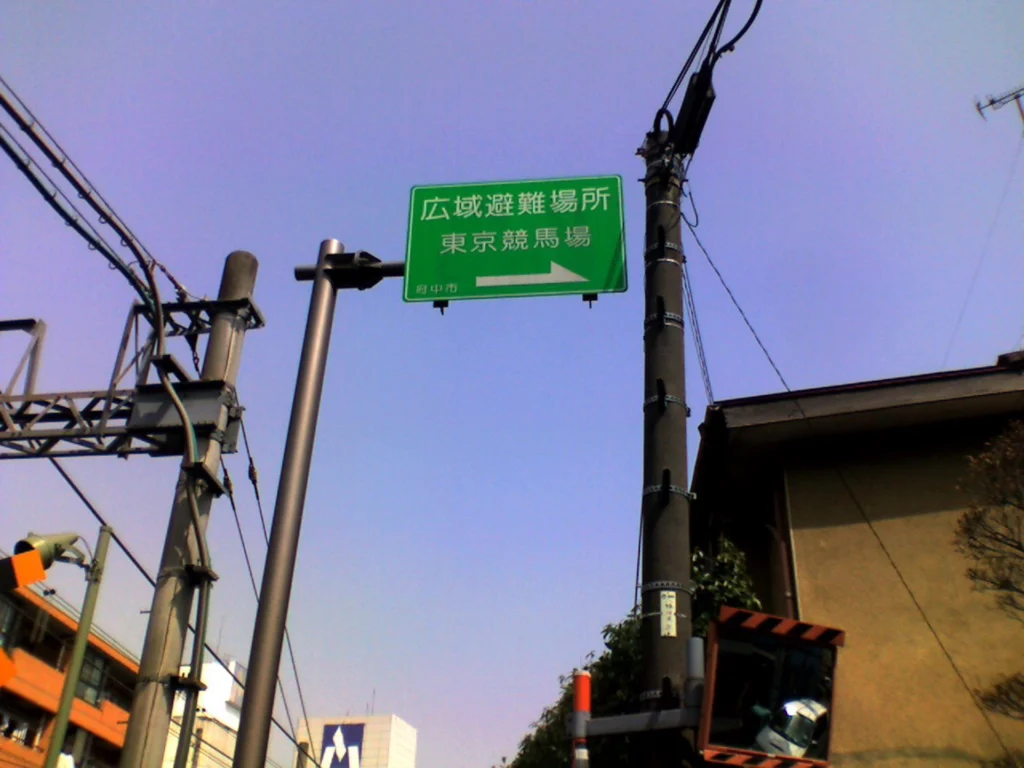
In Tokyo you will see green signs for evacuation places. Two words are useful to know:
| Sign | Reading | What it usually means |
|---|---|---|
| 避難場所 | hinan basho | An open, safe place such as a park, where people gather right after a disaster |
| 避難所 | hinanjo | A shelter, often a school or community center, where people can stay if they cannot go home |
Getting help in English
- Japan Visitor Hotline: 050-3816-2787 (from outside Japan, +81-50-3816-2787), run by the Japan National Tourism Organization (JNTO), 24 hours a day, every day, in English, Chinese and Korean.
- Emergencies: 110 for the police, 119 for an ambulance or fire.
- Hurt or sick? See seeing a doctor in Tokyo.
- Phrases: “Tasukete!” means “Help!”, and “jishin” means “earthquake”. See our Japanese phrases guide.
For other safety tips, from nightlife touts to medical help, see is Tokyo safe for tourists.
FAQ
What should I do in an earthquake in Tokyo?
Protect yourself first. Indoors, get under a sturdy table or away from things that can fall, and do not run outside. Wait until the shaking stops.
Is there an earthquake alert app in English?
Yes. The Safety tips app from the Japan Tourism Agency sends earthquake early warnings, tsunami warnings and weather warnings in 15 languages, including English.
What is the emergency number in Japan?
110 for the police and 119 for an ambulance or fire.
What should I do if there is a tsunami warning?
Go to high ground right away and stay there until the warning is lifted, because waves can come again and again.
Who can I call for help in English?
The Japan Visitor Hotline, 050-3816-2787, run by JNTO, is open 24 hours a day in English, Chinese and Korean.
Related Articles

Sources
What to do during and after an earthquake comes from the Tokyo Fire Department, the Japan Tourism Agency’s Safety tips and Japan’s official tourism guide (checked November 2, 2026). Please follow official instructions and the latest guidance.