Omotenashi (oh-mo-teh-nah-shee) is the Japanese word for wholehearted hospitality. You can feel it at a ryokan (Japanese inn), in a shop, or on a train platform. This guide explains what it means, using JNTO and the Japan Ryokan Association, and tells you what to expect and how to respond.
Quick answer
JNTO describes omotenashi as a culture of wholeheartedly looking after guests, rooted in the tea ceremony. It centers on care rather than expectation. As a traveler, you do not need to do anything special. A nod, a smile or a thank-you is enough.
Do not tip for it. JNTO says tipping is not common at restaurants, bars, cafes, taxis or hotels in Japan.
| Topic | Omotenashi (Japanese hospitality) |
| Meaning (JNTO) | To wholeheartedly look after guests. Care rather than expectation |
| Where you may notice it | Ryokan, restaurants and shops, tea ceremony, train services |
| What to do | A nod, smile or “arigato gozaimasu” (thank you very much) |
| Tipping | Not common at restaurants, bars, cafes, taxis or hotels (JNTO) |
| Cost | Free. It is part of normal service |
| Last checked | November 2026 (on November 18, 2026) |
What Does Omotenashi Mean?
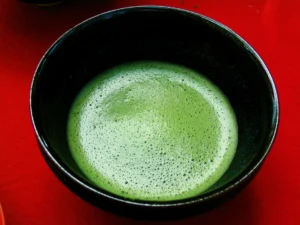
JNTO says omotenashi is a deep-rooted culture that comes from sado (tea ceremony). It means to wholeheartedly look after guests. JNTO describes the idea as hospitality centered on care rather than expectation. It adds that omotenashi goes beyond “the customer is always right”: there are no menial tasks if the result gives a guest a great experience.
JNTO also says omotenashi is hard to define in English, and that you understand it by experiencing it. So treat the examples below as places where you may notice it, not as a checklist.
Where You May Notice It
At a ryokan
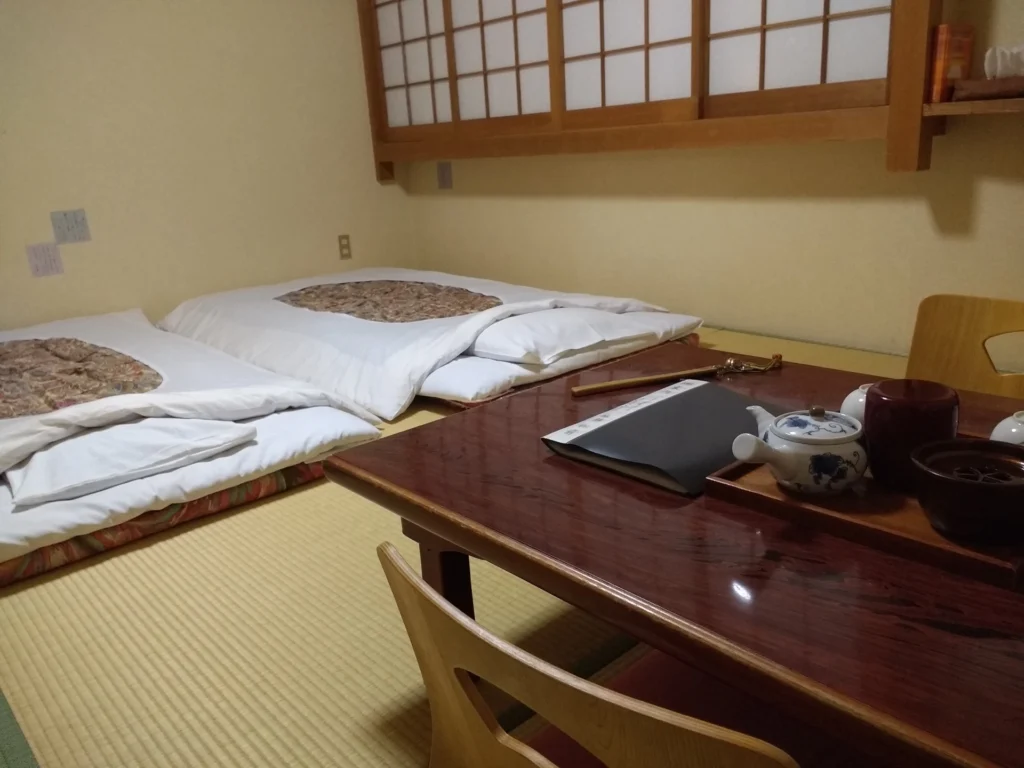
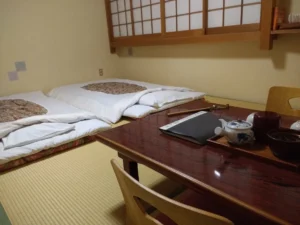
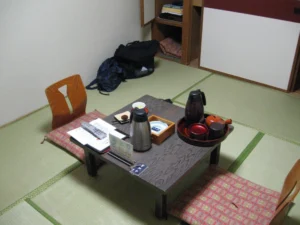
The Japan Ryokan Association describes a ryokan welcome in detail. The okami (the landlady, who manages the inn) and her staff greet guests at the entrance with deep bows of welcome. A nakai-san (a room attendant) carries your luggage with your consent and gives you a short tour on the way to your room. Meals are generally served in the guest room, where the attendant explains each dish and serves it at its best temperature. Attendants also lay out your futon (Japanese bedding) for you. Rules differ by inn, so check yours.
At shops and restaurants
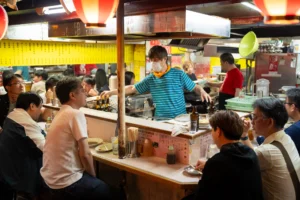
JNTO says that as you enter a store or restaurant, you can expect a loud welcome of “irasshaimase” (welcome). A polite nod or smile is all you need to give back. There is no cultural expectation that you answer the welcome.
On trains
JNTO gives one example from rail travel: shinkansen (bullet train) cleaners who bow to boarding passengers. You do not need to respond with a bow. A small nod is a kind way to say thanks.
In a taxi or a hotel
JNTO says tipping is not common for services in bars, cafes, restaurants, taxis and hotels. You pay the fare or price shown. We did not find an official page that lists taxi door or other taxi manners, so we do not give taxi rules here.
How to Respond as a Visitor
- Say “arigato gozaimasu” (thank you very much) or give a nod or a smile. JNTO says a nod or smile is enough for the shop welcome.
- Do not leave a tip. JNTO says it is not common. In some cases JNTO says a private guide or interpreter used to overseas customs may accept a thank-you gratuity (kokorozuke, “from the heart”), given discreetly in an envelope. It is never expected.
- Follow the house rules. At a ryokan this means shoes, slippers and meal times. See our ryokan etiquette guide.
- Do not worry about being perfect. JNTO describes omotenashi as care rather than expectation, so it is not a test for guests.
More About Japanese Customs
Start with the Japanese culture guide. For greetings, read Bowing in Japan and Japanese phrases for travelers. For money, see Tipping in Japan. For the tea ceremony, see tea ceremony in Tokyo. For stays, see types of accommodation in Japan and for meals how to eat out in Tokyo.
FAQ
What is omotenashi?
Omotenashi is the Japanese idea of wholehearted hospitality. JNTO describes it as care rather than expectation, rooted in the tea ceremony.
Do I need to tip for omotenashi?
No. JNTO says tipping is not common at restaurants, bars, cafes, taxis or hotels in Japan.
Where will I notice omotenashi in Tokyo?
JNTO points to ryokan, shops and restaurants, tea ceremony and train services. We have not tested these in every place, and service differs by business.
Do I have to answer when staff say irasshaimase?
No. JNTO says a polite nod or smile is all you need, and there is no cultural expectation that you reply.
Is omotenashi the same as good customer service?
JNTO says it goes beyond “the customer is always right.” It describes an understanding that no task is too small if it helps a guest.
What do I say to show thanks?
Say “arigato gozaimasu” (thank you very much), or give a nod or smile. A small gift is not required.
Keep reading
Sources
Facts come from the official pages below, read on November 18, 2026. We have not written this guide from our own stay. Service differs by business, so check before you go.