Researched guide · Last checked: Nov 15, 2026
Kunozan Toshogu in Shizuoka City enshrines Tokugawa Ieyasu, the first Tokugawa shogun. Ieyasu died in 1616 and was buried on Mt. Kuno as he wished. On the order of the second shogun, Hidetada, the shrine was built by 1617, 19 years before the buildings of Nikko Toshogu. Its lacquered, brightly painted buildings are a National Treasure. No road goes up to the shrine: you climb 1,159 stone steps or ride the Nihondaira Ropeway.
Quick answer
A Shinto shrine and burial place of Tokugawa Ieyasu, with National Treasure buildings.
Hours: 9:00 to 17:00 every day (reception closes 10 minutes before). Admission: Shrine buildings: adults 700 yen, children 300 yen. Museum: adults 600 yen, children 300 yen. Combined: adults 1,200 yen, children 500 yen (adults = high school age and over, children = elementary and junior high school).
Quick facts
| What it is | A Shinto shrine and burial place of Tokugawa Ieyasu, with National Treasure buildings |
| Hours | 9:00 to 17:00 every day (reception closes 10 minutes before) |
| Admission | Shrine buildings: adults 700 yen, children 300 yen. Museum: adults 600 yen, children 300 yen. Combined: adults 1,200 yen, children 500 yen (adults = high school age and over, children = elementary and junior high school) |
| Address | 390 Negoya, Suruga-ku, Shizuoka |
| Nearest station | JR Shizuoka Station, then bus about 45 minutes to Nihondaira and the 5-minute ropeway, or bus to Kunozan-shita and the stone steps |
| From Tokyo | Tokaido Shinkansen to Shizuoka Station, then bus |
| Last checked | November 2026 |
What to see
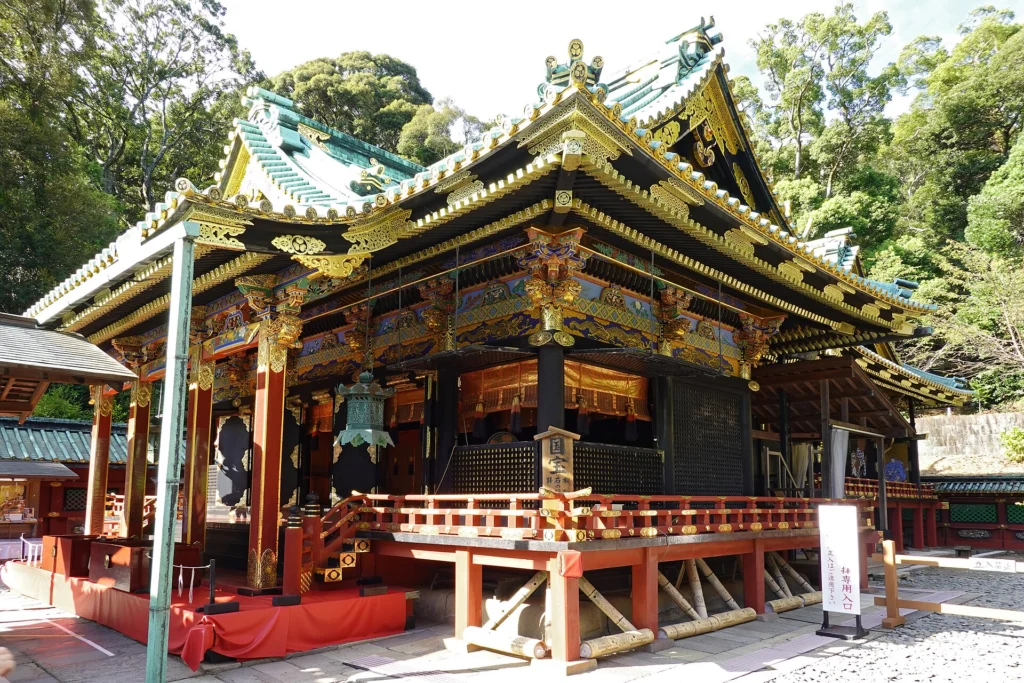
- Main shrine buildings (National Treasure): built in only 1 year and 7 months, from 1616 to 1617, by master carpenter Nakai Masakiyo. The gongen-zukuri style buildings are finished in black and red lacquer with colorful carvings of flowers and birds. The shrine says they became the model for the Toshogu shrines later built across Japan.
- Ieyasu’s tomb (shinbyo): about 5 minutes on foot beyond the main shrine, through the Byomon gate.
- The 1,159 steps: the front approach climbs from Kunozan-shita at the foot of the mountain. The shrine says the climb takes about 20 minutes.
- Museum: the Kunozan Toshogu Museum holds items linked to Ieyasu, including a Western clock given to him by the King of Spain about 400 years ago. A visit takes about 30 to 40 minutes. Photos are not allowed inside.
- Plum and cherry blossoms: plum trees, including one said to be planted by Ieyasu, bloom around February. Early cherries bloom from mid-January to late February, and weeping and double cherries from mid-March to early April.
How long to spend
- Inside the grounds: from the shrine office to the main shrine is about 10 minutes, and from the main shrine to the tomb about 5 minutes.
- With the museum: add about 30 to 40 minutes.
- On foot from the bottom: from the stone torii at the foot of the steps to the shrine office is about 30 minutes.
Before you go
- Steps only: the main shrine can only be reached by stone steps, with no slopes. Wheelchairs and strollers cannot be used.
- Free lockers: coin lockers in front of the shrine office are free. You put in a 100-yen coin, and it comes back after use.
- English leaflets: printed guides are available in English and several other languages. Free Wi-Fi is available near the shrine office.
- Rules: no eating or drinking in the sacred area (use the area around the shop) and no smoking outside the smoking area. Dogs on a leash are allowed in the grounds but not in the museum.
Getting there from Tokyo
- Train: take the Tokaido Shinkansen to Shizuoka Station.
- Ropeway route: from Shizuoka Station, take the Shizutetsu Justline Nihondaira Line bus to the last stop, Nihondaira Ropeway (about 45 minutes, adults 710 yen). The ropeway to the shrine takes 5 minutes. The shrine lists the ropeway fare as 1,250 yen round trip and 700 yen one way for adults. It runs from Nihondaira 9:10 to 16:45 and from Kunozan 9:30 to 17:00.
- Steps route: take the Ishida Kaido Line bus to Higashi-Oya (about 40 minutes), then a bus to Kunozan-shita (about 15 minutes), and climb the steps. A few buses a day go from Shizuoka Station to Kunozan-shita with a change. On weekdays the shrine suggests a taxi (about 20 minutes, about 3,500 yen).
- Car: cars cannot drive up to the shrine. Park at the free Nihondaira summit lot (200 cars) and take the ropeway.
Kunozan Toshogu is the first of the Toshogu shrines. You can compare it with Nikko Toshogu and Ueno Toshogu in Tokyo. For Mt. Fuji trips on the Shizuoka side, see Fujisan Hongu Sengen Taisha and our day trips from Tokyo.
FAQ
Who is enshrined at Kunozan Toshogu?
Tokugawa Ieyasu, the first shogun of the Tokugawa shogunate. He was buried on Mt. Kuno after he died in 1616.
How many steps are there at Kunozan Toshogu?
There are 1,159 stone steps from Kunozan-shita. The shrine says the climb takes about 20 minutes.
Can I take a ropeway to Kunozan Toshogu?
Yes. The Nihondaira Ropeway goes from Nihondaira to the shrine in 5 minutes. Buses from Shizuoka Station to Nihondaira Ropeway take about 45 minutes.
How much is admission?
The shrine buildings cost 700 yen for adults and the museum 600 yen. A combined ticket is 1,200 yen.
Is Kunozan Toshogu wheelchair accessible?
No. The only way to the main shrine is by stone steps, so wheelchairs and strollers cannot be used.
Keep reading
Sources
Facts come from the official Kunozan Toshogu website (history, National Treasure buildings, fees, access and FAQ pages), last checked on November 15, 2026. Bus and ropeway fares are as listed by the shrine. They are based on official sources, not our own visit. Fares and bus routes can change, so check before you go. Last checked: November 2026 (on November 15, 2026).