Researched guide · Last checked: Nov 15, 2026
Enoshima Shrine stands on Enoshima, a small island in Fujisawa, Kanagawa. It is made up of three shrines, Hetsunomiya, Nakatsunomiya and Okutsunomiya, that honor three sister goddesses. Shrine records say the island rose from the sea in 552 and that the first shrine was a cave on its southern side. The shrine is counted as one of Japan’s three great Benzaiten shrines, with Miyajima in Aki and Chikubushima in Omi. Each of the three nearest stations is about 15 to 23 minutes on foot.
Quick answer
A Shinto shrine of three shrines on Enoshima island, linked to the goddess Benzaiten.
Hours: Shrine office reception 8:30 to 17:00. The Hoanden hall is open 8:30 to 16:30. The shrine does not list hours for the grounds. Admission: No fee is listed for the grounds. Hoanden hall: adults 200 yen, junior and senior high school students 100 yen, elementary school students 50 yen, younger children free.
Quick facts
| What it is | A Shinto shrine of three shrines on Enoshima island, linked to the goddess Benzaiten |
| Hours | Shrine office reception 8:30 to 17:00. The Hoanden hall is open 8:30 to 16:30. The shrine does not list hours for the grounds |
| Admission | No fee is listed for the grounds. Hoanden hall: adults 200 yen, junior and senior high school students 100 yen, elementary school students 50 yen, younger children free |
| Address | 2-3-8 Enoshima, Fujisawa, Kanagawa |
| Nearest station | Katase-Enoshima (Odakyu), Enoshima (Enoden) or Shonan-Enoshima (Shonan Monorail), each about 15 to 23 minutes on foot |
| Last checked | November 2026 |
What to see
- Three shrines: Hetsunomiya (the lowest, also called Shimonomiya, where most prayers are held) honors Tagitsuhime. Nakatsunomiya honors Ichikishimahime and is about 5 minutes on foot from Hetsunomiya. Okutsunomiya honors Tagirihime and is about 10 minutes further on. Its prayer hall ceiling has a painting of a turtle that seems to glare in every direction.
- Hoanden hall: an octagonal hall in the Hetsunomiya grounds. It houses Happi Benzaiten, a national Important Cultural Property, and Myoon Benzaiten, the “naked Benzaiten”, an Important Cultural Property of Fujisawa City.
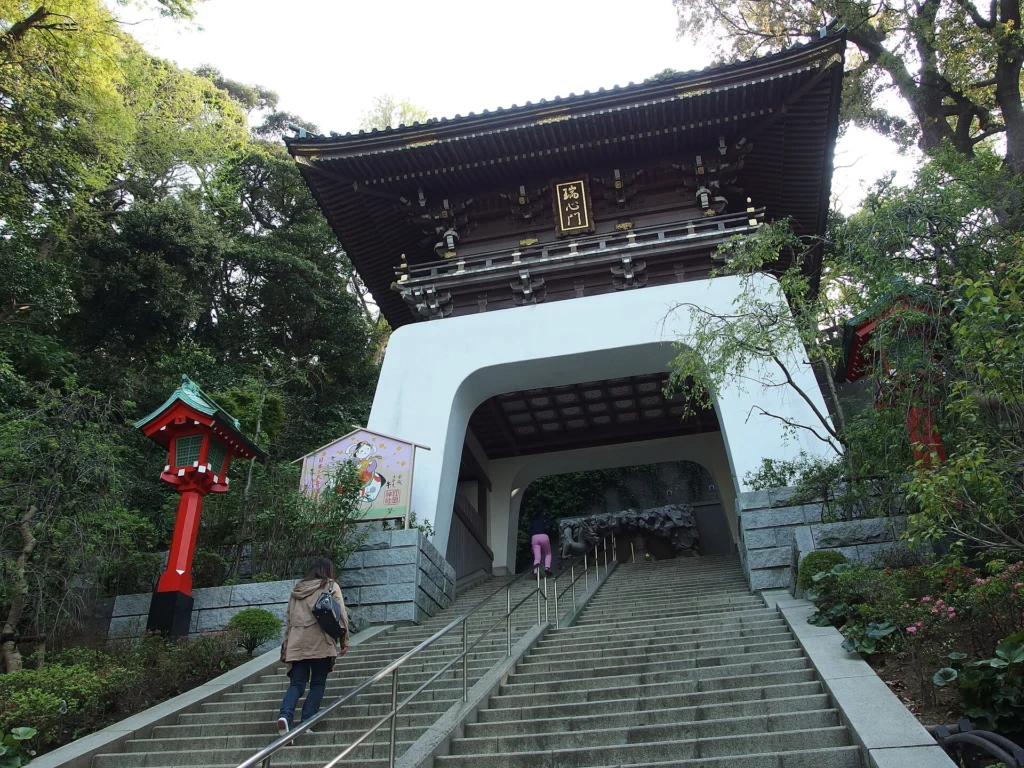
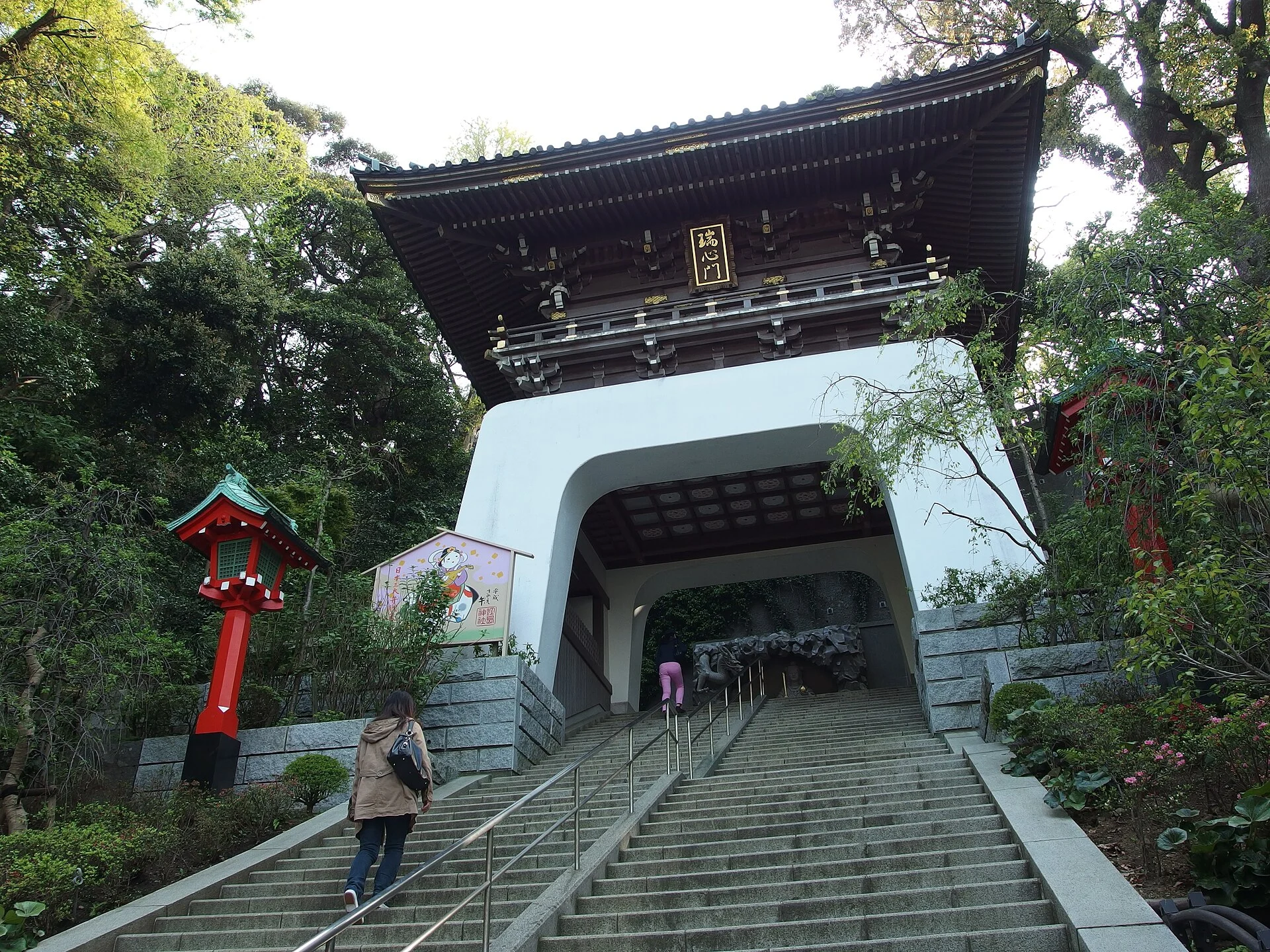
- Zuishinmon gate: a two-story gate modeled on the Dragon Palace, reached by steps from the red torii. Its walls and ceiling carry paintings of peonies and karajishi (Chinese lions) by Kataoka Koyo.
- Bronze torii: the gate at the island’s entrance. It was first built in 1747 and rebuilt in 1821, and its framed name board copies one sent by Emperor Goda.
- Enoshima Benten Bridge: the current 389 m bridge was finished in 1964, in time for the Tokyo Olympic sailing events. The shrine says it takes about 15 to 20 minutes to walk from Katase-Enoshima Station to the end of the bridge.
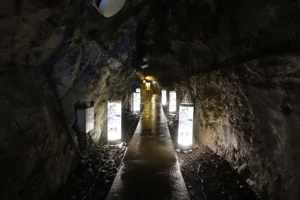
- Iwaya caves: the shrine calls them the birthplace of Enoshima Benzaiten worship. The caves are managed by Fujisawa City and nothing is enshrined in them now.
History
- 552: the Enoshima Engi story says the island rose from the sea in the 13th year of Emperor Kinmei, and that the emperor ordered a shrine in the cave. The shrine counts this as its start.
- 1206: Hetsunomiya, the lowest shrine, was founded.
- Kamakura period: Minamoto no Yoritomo offered a Happi Benzaiten statue and a torii. Emperor Goda gave a name board after the Mongol invasions were repelled.
- 1600: Tokugawa Ieyasu visited, and later shoguns prayed here for health, safe birth and safe travel.
- Early Meiji: Buddhist forms were dropped under the separation of Shinto and Buddhism and the shrine took the name Enoshima Shrine.
Before you go
- Stairs: the three shrines sit at different heights on the island. The shrine lists distances between the stops, so allow time for climbing.
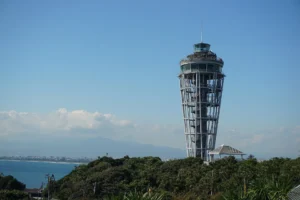
- Escalators: the Enoshima Escar escalators run in three sections (red torii to Hetsunomiya, Hetsunomiya to Nakatsunomiya, and Nakatsunomiya to the summit). They are run separately from the shrine. See our Enoshima Sea Candle page.
- Parking: the shrine lists eight car parks with 54 to 356 spaces each and refers you to the Fujisawa tourism pages for fees and hours.
Getting there
- Train: Katase-Enoshima Station (Odakyu Line), Enoshima Station (Enoden) and Shonan-Enoshima Station (Shonan Monorail) are each about 15 to 23 minutes on foot. The shrine’s access page has route details for each line.
- Bus from Haneda Airport: Enoden Bus runs direct buses between Haneda Airport and Fujisawa, Kamakura and Ofuna stations. Check the timetable with the operator.
- Car: use one of the island-side car parks listed on the shrine’s access page.
Next to the shrine you can visit the Enoshima Iwaya Caves. For a full day, see our Enoshima day trip and Kamakura day trip guides, or browse more day trips from Tokyo.
Also nearby: Kamakura to Enoshima by Enoden: A Day Itinerary
FAQ
Who is enshrined at Enoshima Shrine?
Three sister goddesses: Tagitsuhime at Hetsunomiya, Ichikishimahime at Nakatsunomiya and Tagirihime at Okutsunomiya. Together they are called the great deity of Enoshima.
When was Enoshima Shrine founded?
The shrine’s own history says it began in 552, when a shrine was built in a cave on the island by order of Emperor Kinmei. Hetsunomiya was founded in 1206.
Is there an entrance fee?
The shrine lists no fee for the grounds. The Hoanden hall costs 200 yen for adults, 100 yen for junior and senior high school students and 50 yen for elementary school students.
How far is it from the station?
The shrine says each of the three nearest stations is about 15 to 23 minutes on foot.
What is the Hoanden?
An octagonal hall in the Hetsunomiya grounds that holds Happi Benzaiten and the “naked Benzaiten” Myoon Benzaiten, along with other Benzaiten items.
Keep reading
Sources
Facts come from the official Enoshima Shrine website (history, deities, grounds guide and access pages), last checked on November 15, 2026. They are based on official sources, not our own visit. Opening hours, fees and transport details can change, so check before you go. Last checked: November 2026 (on November 15, 2026).