Researched guide · Last checked: Nov 15, 2026
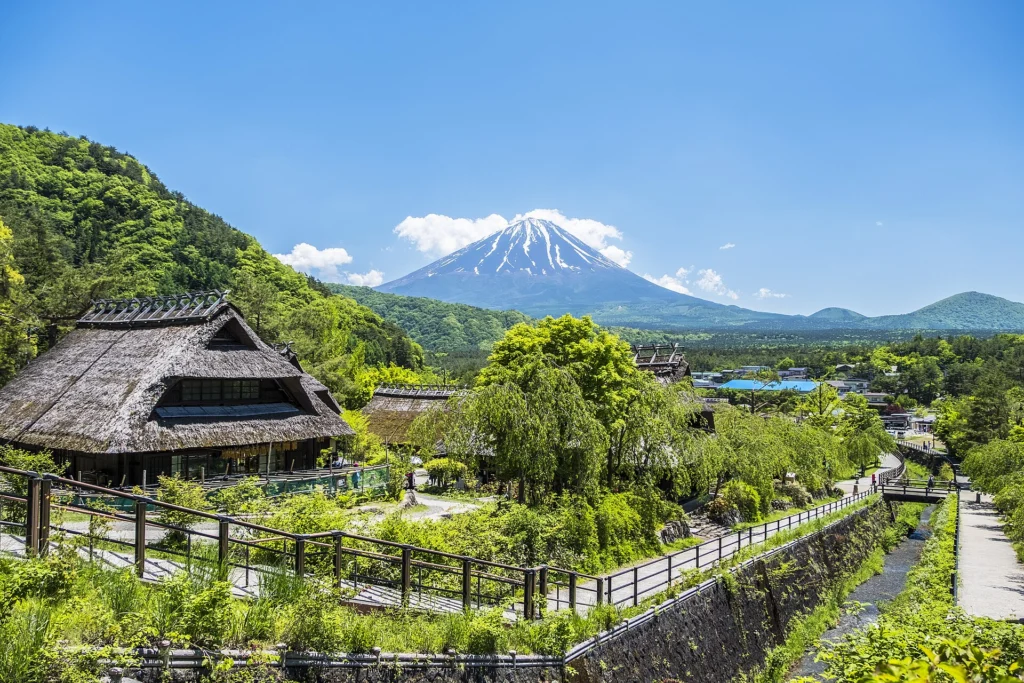
Saiko Iyashi-no-Sato Nenba is an open-air village of thatched-roof houses on the shore of Lake Saiko, one of the Fuji Five Lakes, in Fujikawaguchiko. The old farming village of Nenba was almost wiped out by a landslide in September 1966, when 37 of its 41 thatched houses were destroyed. In 2006 the town opened the village with 20 thatched houses in the local kabuto-zukuri style. Today the houses hold craft workshops, small museums, shops and restaurants, with Mt. Fuji rising behind them on clear days.
Quick answer
A rebuilt village of thatched-roof houses with crafts, shops and small museums.
Hours: March to November 9:00-17:00 (last entry 16:30); December to February 9:30-16:30 (last entry 16:00). Closed: Open every day, with occasional temporary closures. Admission: Adults (high school age and older) JPY 500; elementary and junior high school students JPY 250.
Quick facts
| What it is | A rebuilt village of thatched-roof houses with crafts, shops and small museums |
| Hours | March to November 9:00-17:00 (last entry 16:30); December to February 9:30-16:30 (last entry 16:00) |
| Closed | Open every day, with occasional temporary closures |
| Admission | Adults (high school age and older) JPY 500; elementary and junior high school students JPY 250 |
| Address | 2710 Saiko Nenba, Fujikawaguchiko, Yamanashi |
| Nearest station | Kawaguchiko Station, then the Saiko sightseeing bus (Fujikyu) |
| Last checked | November 2026 |
What to see and do
- Thatched houses and Mt. Fuji: the houses stand on a slope facing the mountain, so you can see Mt. Fuji over the roofs on clear days. Cherry blossoms come in spring and red and yellow leaves in autumn. In winter the village may be under snow.
- Former Watanabe Residence: an Edo-period silk-farming house and a Registered Tangible Cultural Property. Inside, the rooms show daily life in the Showa era, with an early color TV and washing machine. The upper floor was used to raise silkworms.
- Sabo (erosion control) museum: photos and videos about the 1966 landslide and how the village came back.
- Crafts: workshops in the houses offer incense pouches, pottery (the electric wheel needs a reservation), kaleidoscopes, painting a silk pouch and clay figures.
- Kimono and costumes: one house has more than 100 kinds of kimono, armor and ninja costumes, with a paid dressing service.
- Gorone-kan: four small rooms on high ground where you can rest and enjoy the view.
Food
- Satoyama: local dishes such as hoto (thick noodles in miso soup with vegetables) and udon.
- Mizumo: hand-made soba from stone-ground buckwheat, with seasonal vegetable tempura.
- The local products shop also sells soft-serve ice cream and amazake (a sweet rice drink). Seiryutei teahouse serves matcha, dango and sweets.
Tickets and rules
- Admission: adults JPY 500, children JPY 250. Groups of 20 or more pay JPY 450 and JPY 200. Workshops cost extra.
- Parking: free.
- The whole village is non-smoking.
- Pets may walk around the village with you but may not enter the buildings.
- Some shops may be closed on the day you visit.
Getting there from Tokyo
- To Kawaguchiko Station: by train from Shinjuku via Otsuki Station (JR Chuo Line, then Fujikyu Line), or by highway bus from Shinjuku. See our highway bus guide.
- Bus: from Kawaguchiko Station, take the Saiko sightseeing bus run by Fujikyu. The village’s website links to the current timetable.
- Car: the village’s access page shows routes via Kawaguchiko IC on the Chuo Expressway or via the Tomei Expressway. Parking is free.
Nenba is easy to combine with other Fuji Five Lakes sights. Stop at Lake Kawaguchi, walk into the lava caves at Fugaku Wind Cave, or see the pagoda view at Chureito Pagoda. For a full plan, read our Mt. Fuji day trip guide.
FAQ
How much is the entrance fee?
Adults (high school age and older) pay JPY 500 and elementary and junior high school students pay JPY 250. Workshops cost extra.
What are the opening hours?
From March to November 9:00-17:00 (last entry 16:30). From December to February 9:30-16:30 (last entry 16:00).
Can I see Mt. Fuji from Iyashi-no-Sato Nenba?
Yes, on clear days Mt. Fuji is visible behind the thatched houses. Clouds often hide it, so check the weather.
Can I rent a kimono there?
Yes. One house has more than 100 kinds of kimono, armor and ninja costumes, with a paid dressing service.
How do I get there from Kawaguchiko Station?
Take the Saiko sightseeing bus run by Fujikyu. Check the timetable before you go.
Keep reading
Sources
Facts come from the official Saiko Iyashi-no-Sato Nenba website, run by the Town of Fujikawaguchiko (hours and fees, about, map, Former Watanabe Residence, Sabo museum and access pages), last checked on November 15, 2026. This page is based on official sources, not our own visit. Bus times change, so check before you go. Last checked: November 2026 (on November 15, 2026).
- Saiko Iyashi-no-Sato Nenba (official): Hours and fees (English)
- Saiko Iyashi-no-Sato Nenba (official): About the village (English)
- Saiko Iyashi-no-Sato Nenba (official): Village map (English)
- Saiko Iyashi-no-Sato Nenba (official): Former Watanabe Residence (English)
- Saiko Iyashi-no-Sato Nenba (official): Access (English)
- Saiko Iyashi-no-Sato Nenba (official): English top page