Researched guide · Last checked: Nov 15, 2026
At a Japanese shrine (a jinja, a Shinto sacred place), you can receive small items for a small offering. They are not simple souvenirs. This guide explains the five common ones: ofuda, omamori, omikuji, ema and goshuin. It is based on information from Jinja Honcho, the Association of Shinto Shrines, not on our own visit.
Quick answer
Omamori are protective charms. Omikuji are paper fortunes. Ema are wooden wish plaques. Goshuin are stamps that record your visit. A small offering is needed for most of them, and each shrine sets the amount.
Treat omamori and ofuda as sacred items. Do not open an omamori pouch. Leave ema at the shrine, and do not give a goshuin as a gift.
Overview
| What they are | Sacred items and paper fortunes you can receive at a shrine (jinja) |
| Cost | A small offering. The shrine specifies the amount, so check the sign at the shrine office |
| Who can take part | Anyone. Jinja Honcho says visitors are welcome whatever their nationality or religion |
| Where in Tokyo | Most large shrines, for example Meiji Jingu and Hanazono Shrine |
| Last checked | November 2026 (on November 15, 2026) |
Omamori: Protective Charms
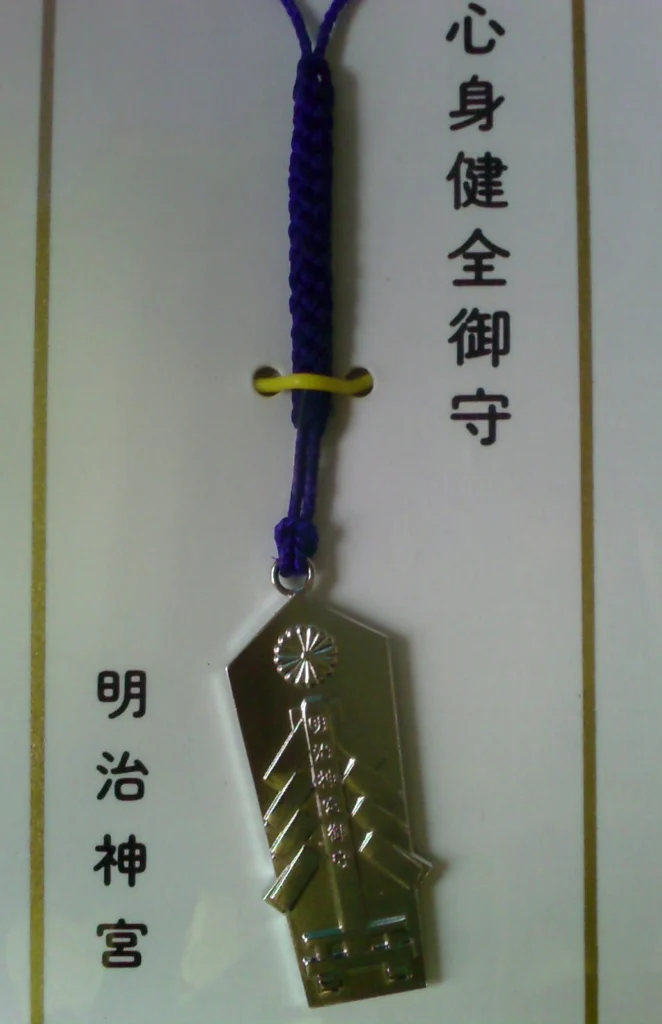
Omamori are small amulets that are believed to hold the spirit of the kami (the Shinto deities). They are protective charms that offer good fortune and keep danger away. They are personal, and people usually choose one that matches a specific request to the kami.
Most omamori are colorful embroidered pouches with the shrine’s name and the type of request written on them. Jinja Honcho says you should not open the pouch or look inside. People often carry them or attach them to a bag. They also make meaningful gifts for friends and family.
Omikuji: Paper Fortunes
Omikuji are sealed paper fortunes. You draw one at the shrine for a small sum. When you open it, people often fold it and tie it to a string on the shrine grounds. This is especially common if the fortune is bad.

Ema: Wooden Wish Plaques
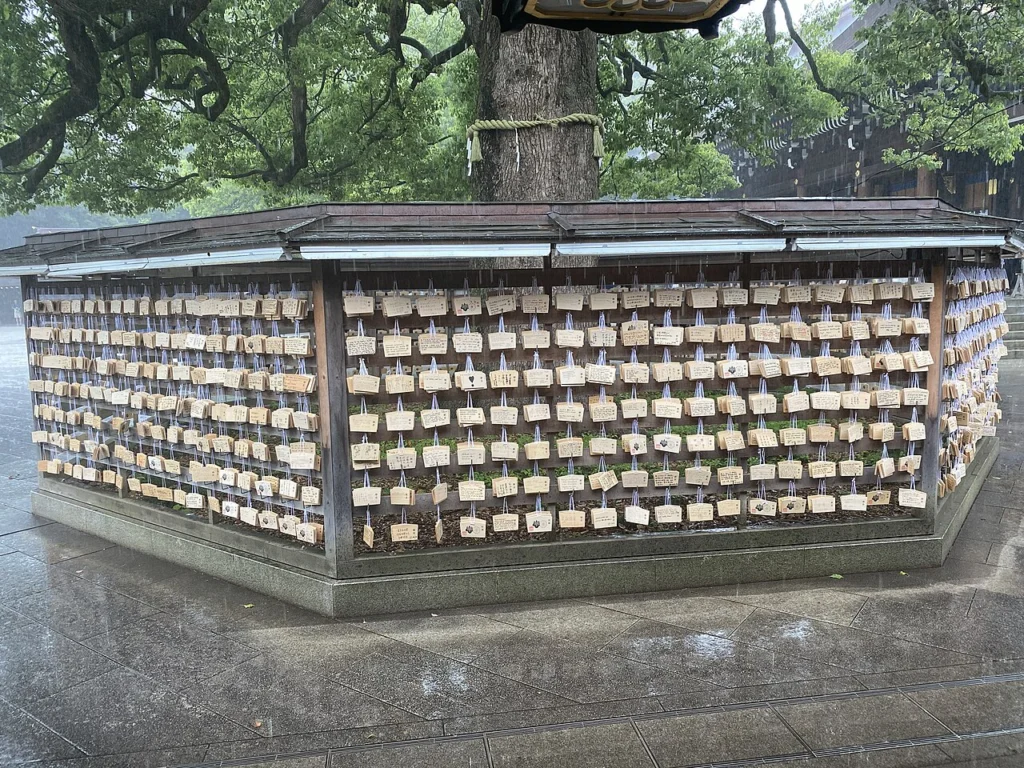
Ema are small wooden plaques with a painted picture and space to write your wish to the kami. Although ema are often taken home as souvenirs, Jinja Honcho says it is customary to leave them at the shrine. You hang them in the designated area of the grounds.
Goshuin: Stamps That Record Your Visit
Goshuin are red stamps written in Japanese, usually with the shrine’s name and the date handwritten in black ink. Each shrine has its own seal. Many people in Japan collect them in a special book called a goshuincho.
A goshuin is a record of your own visit to that shrine. Jinja Honcho says this means it is not suitable as a gift.
Ofuda: Sacred Plaques for the Home
Ofuda are flat pieces of wood or Japanese paper (washi) with the name of the enshrined kami or the shrine. They are believed to hold the divine power of the kami. In Japan they are placed on the household shelf for the kami, called a kamidana. They are generally renewed every year at the shrine.
How to Treat Them
- Respect: Jinja Honcho says omamori are embodiments of the power of the kami, so they are not simple souvenirs. It is appropriate to keep them yourself or give them to family or friends.
- Offering: You receive them for a small donation. Most shrines state the amount.
- Ema: Hang them at the shrine. Do not take them home.
- Goshuin: Keep it as your own record of the visit.
- Follow the shrine: If the priests at a shrine ask you to do something differently, follow their instructions.
For the basics of visiting a shrine, see our shrine and temple etiquette guide. For where to go, see temples and shrines in Tokyo.
Where to Try Them in Tokyo
- Meiji Jingu: a large shrine in Shibuya with many ema. See Meiji Jingu.
- Hanazono Shrine: a shrine in Shinjuku with omikuji and a lively atmosphere. See Hanazono Shrine.
- Suga Shrine: a quiet shrine in Yotsuya. See Suga Shrine in Yotsuya.
- New Year: many people visit a shrine in the first days of the year. See New Year in Tokyo.
More on Japanese customs: our Japanese culture guide.
You can also make your own omamori in Asakusa. At Orinami, you weave the cloth by hand and the staff sew it into a pouch. See our omamori making guide.
FAQ
What is an omamori?
An omamori is a small protective amulet that is believed to hold the spirit of the kami. It is a pouch with the shrine’s name and the type of request written on it.
Can I open my omamori?
No. Jinja Honcho says you should not open the pouch or look inside.
What do I do with a bad omikuji?
People often fold the fortune and tie it to a string on the shrine grounds, especially if it is a bad one.
Should I take my ema home?
It is customary to leave ema at the shrine. You can hang them in the designated area.
Can I give a goshuin as a gift?
No. A goshuin records your own visit to that shrine, so Jinja Honcho says it is not suitable as a gift.
Keep reading
Sources
This guide is based on the official information below, not on our own visit. Last checked: November 2026 (on November 15, 2026). Each shrine sets its own offerings, so please check at the shrine.
Also nearby: Kamidana: the Shinto household shrine