Researched guide · Last checked: Nov 15, 2026
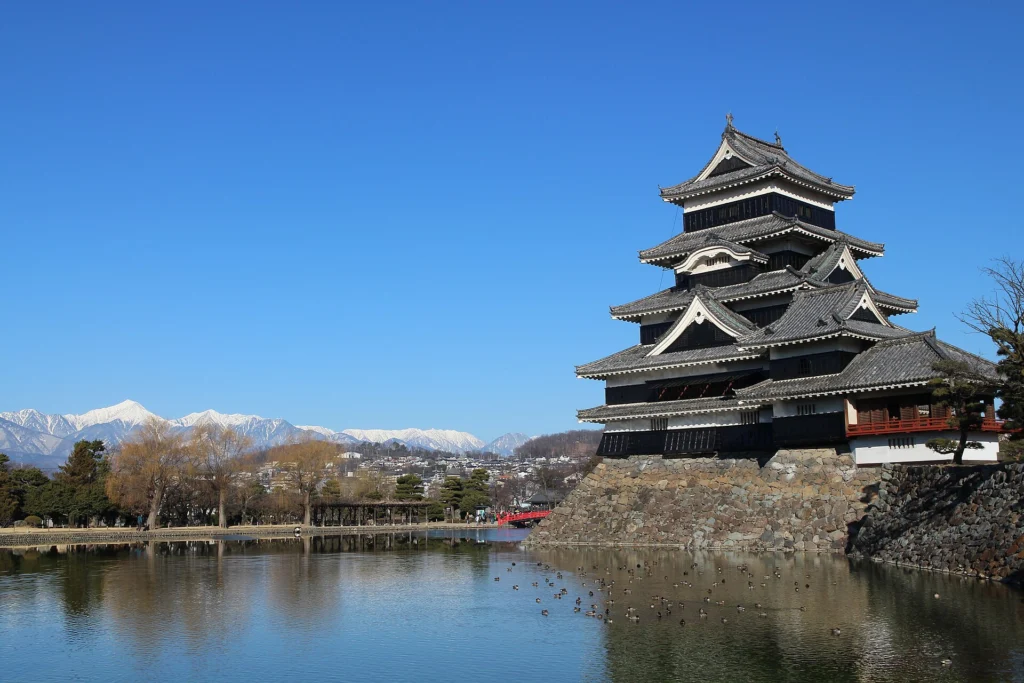
Matsumoto Castle in Matsumoto, Nagano, is a National Treasure. Among the 12 castle keeps in Japan that survive from the old days, it has the oldest five-tiered, six-story keep. Matsumoto City’s official view is that the main keep, the small Inui keep and the connecting tower were built in 1593 to 1594 by Ishikawa Kazumasa and his son Yasunaga. The castle is about 20 minutes on foot from Matsumoto Station, and the limited express Azusa from Tokyo takes about 2 hours 30 minutes.
Quick answer
An original castle keep and National Treasure, with a garden inside the inner moat.
Hours: 8:30 to 17:00 (last entry 16:30). Longer hours at Golden Week; January 1 to 3: 10:00 to 15:30. Admission: Garden and keep: adults 1,200 yen (e-ticket) or 1,300 yen (paper ticket on the day), elementary and junior high school students 400 yen, preschool children free. Closed: December 29 to 31.
Quick facts
| What it is | An original castle keep and National Treasure, with a garden inside the inner moat |
| Hours | 8:30 to 17:00 (last entry 16:30). Longer hours at Golden Week; January 1 to 3: 10:00 to 15:30 |
| Admission | Garden and keep: adults 1,200 yen (e-ticket) or 1,300 yen (paper ticket on the day), elementary and junior high school students 400 yen, preschool children free |
| Closed | December 29 to 31 |
| Address | 4-1 Marunouchi, Matsumoto, Nagano |
| Nearest station | Matsumoto Station (JR Shinonoi Line), about 20 minutes on foot or about 10 minutes by Town Sneaker bus |
| From Tokyo | JR limited express Azusa (Chuo Line and Shinonoi Line), about 2 hours 30 minutes |
| Last checked | November 2026 |
What to see
- Five National Treasure buildings: the main keep, the small Inui keep, the Watari-yagura tower that links them, the Tatsumi tsuke-yagura and the Tsukimi-yagura. They were named a National Treasure in 1936.
- Built for war: the main keep, the Inui keep and the Watari-yagura have 115 small openings for arrows and guns and 11 ishi-otoshi, openings in the floor for attacking enemies below. The walls on the first two floors are about 29 cm thick.
- Moon-viewing tower: the Tsukimi-yagura was added about 40 years later, in the peaceful early Edo period, and has almost no defenses.
- Hidden foundation: the castle stands on soft ground. Inside the stone base, 16 hemlock logs about 5 m long helped hold up the 1,000-ton main keep.
- Stone walls: the walls under the keeps are about 400 years old and have never been rebuilt. They are made of natural, uncut stones (nozura-zumi).
Inside the keep
- Steep stairs: you can only go up by stairs. There are about 140 steps, and the steepest is about 61 degrees. Wheelchairs cannot go inside.
- Shoes off: you take off your shoes at the entrance and carry them in a bag handed out there.
- Time: about 30 to 40 minutes when quiet, or about 60 minutes when busy.
- Good to know: there are no toilets inside the keep, and photos are not allowed near the stairs.
Before you go
- One entrance: you can enter the garden only through the Kuromon gate on the south side, not from the red Uzumi bridge.
- Crowds: Golden Week and the Obon holidays in August are very busy. The castle limits entry, and you may have to wait a long time to go in. E-tickets have a set date and time.
- Free guides: volunteer guides, including volunteer interpreters, are usually in Matsumoto Castle Park (except over New Year and some other days).
- Food and bags: eating is not allowed in the inner garden; use the park outside the inner moat. Coin lockers are in the garden.
- Combined tickets: e-tickets for the castle with the former Kaichi School (adults 1,600 yen) and other Matsumoto museums are sold online.
Getting there from Tokyo
- Train: the castle says the JR limited express Azusa (Chuo Line and Shinonoi Line) from Tokyo takes about 2 hours 30 minutes to Matsumoto Station.
- On foot or bus: walk about 20 minutes from Matsumoto Station, or take the Town Sneaker loop bus (north course) from the Oshiro Exit to Matsumoto-jo/Shiyakusho-mae, about 10 minutes.
- Car: about 3.5 km (about 20 minutes) from Matsumoto IC on the Nagano Expressway. The castle says Matsumoto IC is about 2 hours 40 minutes from Tokyo by the Chuo Expressway.
Closer to Tokyo, you can visit Odawara Castle and the Imperial Palace East Gardens, on the site of Edo Castle. Also in Nagano, see Karuizawa. Find more day trips from Tokyo.
FAQ
How long does it take from Tokyo to Matsumoto Castle?
The limited express Azusa takes about 2 hours 30 minutes from Tokyo to Matsumoto Station. The castle is about 20 minutes on foot from the station.
How much is admission to Matsumoto Castle?
Adults pay 1,200 yen for an e-ticket or 1,300 yen for a paper ticket on the day. Elementary and junior high school students pay 400 yen.
What are the opening hours?
Usually 8:30 to 17:00, with last entry at 16:30. It is closed from December 29 to 31.
How long does it take to see the keep?
About 30 to 40 minutes when quiet and about 60 minutes when busy. In peak seasons you may wait to enter.
Is Matsumoto Castle an original castle?
Yes. It is one of the 12 original castle keeps in Japan, and the oldest with five tiers and six floors.
Keep reading

Also nearby: Ueda Castle Park, Tsumago-juku, Suwa Taisha.
Sources
Facts come from the official Matsumoto Castle website run by Matsumoto City (visitor guide, access, keep structure, construction date and FAQ pages), last checked on November 15, 2026. They are based on official sources, not our own visit. Hours and entry limits change in busy seasons, so check before you go. Last checked: November 2026 (on November 15, 2026).