Researched guide · Checked on Oct 21, 2026
Nezu Shrine (Nezu Jinja) is one of Tokyo’s oldest and most beautiful shrines, tucked into the quiet Yanesen area next to Ueno. Its lacquered gates and halls date from 1706 and are National Important Cultural Properties, and a tunnel of small red torii gates winds down the hillside. In April, about 3,000 azalea bushes bloom in its garden. Visiting the grounds is free.
Quick answer
Admission: free (the azalea garden charges a donation during the April festival).
Karamon gate hours: from 5:00–6:00 to 17:00–18:00, depending on the month (October: 5:30–17:30).
Getting there: about 5 minutes on foot from Nezu or Sendagi Station (Tokyo Metro Chiyoda Line) or Todaimae Station (Namboku Line).
About the shrine
According to the shrine, it was founded about 1,900 years ago by the legendary hero Yamato Takeru in Sendagi. It moved to its present site in 1706, when the shogun Tokugawa Tsunayoshi ordered a major building project here. Nezu was the guardian shrine of Tokugawa Ienobu, Tsunayoshi’s heir and the sixth shogun, who fixed its main festival on September 21.
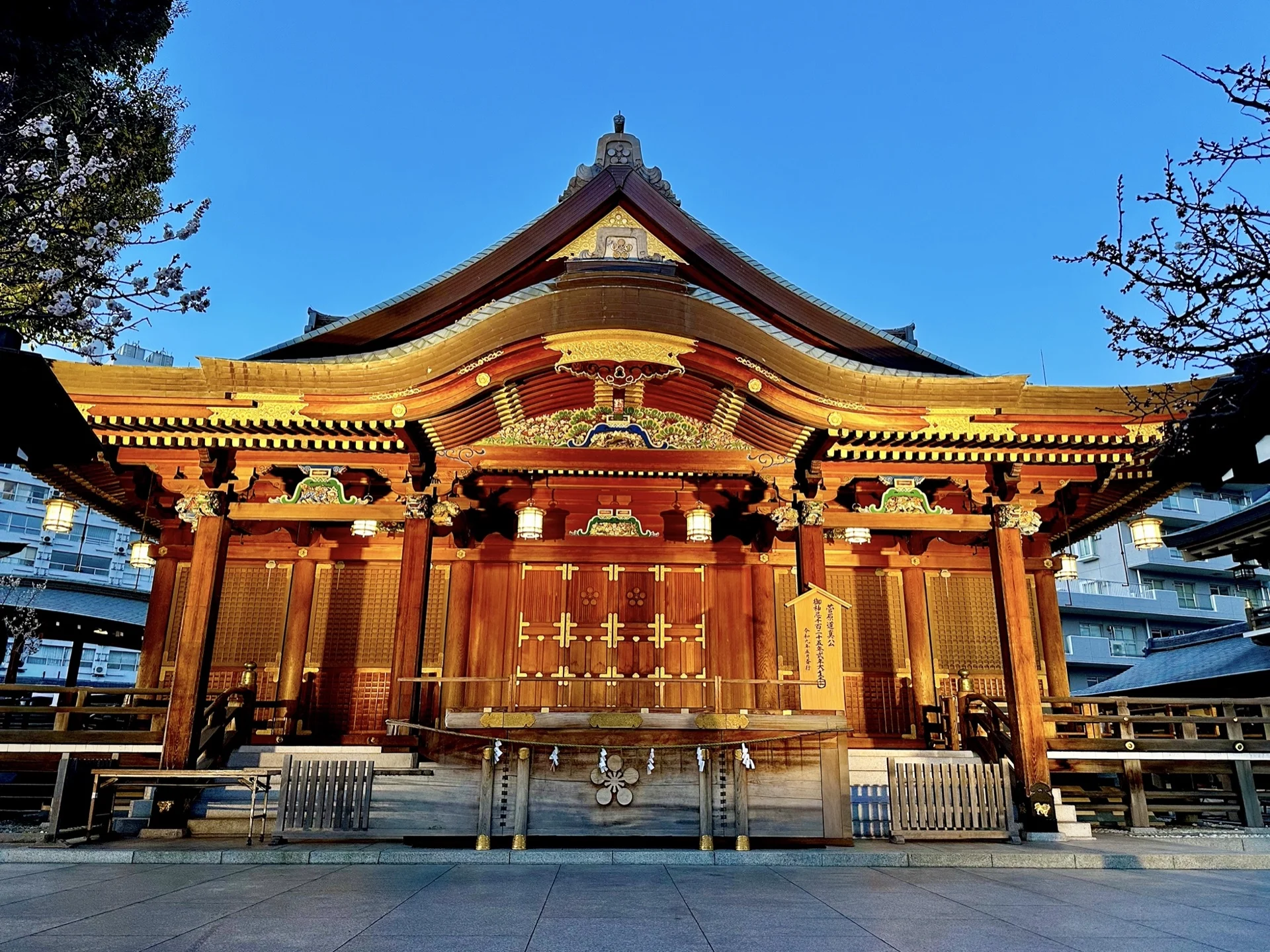
Seven structures finished in 1706 survive and are National Important Cultural Properties: the main hall, offering hall and worship hall (joined in the gongen style), the Karamon gate, the west gate, the sukibei fence and the Romon gate.
What to see
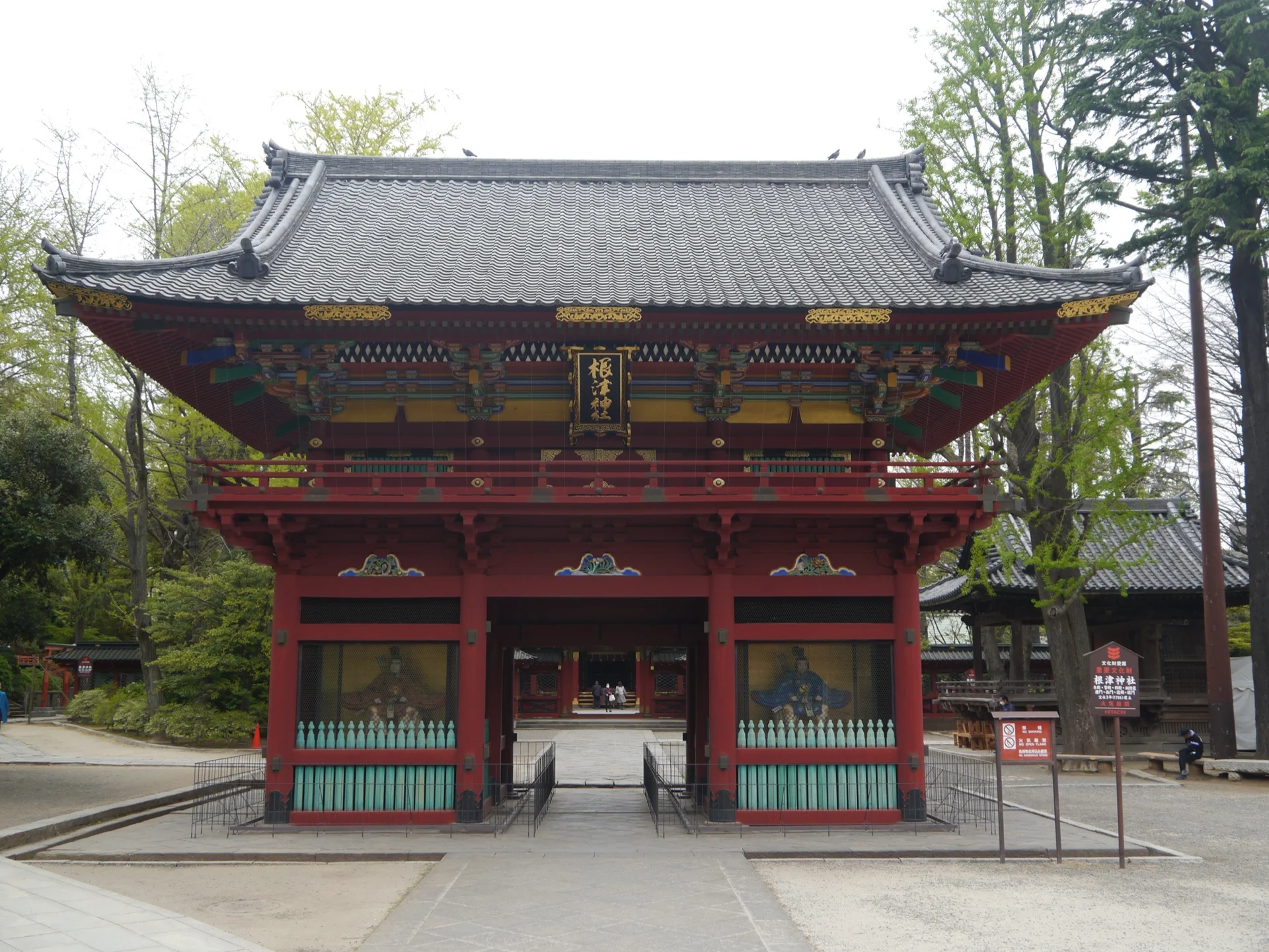
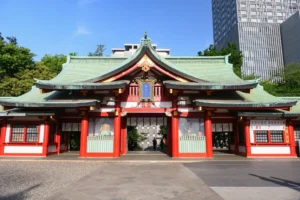
- Romon gate: the large two-story gate at the entrance. The shrine says it is the only gate of its kind still standing at an Edo-period shrine.
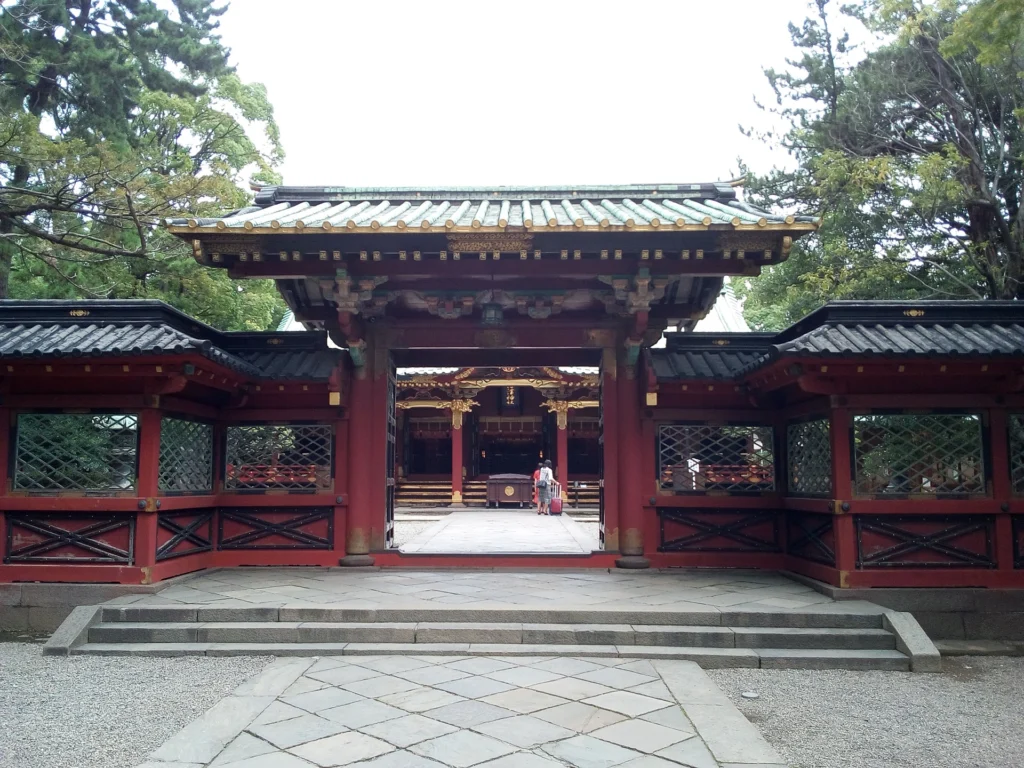
- Karamon gate and sukibei fence: the gate in front of the main halls, and the long fence around them with a diamond-pattern lattice you can see through. The fence runs for about 200 meters.
- Main halls: the worship hall, offering hall and main hall are joined together, with bright lacquer and carvings.
- Senbon Torii and Otome Inari: a path lined with small red torii gates donated by worshippers leads to Otome Inari, a small shrine above the pond.
- Bungo no Ishi: the “writers’ stone”, where the novelists Natsume Soseki and Mori Ogai are said to have sat. Both lived nearby.
- Maihime no Ie: the former home of Mori Ogai, now part of the shrine, opens on weekends and holidays (¥300).
Before you pray, see our guide to shrine and temple etiquette.
The azalea festival
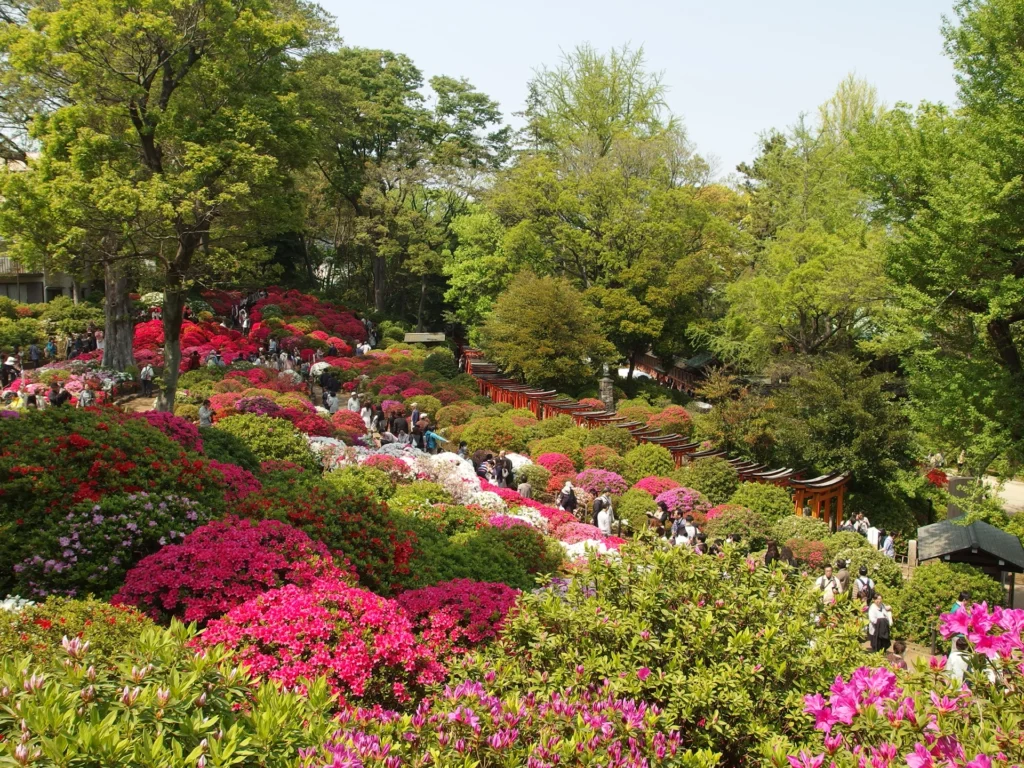
Nezu Shrine’s hillside azalea garden has about 3,000 plants of around 100 varieties. It is open only during the Bunkyo Azalea Festival (Bunkyo Tsutsuji Matsuri) in April.
- In 2026 the festival ran from April 1 to April 30, and the garden was open 9:00–17:30.
- Entry to the garden is a donation of ¥500–¥1,000, depending on the date. The rest of the shrine stays free.
- There is no festival parking, and the shrine gets very busy on spring weekends. Come early on a weekday if you can.
- Dates for 2027 had not been announced when we checked. Look at the shrine’s website from March.
Opening hours
The grounds are open early, but the Karamon gate in front of the main halls opens and closes by season. The amulet and goshuin office opens at 9:30 (9:00 on Sundays and holidays).
| Month | Karamon gate | Amulet office |
|---|---|---|
| January | 6:00–17:00 | 9:30–16:30 |
| February | 6:00–17:30 | 9:30–17:00 |
| March | 6:00–18:00 | 9:30–17:30 |
| April–May | 5:30–18:00 | 9:30–17:30 |
| June–August | 5:00–18:00 | 9:30–17:30 |
| September | 5:30–18:00 | 9:30–17:30 |
| October | 5:30–17:30 | 9:30–17:00 |
| November–December | 6:00–17:00 | 9:30–16:30 |
On January 1 the Karamon gate is open from midnight to 19:00.
Getting there
- Nezu Station or Sendagi Station (Tokyo Metro Chiyoda Line): about 5 minutes on foot.
- Todaimae Station (Tokyo Metro Namboku Line): about 5 minutes on foot.
- Hakusan Station (Toei Mita Line): about 10 minutes on foot.
- The shrine fits well into a walk around Yanaka and Nezu, and makes a good pair with Ueno Park.
Planning which ones to visit? See eight temples and shrines side by side in temples and shrines in Tokyo.
FAQ
Is Nezu Shrine free?
Yes. Visiting the grounds is free. Only the azalea garden charges a donation (¥500–¥1,000 in 2026) during the April festival.
When do the azaleas bloom at Nezu Shrine?
In April. The Bunkyo Azalea Festival ran from April 1 to April 30 in 2026, and the garden is open only during the festival.
What time does Nezu Shrine open?
The Karamon gate opens between 5:00 and 6:00 and closes between 17:00 and 18:00, depending on the month. The amulet office is open from 9:30.
How do I get to Nezu Shrine?
Walk about 5 minutes from Nezu or Sendagi Station on the Tokyo Metro Chiyoda Line, or from Todaimae Station on the Namboku Line.
Related Articles
Sources
Hours, history, the grounds and access come from Nezu Shrine’s official website. Festival dates and the garden fee come from Bunkyo City (checked October 21, 2026).