Researched guide · Checked on Oct 20, 2026
This article contains affiliate links. If you book through them, we may earn a commission at no extra cost to you. See our Affiliate Disclosure.
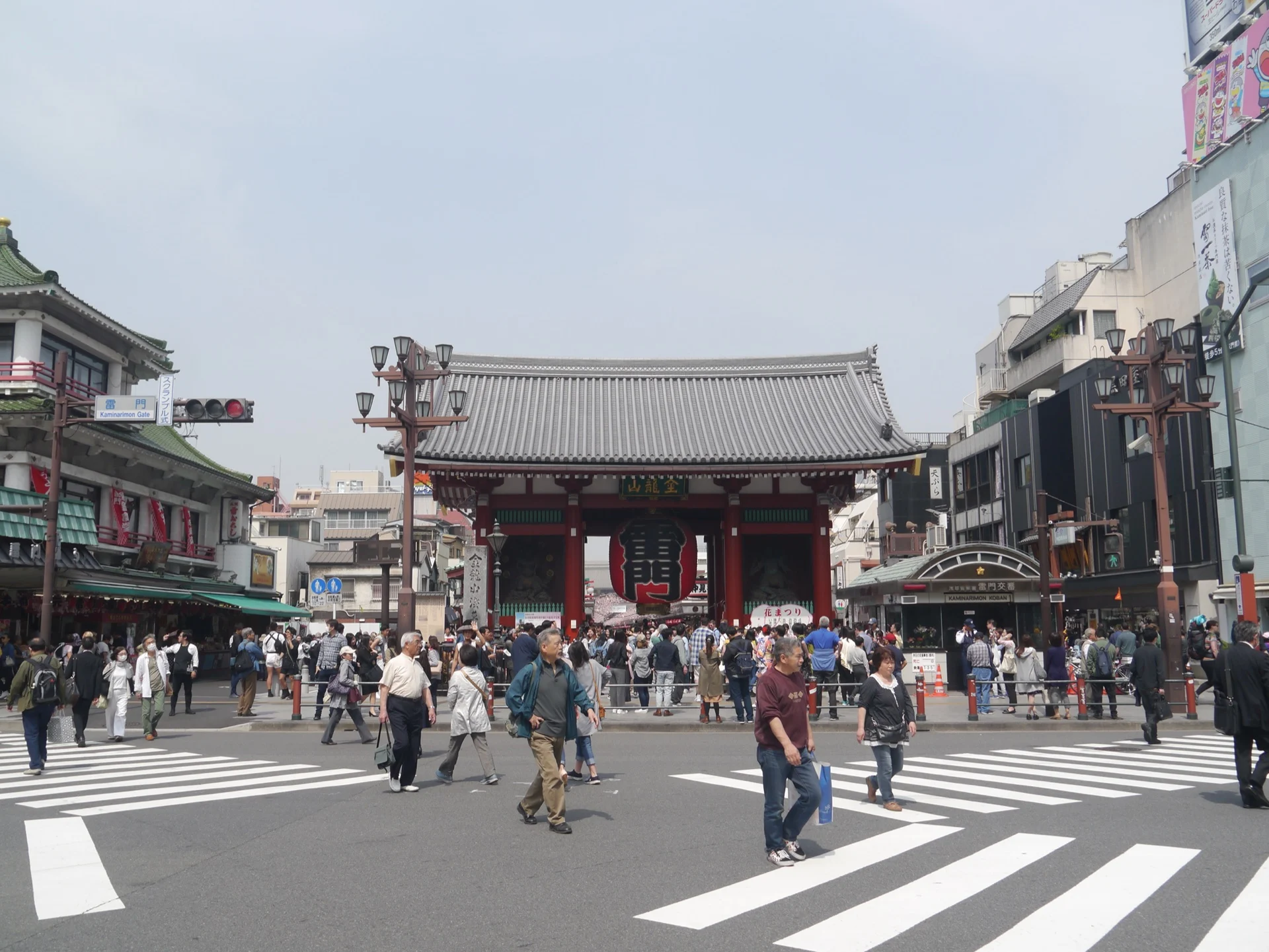
Senso-ji in Asakusa is the oldest temple in Tokyo, dedicated to Kannon, the Bodhisattva of mercy. You enter through the huge Kaminarimon Gate with its red lantern, walk up Nakamise shopping street and reach the Main Hall. The temple grounds are free and open every day.
Quick answer
Main Hall hours: 6:00–17:00 (from 6:30 between October and March).
Admission: free.
Getting there: about 5 minutes on foot from Asakusa Station (Tokyo Metro Ginza Line, Toei Asakusa Line, Tobu Line, Tsukuba Express).
The story of Senso-ji
According to the temple, on March 18, 628, two fishermen brothers found a statue of Kannon in their net in the Sumida River. The local village head turned his house into a temple to worship it, and in 645 the priest Shokai built a hall and decided to keep the statue hidden from view. It has never been shown since. The temple grew under the Tokugawa shoguns, and Asakusa became one of the cultural centers of Edo.
What to see
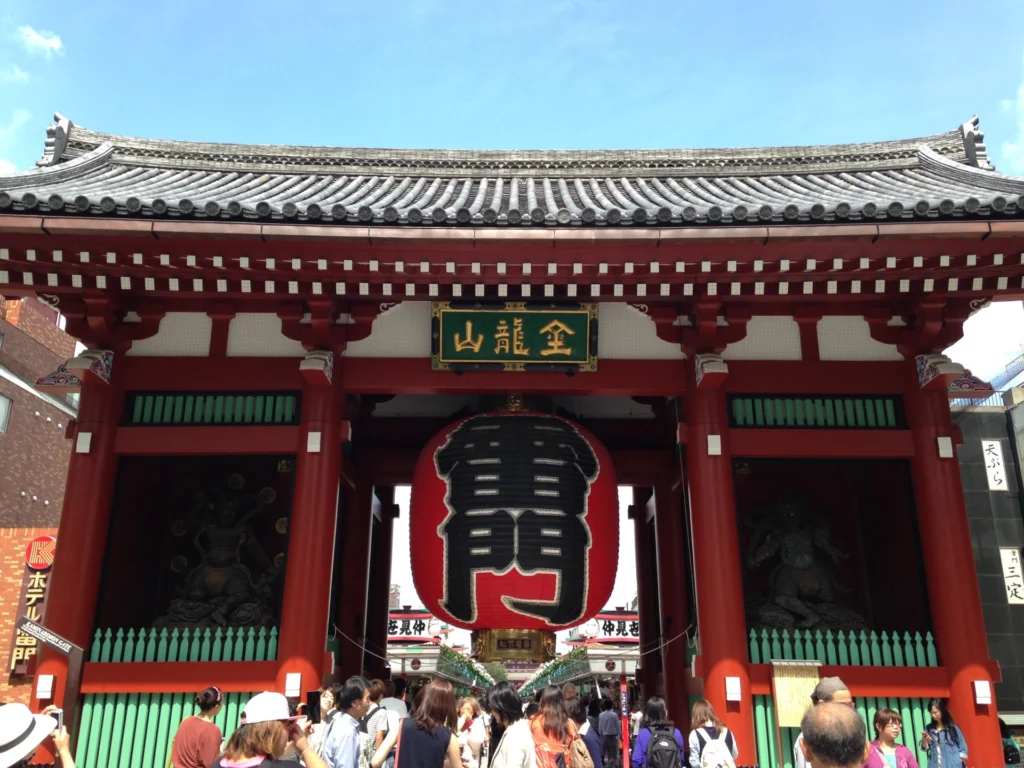
- Kaminarimon Gate: the main gate, with statues of Fujin (god of wind) and Raijin (god of thunder) and a red lantern about 3.9 m high and weighing about 700 kg. The current gate was rebuilt in 1960.
- Nakamise: about 250 m of shops between Kaminarimon and Hozomon, selling traditional toys, sweets and souvenirs. Shops here date back to around 1685, and the red-lacquered shopfronts were built in 1925.
- Hozomon Gate: the inner gate, rebuilt in 1964.
- Main Hall (Kannon-do): rebuilt in 1958 after it was destroyed in the 1945 air raids. The hidden Kannon statue is kept here. You can step up into the inner area to pray; take off your shoes before stepping onto the tatami. The 18th of each month, Kannon’s day, is especially busy.
- Five-Storied Pagoda: rebuilt in 1973.
- Niten-mon Gate: built in 1649, an Important Cultural Property.
- Yogodo Hall: where you can receive the temple’s goshuin (red seal stamp).
How to pray
At the Main Hall, put your hands together and, if you like, say “Namu Kanzeon Bosatsu” (“I place my trust in Bodhisattva Kannon”). Senso-ji is a Buddhist temple, so you do not clap your hands as you would at a Shinto shrine. See our shrine and temple etiquette guide.
When is Senso-ji crowded?
Google Maps reviews suggest Senso-ji is already busy by about 9:00 and stays busy through midday, even on weekdays. Early morning and the evening are described as much quieter, and weekends and public holidays as especially crowded.
Senso-ji: when it gets busy
Weekdays: Many reviewers found it busy even on weekdays, especially around midday. Early morning is the usual suggestion.
Weekends and holidays: Weekends and public holidays are described as especially crowded. One reviewer suggests arriving before 6:00.
Based on about 50 Google Maps reviews we read in November 2026, found by searching for crowded and for weekday or weekend. Most do not say which day they visited, so the difference between the two charts is approximate. This is not measured data, and we did not visit ourselves.
Reviewers who arrived around 9:00, 10:00 and 11:00 all describe it as already busy, while others suggest coming between 6:00 and 8:00. Several found the temple much calmer in the evening and at night, when the buildings are lit up. They rarely give an exact time, so the evening bars are approximate. We did not find enough reports about the weekend afternoon or the time just before dusk.
The Main Hall is open 6:00 to 17:00, and from 6:30 between October and March, so come back in the evening for the lit-up buildings rather than the hall itself.
Temple etiquette and tips
- Bow lightly at the gate as you enter, and wash your hands and mouth at the purification fountain (Omizuya) before praying.
- At the incense burner, people waft the smoke over themselves for good health.
- Early mornings, before the shops on Nakamise open, are the quietest time to see the gates and Main Hall.
- In the evening the buildings are lit up and the crowds thin out.
- Big events such as the Sanja Matsuri in May bring huge crowds. See our Tokyo events calendar.
Yearly events
| Event | When |
|---|---|
| Hatsumode (New Year visits) | January 1–7 |
| Setsubun (bean throwing) | Around February 3 |
| Hozuki Market | July 9–10 |
| Hagoita (battledore) Market | December 17–19 |
How to get there
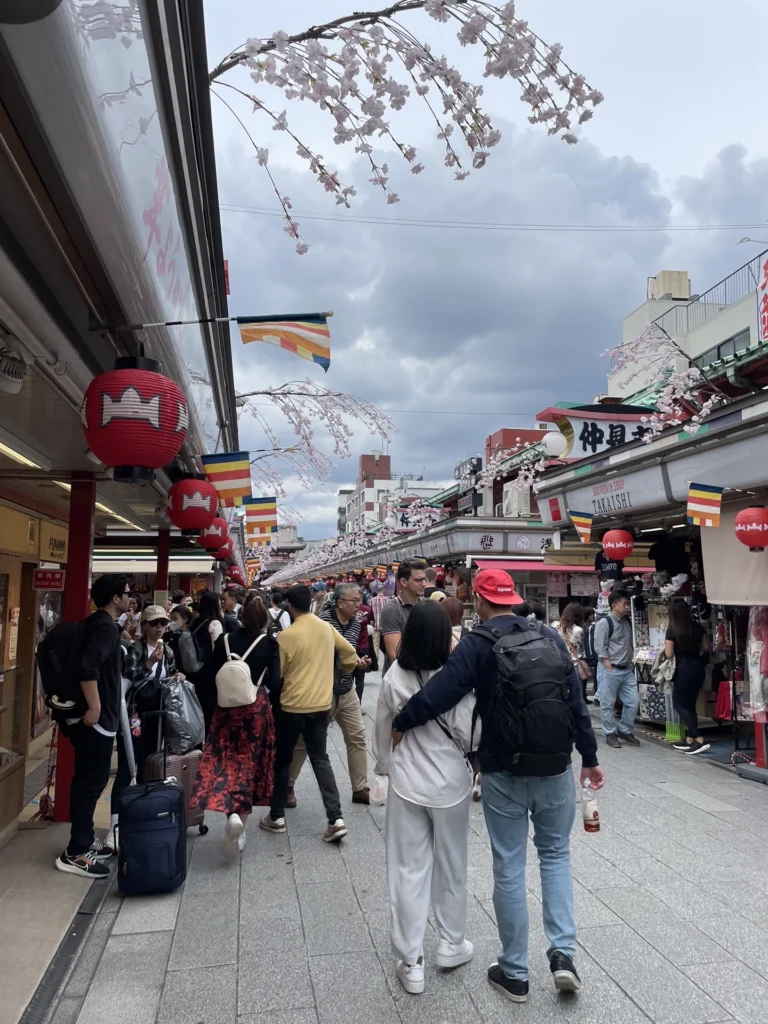
Address: 2-3-1 Asakusa, Taito-ku. It is about 5 minutes on foot from Asakusa Station on the Tokyo Metro Ginza Line, Toei Asakusa Line (Exit A4), Tobu Skytree Line and Tsukuba Express. The temple has no parking. See our Asakusa guide for food and things to do nearby.
Planning which ones to visit? See eight temples and shrines side by side in temples and shrines in Tokyo.
Want to walk around Asakusa in a kimono? See kimono rental in Tokyo.
Want a guide? An English-guided walking tour of Asakusa and Senso-ji can be booked on Klook.
Affiliate link
The Sanja Matsuri in Asakusa is held in May: see Tokyo in May.
Find Asakusa tours
Opens the search results in a new tab. Prices and availability are set by each site. Some of these are affiliate links: we may earn a commission at no extra cost to you.
FAQ
What time does Senso-ji open?
The Main Hall is open 6:00–17:00, and from 6:30 between October and March. Other halls may have different hours.
Is Senso-ji free?
Yes. There is no admission fee.
Do I clap at Senso-ji?
No. Senso-ji is a Buddhist temple. Put your hands together quietly instead of clapping.
Can I see the Kannon statue?
No. The temple’s main statue has been kept hidden since 645.
Can I go inside the Main Hall?
Yes. You can step up into the inner area to pray. Take off your shoes before stepping onto the tatami.
Related Articles


Sources
History, buildings, events, hours and access come from Senso-ji’s official website (checked October 20, 2026). Please check before you go. The crowd notes come from Google Maps reviews, as explained in that section.