Researched guide · Last checked: Nov 14, 2026
Zenpukuji Park (Zenpukuji-koen) is a free metropolitan park in Suginami City, in west Tokyo. It is built around Zenpukuji Pond, which is fed by springs. The pond’s water was once clean enough to be used as an extra water source for the Kanda Josui, an Edo-period water supply. The park has an upper pond with rowboats and a quieter lower pond with reeds, and about 50 kinds of wild birds visit each year.
Quick facts
| What it is | A metropolitan park around two spring-fed ponds, opened in 1961 |
| Size | About 8 hectares; the two ponds cover about 47% of the park |
| Hours | Always open; the service center is open 8:30-17:30 (closed December 29 to January 3) |
| Admission | Free (rowboats are paid) |
| Address | Zenpukuji 2-chome and 3-chome, Suginami City |
| Getting there | Bus from JR Nishi-Ogikubo Station to the Zenpukuji stop, then about 5 minutes on foot |
| Last checked | November 2026 |
What to see
- Upper pond (Kami-no-ike): a wide, open pond with two small islands and the boat area. On the larger island there is a small shrine to Benzaiten (a goddess of water and the arts). Hydrangeas and rose mallows bloom around the pond in summer.
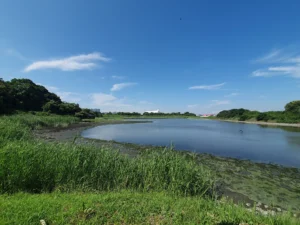
- Lower pond (Shimo-no-ike): more than half of it is covered with reeds and other water plants, with pink water lilies in summer. The woods around it feel wilder than the upper pond.
- Wild birds: the park says you can see about 50 kinds of birds a year, such as ducks, little grebes, great egrets and kingfishers. It is linked to Nakanishi Godo, who founded the Wild Bird Society of Japan in 1934 and lived near the pond.
- Osono-i spring: one of the pond’s springs. A legend says Minamoto no Yoritomo dug for water here in 1189. The spring dried up, so today a well pumps water for a small waterfall.
- Osonoi River water area: a shallow stream between the two ponds where children can play in the water. Suginami City built it in 2018.
Rowboats
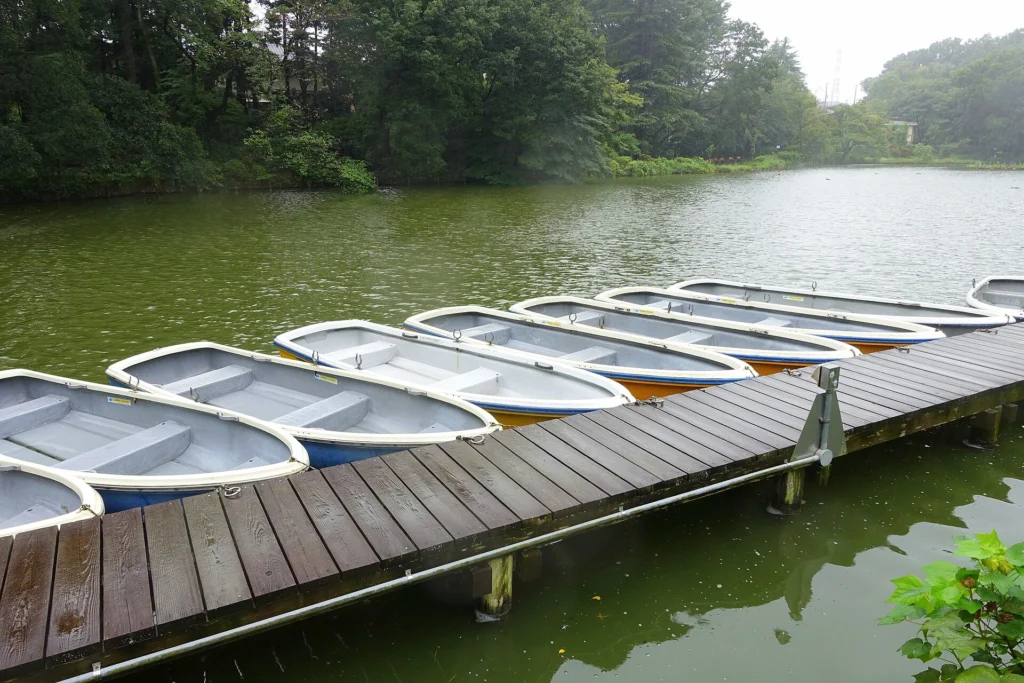
- The boat area on the upper pond opens on Saturdays, Sundays and national holidays only. It is closed from December 1 to the end of February.
- Hours: 9:00-16:50 (last entry 15:50). In November: 9:00-16:20 (last entry 15:20).
- Rowboat (up to 3 adults): JPY 800 per 30 minutes. Pedal boat or animal boat (2 adults and 1 child): JPY 1,000 per 30 minutes.
- Hours can change with the season or weather, so check before you go.
Seasons
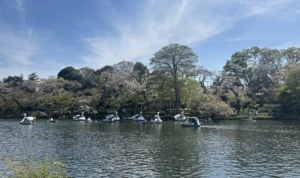
- Spring: cherry blossoms, magnolias and azaleas.
- Summer: hydrangeas, crape myrtle, rose mallows and water lilies.
- Autumn: ginkgo, maples and metasequoia trees.
- Winter: plum blossoms and wintersweet.
Getting there
- From JR Nishi-Ogikubo Station: take a Kanto Bus or Seibu Bus bound for Kami-Shakujii Station (some go to Oizumi-Gakuen Station) and get off at Zenpukuji. Walk about 5 minutes.
- From JR Ogikubo Station: take a Kanto Bus bound for Minami-Zenpukuji and get off at Zenpukuji-koen.
- From Kami-Shakujii Station (Seibu Shinjuku Line): take a Kanto Bus or Seibu Bus bound for Nishi-Ogikubo Station and get off at Zenpukuji. Walk about 5 minutes.
- The park has no parking.
In the same part of west Tokyo, visit Inokashira Park, another pond park, or the free Suginami Animation Museum in Ogikubo. For more green spaces, see the best parks and gardens in Tokyo.
FAQ
Is Zenpukuji Park free?
Yes. The park is free and always open. Only the rowboats cost money.
Can you rent a boat at Zenpukuji Park?
Yes, on the upper pond on Saturdays, Sundays and national holidays. Boats do not run from December 1 to the end of February.
How much is a rowboat?
JPY 800 for 30 minutes for up to 3 adults. Pedal and animal boats are JPY 1,000 for 30 minutes.
What birds can I see?
The park lists ducks, little grebes, moorhens, great egrets and kingfishers. About 50 kinds visit each year.
How do I get to Zenpukuji Park?
Take a bus from JR Nishi-Ogikubo Station to the Zenpukuji stop and walk about 5 minutes. There is no parking.
Keep reading
Sources
Facts come from the Tokyo Metropolitan Park Association’s official pages for Zenpukuji Park (Last checked: November 14, 2026). This page is based on official sources, not our own visit. Last checked: November 2026 (on November 14, 2026).
Also nearby: Asagaya and Ogikubo guide