Researched guide · Last checked: Nov 17, 2026
Koganei Park is a large, free Tokyo Metropolitan park in Koganei City, west Tokyo, beside the Tamagawa Aqueduct. It covers about 81 hectares, which the park says is five times the size of Hibiya Park. It is best known for cherry blossom: about 1,400 trees of around 50 kinds. It also has wide lawns, a wood of oak and pine, and the Edo-Tokyo Open-Air Architectural Museum. The park opened in 1954 and is open at all times.
Quick answer
A large Tokyo Metropolitan park with lawns, woods and cherry trees.
Open: Always open. The service center is open 8:30-17:30; it and the park facilities close over the New Year. Admission: Free (some facilities charge a fee).
Quick facts
| What it is | A large Tokyo Metropolitan park with lawns, woods and cherry trees |
| Known for | About 1,400 cherry trees of around 50 kinds, wide lawns, a wood with a bird sanctuary, a steam locomotive on display |
| Open | Always open. The service center is open 8:30-17:30; it and the park facilities close over the New Year |
| Admission | Free (some facilities charge a fee) |
| Size | About 81 hectares (opened January 14, 1954) |
| Address | Spans Koganei, Kodaira, Nishi-Tokyo and Musashino. Service center: 1-13-1 Sekino-cho, Koganei City |
| Getting there | By bus from JR Musashi-Koganei, JR Higashi-Koganei or Seibu Hana-Koganei Station (see below) |
| Last checked | November 2026 |
What to see
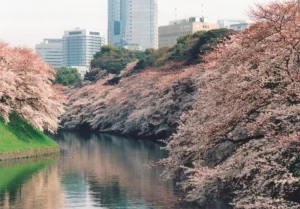
- The Cherry Garden: about 400 of the park’s cherry trees stand in this 2.9-hectare area. Many were planted when the park opened in 1954, and different kinds bloom one after another for about a month.
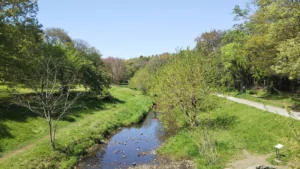
- The Tamagawa Aqueduct bank: the line of cherry trees beside the park was planted in the time of the shogun Tokugawa Yoshimune. It became a national Place of Scenic Beauty in 1924.
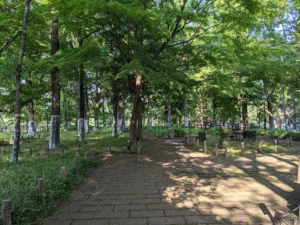
- The Musashino wood: 16 hectares of oak and red pine. Most of it is a bird sanctuary that visitors cannot enter, and more than 40 bird species have been recorded in the park.
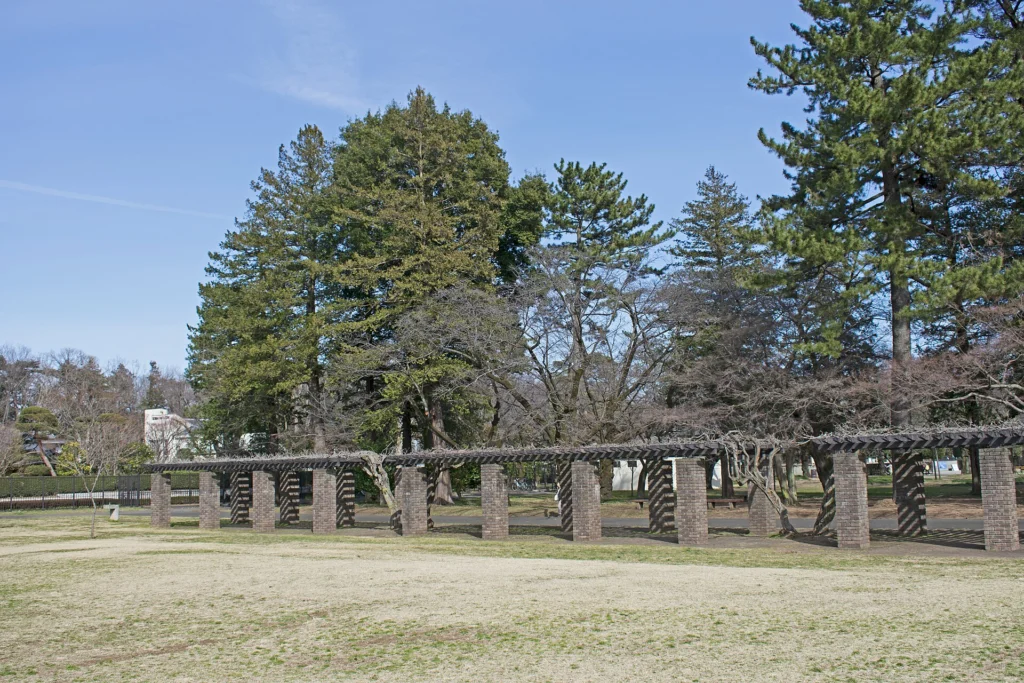
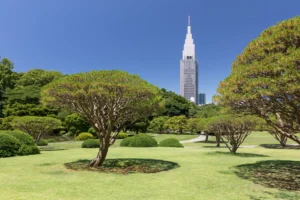
- The lawns: gently rolling grass fields called Tsutsujiyama, Ikoi and Kodomo no Hiroba, used for picnics, jogging and play.
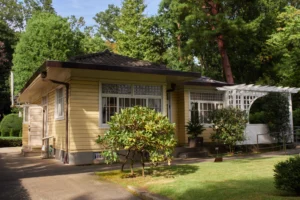
- Edo-Tokyo Open-Air Architectural Museum: an open-air museum of moved historic buildings inside the park. It runs separately from the park, so check its own page before you go.
- Other facilities: a display of a C57 steam locomotive, 16 tennis courts, an archery range, a dog run, a barbecue area, a sled slope and a cycling center. The park says bicycle rental is paused while the cycling center is renewed (notice of October 15, 2026).
Seasons
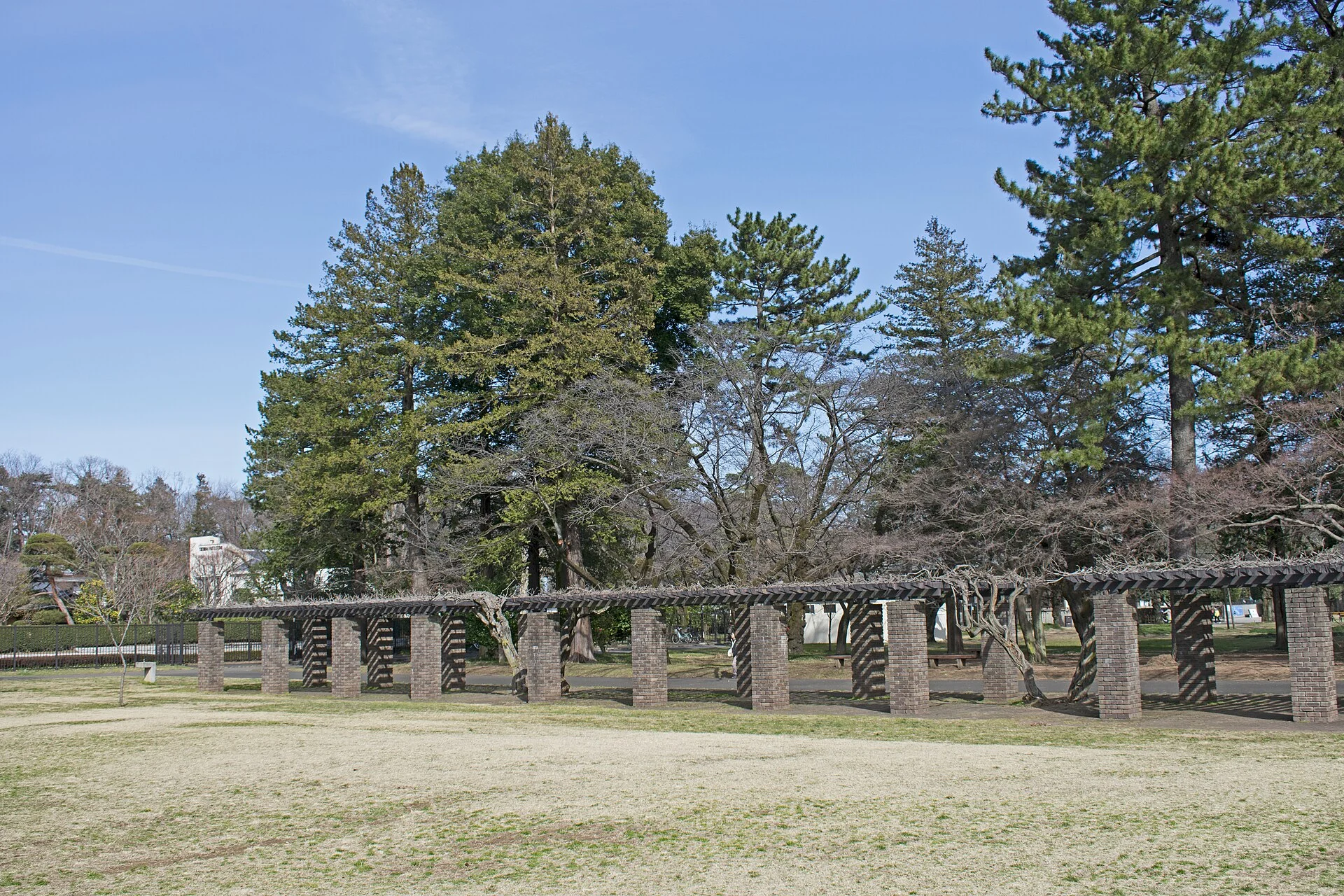
- Spring: cherry blossom, azalea, wisteria and dogwood. From mid-March to early May the park limits photo shoots and group use.
- Summer: hydrangea, crape myrtle and sunflowers.
- Autumn: ginkgo, cosmos and the autumn-flowering cherry called Jugatsu-zakura. The park also lists the osmanthus trees by the museum as a highlight, with fragrant orange flowers.
- Winter: plum, camellia and wintersweet.
Tips
- Use public transport on weekends and holidays. The park says Itsukaichi-kaido road jams, and parking can be restricted when it is full.
- Take your trash home. Motorbikes and scooters may not enter, even if pushed.
- Keep music low and do not play it at night. There is no wall for tennis practice.
- Keep dogs on a leash and take droppings with you. Smoking is discouraged in crowded places.
- Parking is paid and open 24 hours (431 spaces in lot 1, 126 in lot 2).
Getting there
- JR Chuo Line, Musashi-Koganei Station: Seibu Bus to Koganei Koen Nishiguchi, or Kanto Bus to Edo-Tokyo Tatemono-en Mae, Koganei Koen Mae or Sports Center Iriguchi.
- JR Chuo Line, Higashi-Koganei Station: CoCo Bus to Koganei Koen Iriguchi.
- Seibu Shinjuku Line, Hana-Koganei Station: Seibu Bus to Koganei Koen Nishiguchi.
- The park does not list walking times from the stations.
Koganei Park is next to the Edo-Tokyo Open-Air Architectural Museum. For more green space in the west, see Nogawa Park, Inokashira Park and our Mitaka and Musashino guide. For blossom timing, read cherry blossoms in Tokyo.
FAQ
Is Koganei Park free?
Yes. Entry is free. A few facilities, such as the tennis courts and the barbecue area, charge fees.
What are the opening hours?
The park is always open. The service center is open 8:30-17:30, and it and the facilities close over the New Year.
When do the cherry trees bloom?
Different kinds bloom one after another for about a month in spring, according to the park. Check the park’s notices for the current guidance.
Can I enter the bird sanctuary?
No. Most of the wood is a bird sanctuary and entry is not allowed.
How do I get there without a car?
Take a bus from Musashi-Koganei, Higashi-Koganei or Hana-Koganei Station. The park asks visitors to use public transport on weekends and holidays.
Keep reading
Sources
Facts come from the Tokyo Metropolitan Park Association’s official page for Koganei Park (Last checked: November 17, 2026). This page is based on official sources, not our own visit. Last checked: November 2026 (on November 17, 2026).