Researched guide · Last checked: Nov 15, 2026
Roka Koshun-en is a free Tokyo Metropolitan park in Kasuya, Setagaya City. It was built around the home and fields where the writer Tokutomi Roka (Kenjiro) lived for about 20 years, until he died on September 18, 1927. Roka is known for works such as Hototogisu and Shizen to Jinsei. His former home is a Tokyo historic site, and the park opened in 1938 to keep the look of the Musashino countryside.
Quick answer
A Tokyo Metropolitan park built around a writer’s former home and fields.
Hours: The park is always open. The Koshun-en area is open 9:00-16:30; the former home and the memorial hall close at 16:00. Closed: The service center and the Koshun-en area close over the New Year. Admission: Free.
Quick facts
| What it is | A Tokyo Metropolitan park built around a writer’s former home and fields |
| Known for | The thatched former home of Tokutomi Roka, Roka Memorial Hall, a bamboo grove and seasonal flower beds |
| Hours | The park is always open. The Koshun-en area is open 9:00-16:30; the former home and the memorial hall close at 16:00 |
| Closed | The service center and the Koshun-en area close over the New Year |
| Admission | Free |
| Opened | February 27, 1938 |
| Size | About 8 hectares (80,304.43 square meters, as of July 2015) |
| Address | 1-chome Kasuya, Setagaya City (service center: 1-20-1 Kasuya) |
| Nearest station | Roka-koen or Hachimanyama Station on the Keio Line, about 15 minutes on foot |
| Last checked | November 2026 |
What to see
- Tokutomi Roka’s former home: the thatched main house and two study buildings, Shusui Shoin and Baika Shooku, stand in the Koshun-en area. The buildings were repaired in the 1980s and became a Tokyo historic site on March 10, 1986.
- Roka Memorial Hall: built in 1959 for the belongings, manuscripts, letters and farm tools that came with the property. Part of the collection is shown. The park announced a show titled “Tokutomi Roka and Kashiwagi Gien” on September 28, 2026; check the park’s page for dates.
- The graves of Roka and his wife Aiko: a small path east of Koshun-en leads to a natural-stone marker among oak trees. The inscription was written by Roka’s elder brother, Tokutomi Soho.
- The bamboo grove: the moso bamboo was planted by Roka. Together with the thatched house, it recalls the Musashino scenery he loved.
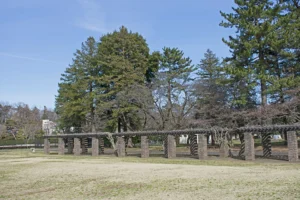
- The flower hill (Hana no Oka): 15 Takato kohigan cherry trees from Takato in Nagano, a wisteria trellis, a bush clover tunnel and five central flower beds with cosmos, sunflowers and rape blossom.
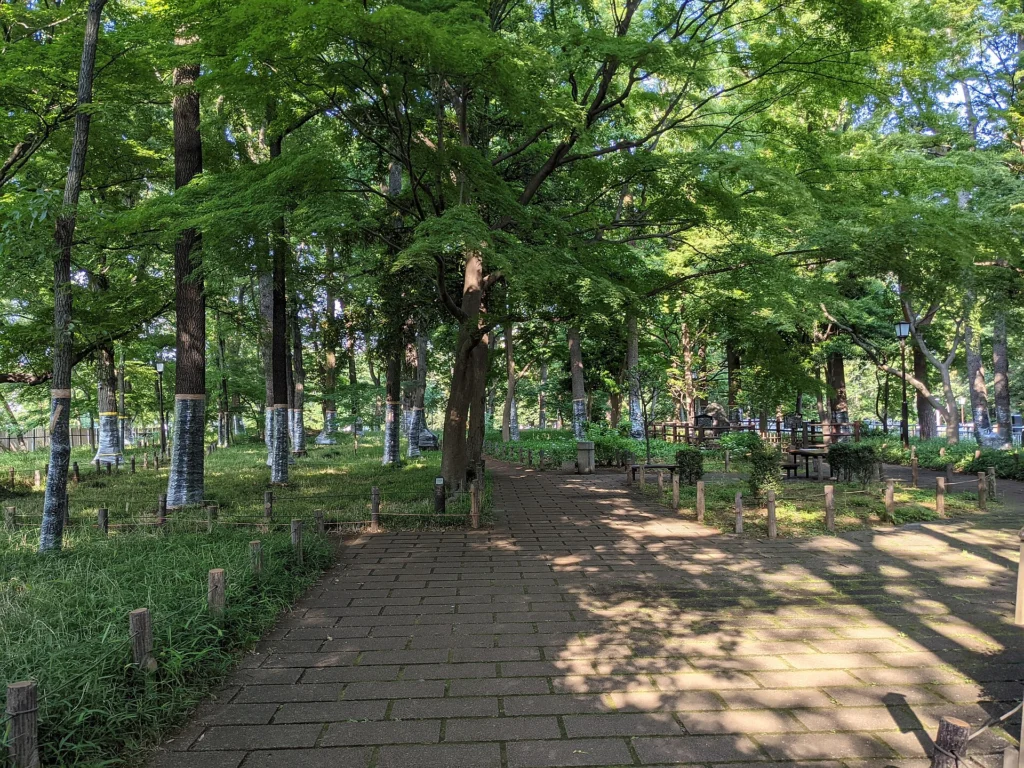
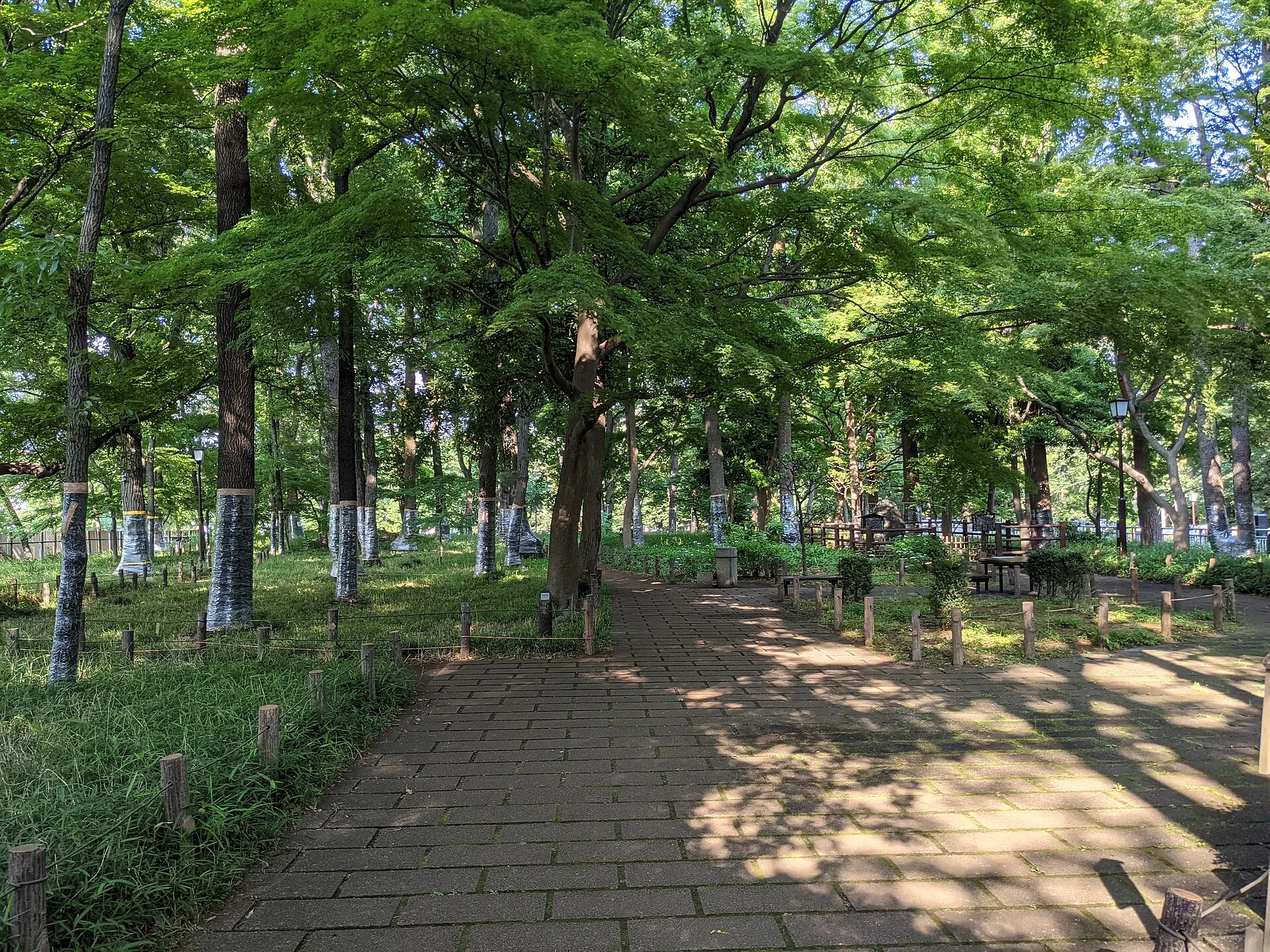
- Other spots: a grass plaza, a field athletics area, a children’s park and a dog run (register at the service center).
Seasons
- Spring: cherry blossom, tulips and rape blossom.
- Summer: crape myrtle, rose of Sharon and sunflowers.
- Autumn: ginkgo, bush clover, maples and cosmos.
- Winter: plum and wintersweet.
Tips
- Plan to arrive well before 16:00 if you want to see the former home and the memorial hall.
- The park offers a map in English (PDF) on its official page.
- Keep dogs on a leash and take droppings with you. Smoking is discouraged in crowded places.
- The Setagaya Literary Museum, which shows manuscripts, letters and first editions of about 55 writers linked to Setagaya, is about 10 minutes on foot from the park.
Getting there
- Keio Line, Roka-koen or Hachimanyama Station: about 15 minutes on foot.
- Keio Bus between Keio Chitose-Karasuyama and Odakyu Chitose-Funabashi: get off at Roka Koshun-en, then walk about 7 minutes.
- There is paid parking.
Roka Koshun-en fits well with a day in southwest Tokyo. See our Setagaya guide, the Setagaya Art Museum and Kinuta Park, or browse parks and gardens in Tokyo.
FAQ
Is Roka Koshun-en free?
Yes. Entry to the park is free. Only the meeting hall, a Japanese-style room, charges a fee and needs a reservation.
What time does it close?
The Koshun-en area is open 9:00-16:30. The former home and the memorial hall close at 16:00.
Who was Tokutomi Roka?
A writer of the Meiji and Taisho periods, known for Hototogisu, Shizen to Jinsei and Mimizu no Tawakoto. He lived in Kasuya for about 20 years until 1927.
Is there an English map?
Yes. The park’s official page has an English map as a PDF.
How far is it from the station?
About 15 minutes on foot from Roka-koen or Hachimanyama Station on the Keio Line. A bus stop is about 7 minutes away on foot.
Keep reading
Sources
Facts come from the Tokyo Metropolitan Park Association’s official page for Roka Koshun-en (Last checked: November 18, 2026). This page is based on official sources, not our own visit. Last checked: November 2026 (on November 15, 2026).