Researched guide · Last checked: Nov 15, 2026
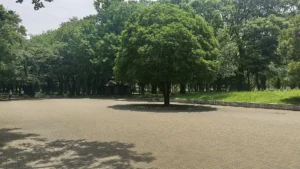
Rinshi-no-mori Park (Rinshi-no-mori-koen) is a free metropolitan park on the border of Meguro City and Shinagawa City. It began in 1900 as a tree nursery for forestry research, and later became the national Forestry Experiment Station (“rinshi” is short for this name). The station moved to Tsukuba, and the land opened as a park in 1989. Many trees planted for research are now more than 100 years old.
Quick answer
A metropolitan park on a former forestry research station, opened in 1989.
Hours: Always open; the service center closes over the New Year holidays. Admission: Free.
Quick facts
| What it is | A metropolitan park on a former forestry research station, opened in 1989 |
| Size | About 12 hectares; long and thin, about 700 m east to west and 250 m north to south |
| Hours | Always open; the service center closes over the New Year holidays |
| Admission | Free |
| Address | Shimo-Meguro 5-chome, Meguro City, and Koyamadai 2-chome, Shinagawa City |
| Getting there | About 10 minutes on foot from Musashi-Koyama Station |
| Last checked | November 2026 |
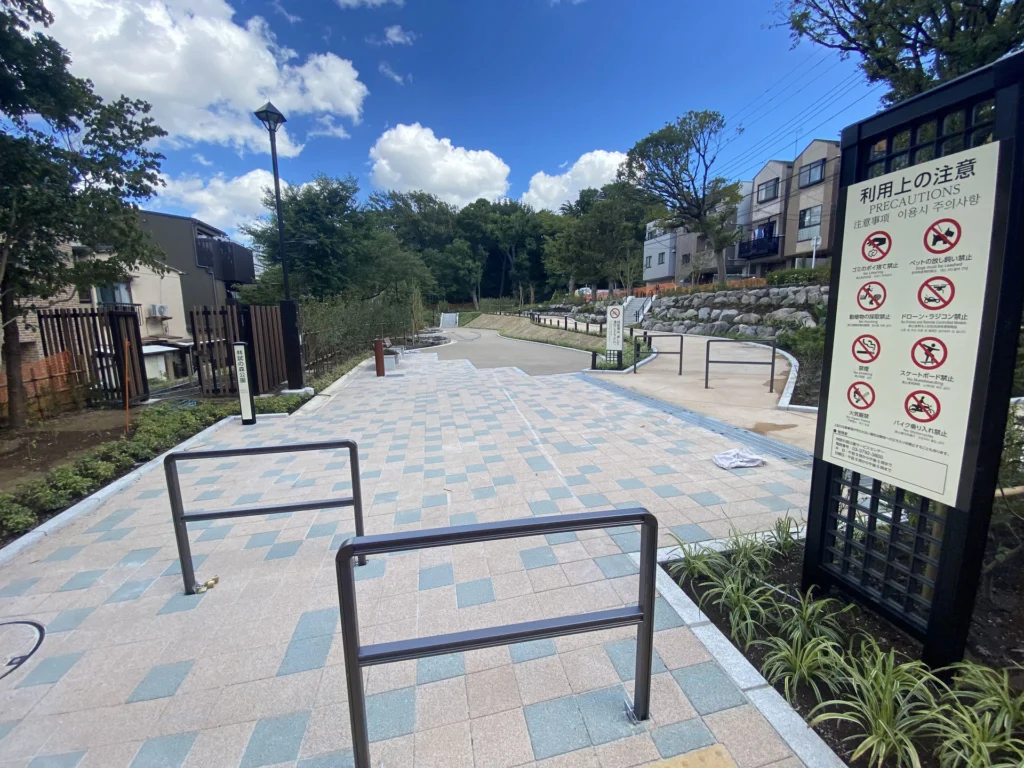
What to see
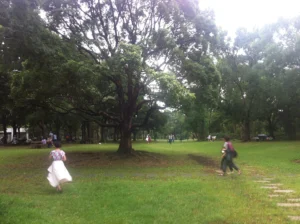
- Giant trees: many trees have trunks more than 3 m around, such as zelkova, camphor, poplar and plane trees. The big camphor tree on the lawn is the park’s symbol tree.
- Wild birds: azure-winged magpies, Japanese tits and pygmy woodpeckers can be seen all year. The park says birds that are rare in central Tokyo, such as blue-and-white flycatchers, narcissus flycatchers, kingfishers and Japanese paradise flycatchers, have also been recorded. Ducks and little egrets visit the stream.
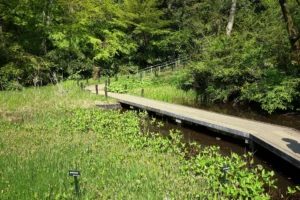
- Ponds and stream: the land was once wetland. Today an upper pond, a lower pond and a small stream remain, with a wood of bald cypress trees behind them.
- A walk around the park: the path around the outside of the park takes about 45 minutes.
- Jabu-jabu pond: a shallow pond for water play in summer, for children up to the lower grades of elementary school.
- Butterfly garden: the park announced a new butterfly garden in November 2026.
Seasons
- Spring: cherry blossoms, including early-blooming Kawazu cherry.
- Summer: hydrangeas, Japanese irises and crape myrtle.
- Autumn: sweet osmanthus.
Getting there
- From Musashi-Koyama Station (Tokyu Meguro Line, Toei Mita Line, Tokyo Metro Namboku Line): about 10 minutes on foot.
- By bus from JR Shibuya Station: take Tokyu Bus route 72 (via Ebisu) bound for Gotanda and get off at Rinshi-no-mori Iriguchi. The park is about 1 minute from the stop.
- The park has no parking.
Near the park, try the long shopping street Musashi-Koyama Palm. For more of this area, see our Meguro and Shirokanedai guide and Shinagawa guide. For more green spaces, see the best parks and gardens in Tokyo.
Also nearby: Musashi-Koyama and Togoshi Guide: Two Shopping Streets and a Forest Park
FAQ
Is Rinshi-no-mori Park free?
Yes. The park is free and always open.
Why is it called Rinshi-no-mori?
“Rinshi” is short for the Forestry Experiment Station that used this land until 1978. “Mori” means forest.
What birds can I see?
Azure-winged magpies, Japanese tits and pygmy woodpeckers all year. Kingfishers and some flycatchers have also been recorded.
How long does it take to walk around the park?
About 45 minutes on the outer path.
How do I get to Rinshi-no-mori Park?
Walk about 10 minutes from Musashi-Koyama Station, or take Tokyu Bus route 72 from Shibuya to Rinshi-no-mori Iriguchi. There is no parking.
Keep reading
Sources
Facts come from the Tokyo Metropolitan Park Association’s official pages for Rinshi-no-mori Park (Last checked: November 15, 2026). This page is based on official sources, not our own visit. Last checked: November 2026 (on November 15, 2026).