Researched guide · Last checked: Nov 14, 2026
Kashima Jingu in Kashima, Ibaraki, honors Takemikazuchi no Okami, a god from Japanese myths who has long been worshipped as a warrior god. The shrine says its history goes back to the time of Emperor Jimmu, the legendary first emperor. In old Heian-period records, only three shrines had the title jingu (grand shrine): Ise, Katori and Kashima. The grounds are a large forest with more than 600 kinds of plants. A direct highway bus runs from Tokyo Station.
Quick answer
Kashima Jingu in Kashima, Ibaraki, honors Takemikazuchi no Okami, a god from Japanese myths who has long been worshipped as a warrior god.
Admission: Free. Hours: The grounds have no gates and are open 24 hours. Amulet counter and prayer reception: 8:30 to 16:30. Closed: The treasure hall has been closed since May 2018.
Quick facts
| What it is | A Shinto shrine in a forest, with buildings given by the Tokugawa shoguns |
| Hours | The grounds have no gates and are open 24 hours. Amulet counter and prayer reception: 8:30 to 16:30 |
| Admission | Free |
| Closed | The treasure hall has been closed since May 2018 |
| Address | 2306-1 Kyuchu, Kashima, Ibaraki |
| Nearest station | Kashima-Jingu Station (JR Kashima Line), about 7 minutes on foot |
| From Tokyo | Highway bus Kashima-go from Tokyo Station Yaesu South Exit to the Kashima Jingu stop, about 2 hours, 2,100 yen |
| Last checked | November 2026 |
What to see
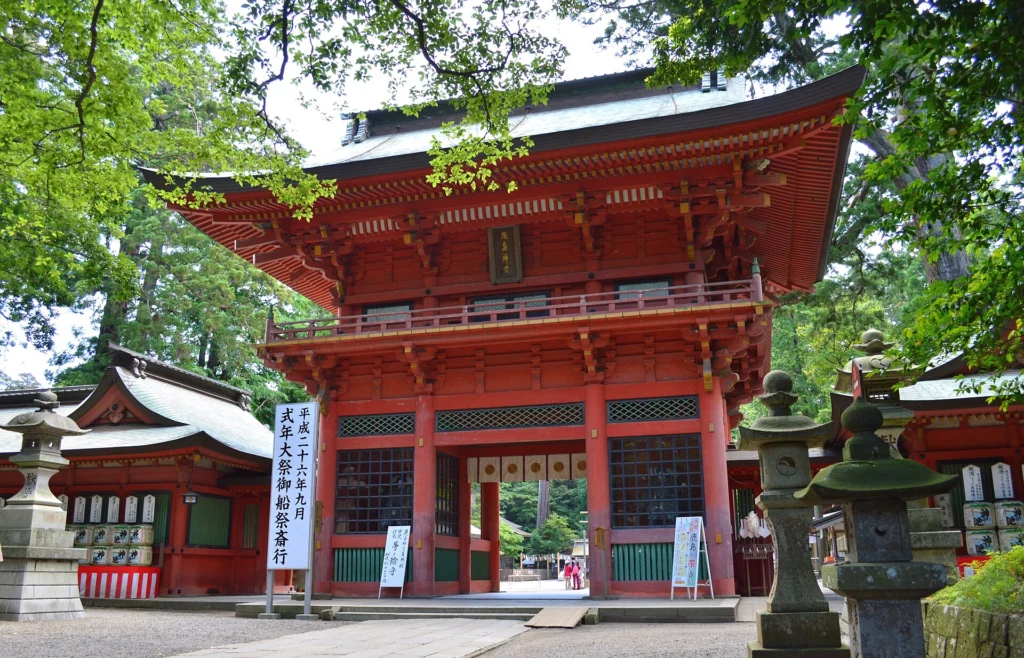
- Romon gate: a red two-story gate about 13 m high. Tokugawa Yorifusa, the first lord of Mito, gave it in 1634. It is an Important Cultural Property.
- Main shrine buildings: the main hall, worship hall and the halls between them were given by the second shogun, Tokugawa Hidetada, in 1619. They are Important Cultural Properties.
- Okumiya and the back approach: the Okumiya (inner shrine) was first given by Tokugawa Ieyasu in 1605. It stands at the end of the Oku-sando, a path of about 300 m under tall trees. Horseback archery (yabusame) is held here on May 1.
- Sacred cedar: the oldest and largest tree in the forest, about 40 m tall and about 1,300 years old.
- Kaname-ishi: a small stone said to go deep into the ground and hold down the giant catfish that causes earthquakes.
- Mitarashi Pond: more than 400,000 liters of spring water flow in each day, and the water is clear to the bottom.
- Deer park: deer are seen as messengers of the gods here. About 20 deer live in the park.
Before you go
- No dogs: dogs are not allowed in the grounds, partly because the deer are afraid of them. Guide dogs and service dogs are allowed.
- Easy walking: most of the grounds are flat, except around Mitarashi Pond. The shop at Parking Lot 1 lends wheelchairs free of charge, but only a few.
- Do not take things home: the grounds are a national historic site. Do not pick plants or take soil or sand.
- Big festival: the yearly festival is on September 1. The Ofunesai boat festival is held once every 12 years, in the Year of the Horse. It was last held in 2026.
Getting there from Tokyo
- Highway bus: the Kashima-go bus leaves from Tokyo Station Yaesu South Exit and stops at Kashima Jingu. It takes about 2 hours and costs 2,100 yen one way. Suica and PASMO work.
- Train: ride to Kashima-Jingu Station on the JR Kashima Line, then walk about 7 minutes. The Kashima Line runs about once an hour, so check the timetable first.
- From Mito: the Kashima Rinkai Railway runs from Mito to Kashima-Jingu. IC cards like Suica cannot be used on this line.
- To Katori Jingu: the shrine says it takes about 50 minutes by train and on foot, or about 40 minutes by train and taxi via Sawara Station.
Visit the nearby canal town of Sawara, see Naritasan Shinshoji Temple on the way to the airport, or find more day trips from Tokyo.
FAQ
What are the opening hours of Kashima Jingu?
The grounds have no gates, so you can visit at any time, 365 days a year. The amulet counter and prayer reception are open from 8:30 to 16:30.
How do I get to Kashima Jingu from Tokyo?
Take the Kashima-go highway bus from Tokyo Station Yaesu South Exit to the Kashima Jingu stop. It takes about 2 hours and costs 2,100 yen. You can also take the JR Kashima Line to Kashima-Jingu Station and walk 7 minutes.
Is there an entrance fee at Kashima Jingu?
No. Walking in the grounds is free. The treasure hall has been closed since 2018.
Can I bring my dog to Kashima Jingu?
No. The shrine asks visitors not to bring dogs, partly because the deer are afraid of them. Guide dogs and service dogs are allowed.
Can I visit Kashima Jingu and Katori Jingu on the same day?
Yes. The shrine says it takes about 20 minutes by car, about 40 minutes by train and taxi via Sawara Station, or about 50 minutes by train and on foot.
Keep reading
Sources
Facts come from the official Kashima Jingu website (grounds guide, history, access and FAQ pages). They are based on official sources, not our own visit. Bus times and fares can change, so check before you go. Last checked: November 2026 (on November 14, 2026).