Researched guide · Last checked: Nov 13, 2026
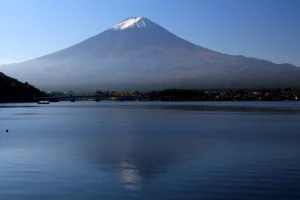
Fujisan Hongu Sengen Taisha in Fujinomiya, Shizuoka, is the head shrine of the Sengen shrines, which worship Mt Fuji as a god. Its main buildings were given by Tokugawa Ieyasu in 1604, and pilgrims once purified themselves in its spring-fed Wakutama Pond before climbing the mountain. It is about 10 minutes on foot from Fujinomiya Station.
Quick answer
Hours: The shrine’s site does not list gate hours; check with the shrine (0544-27-2002).
Admission: No entry fee is listed.
Getting there: Fujinomiya Station (JR Minobu Line): about 10 minutes on foot.
If you prefer a guided trip, compare Mt. Fuji day tours from Tokyo.
Quick facts
| What it is | Head shrine of the Sengen shrines; the god is Asama Okami (Konohana-no-Sakuyahime) |
| Highlights | Wakutama Pond, the two-story inner shrine in Sengen style, the tower gate |
| Hours | The shrine’s site does not list gate hours; check with the shrine (0544-27-2002) |
| Entry | No entry fee is listed |
| Nearest station | Fujinomiya Station (JR Minobu Line): about 10 minutes on foot |
| Last checked | November 2026 (on November 13, 2026) |
About the shrine
The shrine explains that Mt Fuji itself is the sacred body of its god, Asama Okami, who appears as Konohana-no-Sakuyahime. After his victory and appointment as shogun, Tokugawa Ieyasu built the inner shrine, outer shrine and tower gate in 1604, and in 1606 he gave the shrine the land of Mt Fuji above the eighth station. Some buildings were lost in the earthquakes of 1633 and 1854; the inner shrine, outer shrine and tower gate are the originals.
- Inner shrine: a two-story building about 14 m high, built in a unique “Sengen style”.
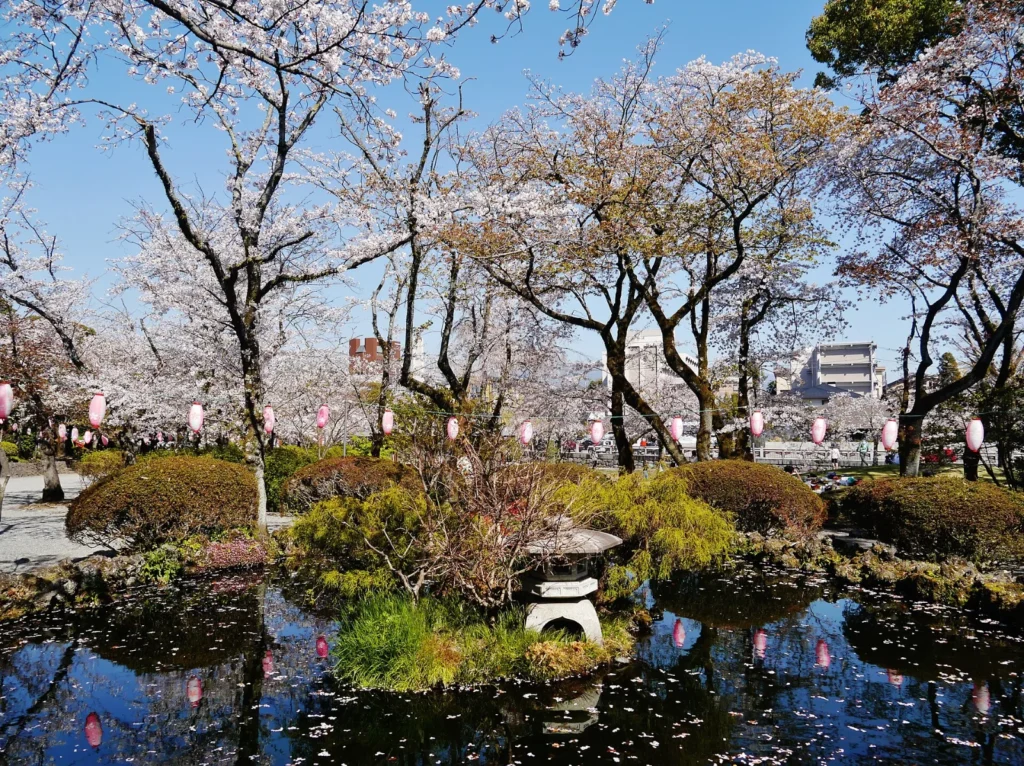
- Wakutama Pond: through the small eastern gate behind the main shrine. In the past, pilgrims purified themselves here before climbing Mt Fuji.
- Festivals: yabusame (horseback archery) on May 4 to 6, and the autumn grand festival on November 3 to 5.
Good to know
- Eating, drinking and smoking are not allowed in the grounds.
- The shrine’s parking is paid.
- Prayer services are booked at the reception desk; groups and special requests need a reservation (0544-27-2002).
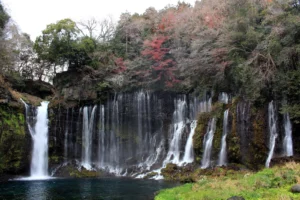
Fujinomiya is a good base on the south side of Mt Fuji. Visit Shiraito Falls nearby, and see our Mt Fuji day trip guide.
Getting there
- JR Minobu Line: Fujinomiya Station, about 10 minutes on foot.
- From Shin-Fuji Station (Tokaido Shinkansen): taxi about 30 minutes, or bus to Fuji Station and the Minobu Line to Fujinomiya.
- Highway buses run between Tokyo Station and Fujinomiya (reservation needed).
- Address: 1-1 Miyacho, Fujinomiya, Shizuoka.
FAQ
How do I get to Fujisan Hongu Sengen Taisha?
Take the JR Minobu Line to Fujinomiya Station and walk about 10 minutes.
What is Wakutama Pond?
A spring-fed pond behind the main shrine where pilgrims purified themselves before climbing Mt Fuji.
Who built the shrine buildings?
Tokugawa Ieyasu built the inner shrine, outer shrine and tower gate in 1604.
Is there an entry fee?
The shrine does not list one.
What are the opening hours?
The official site does not list gate hours, so check with the shrine before an early or late visit.
Sources
Facts on this page come from the official sources below. Last checked: November 2026 (on November 13, 2026). Hours and prices can change, so please check before you go.