Researched guide · Last checked: Nov 11, 2026
The Tsukiji Outer Market is a few blocks of food stalls, small restaurants and kitchen shops next to the site of Tokyo’s old fish market. It is one of the best places in the city to try fresh seafood and snacks in a single morning. This page is about eating your way through it: when to go, how to eat politely and what to bring. For the whole area, including Toyosu Market, see our Tsukiji and Toyosu guide.
Quick answer
Hours: The market runs about 9:00 to 14:00. Each shop sets its own hours, so some open earlier or close later.
Where: Tsukiji, Chuo City, the streets around the former Tsukiji fish market.
Closed days: Many shops close on Sundays and on some Wednesdays. The official site has a market calendar, and each shop follows its own schedule.
Quick facts
| Where | Tsukiji, Chuo City, the streets around the former Tsukiji fish market |
| Hours | The market runs about 9:00 to 14:00. Each shop sets its own hours, so some open earlier or close later |
| Closed days | Many shops close on Sundays and on some Wednesdays. The official site has a market calendar, and each shop follows its own schedule |
| Best time | Morning. The official site suggests having lunch a little early, around 11:00 |
| Nearest stations | Tsukijishijo Station (Toei Oedo Line) and Tsukiji Station (Tokyo Metro Hibiya Line), 1 minute on foot. Higashi-ginza Station (Toei Asakusa and Tokyo Metro Hibiya lines), 3 minutes |
| Payment | Most shops accept Japanese yen only, and there is no money exchange inside the market. Card acceptance depends on the shop |
| Last checked | November 2026 |
How to enjoy a food walk
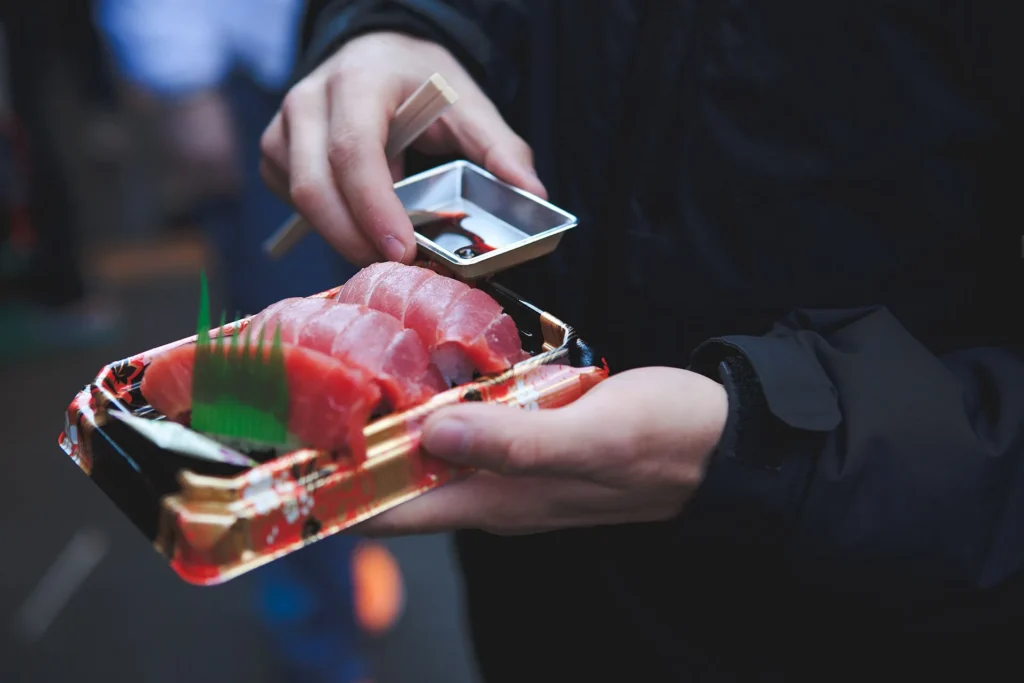
The market is a mix of shops selling ingredients and kitchen tools, and small eateries and stalls serving food to eat on the spot. A good plan is to walk the lanes once to see what looks good, then come back and eat at the places you liked.
- Eat at the shop, not while walking. The market asks visitors not to wander around while eating, because it gets in the way of other people. Eat inside the eatery, in front of the stall, or in a designated eating area.
- Share and try more. Small portions make it easy to try several things. Go with a friend and share.
- Ask before taking photos. The market asks you to get the shopkeeper’s permission before photographing a shop. Some shops do not allow photos.
- Do not bargain. The market is mainly a wholesale market, and bargaining is not accepted.
- Look at the kitchen shops too. Besides food, the market sells knives, tableware and cooking tools. See our Kappabashi guide for Tokyo’s kitchen-tool street.
New to Japanese food? See Japanese food to try in Tokyo and how to eat sushi before you go.
Why go in the morning, and what to watch out for
- Morning is best. The official site says the best time to visit is in the morning, and the market runs until about 14:00. Many shops close in the early afternoon.
- Professional buyers come first until 9:00. The market asks visitors to give priority to professional buyers before 9:00. Shopping at the Tsukiji Uogashi wholesale building before 9:00 is limited to people with advance permission; after 9:00 it is open to everyone.
- Check the day. Many shops close on Sundays and some Wednesdays. Check the official market calendar before you go.
- Leave big bags behind. Large bags block the narrow lanes. Use a coin locker first; see our luggage guide.
- Keep groups small. The market asks visitors not to move around in large groups.
- Bring cash. Most shops take yen only, and there is no money exchange inside. See money in Tokyo.
- No smoking on the street. Smoking on the streets of Chuo City is not allowed except in designated areas.
Getting there
- Tsukijishijo Station (Toei Oedo Line): 1 minute on foot.
- Tsukiji Station (Tokyo Metro Hibiya Line): 1 minute on foot.
- Higashi-ginza Station (Toei Asakusa Line and Tokyo Metro Hibiya Line): 3 minutes on foot.
Ginza is a short walk away; see our Ginza and Tokyo Station guide. To see the working wholesale market and the tuna auction, go to Toyosu instead: see Toyosu Market and the tuna auction.
Also nearby: Eating While Walking in Japan: Where to Eat Instead
Also see: Shiose Sohonke (Tsukiji) · Sushizanmai Tsukiji Main Store
FAQ
What time does the Tsukiji Outer Market open?
The market runs about 9:00 to 14:00, but each shop sets its own hours. Professional buyers have priority until 9:00, so mid-morning is a good time for visitors.
Is the Tsukiji Outer Market open on Sundays?
Many shops close on Sundays and on some Wednesdays. Check the official market calendar and the shop you want to visit.
Can you eat while walking at Tsukiji?
The market asks you not to. Eat inside the eatery, at the stall, or in a designated eating area.
Do I need cash at Tsukiji?
Yes, bring yen. Most shops accept Japanese yen only, card acceptance depends on the shop, and there is no money exchange inside the market.
Is the tuna auction at Tsukiji?
No. The wholesale market moved to Toyosu in 2018, and the tuna auction is held there. See our Toyosu Market guide.
To start your food walk early, stay nearby: see our best hotels in Tsukiji and Toyosu.
Next door: Tsukiji Hongwanji Temple, free to visit from 6:00.
Keep reading


Sources
This page is based on the official information below, not on our own visit. Last checked: November 2026 (on November 11, 2026). Shop hours and closing days can change, so please check before you go.
Also nearby: Tsukiji, teamLab and Toyosu in one day (itinerary)
Also nearby: Tsukishima, Tsukudajima and Kachidoki half-day itinerary