Researched guide · Last checked: Nov 13, 2026
This article contains affiliate links. If you book through them, we may earn a commission at no extra cost to you. See our Affiliate Disclosure.
Quick answer
Admission: No fee is listed by the Nikko City Tourism Association.
Nearest bus stop: “Anzawa-cho” (bus toward Chuzenji Onsen, about 8 minutes from JR / Tobu Nikko Station), then about 20 minutes on foot.
What it is: A gorge on the Daiya River, formed by lava from Mt. Nantai.
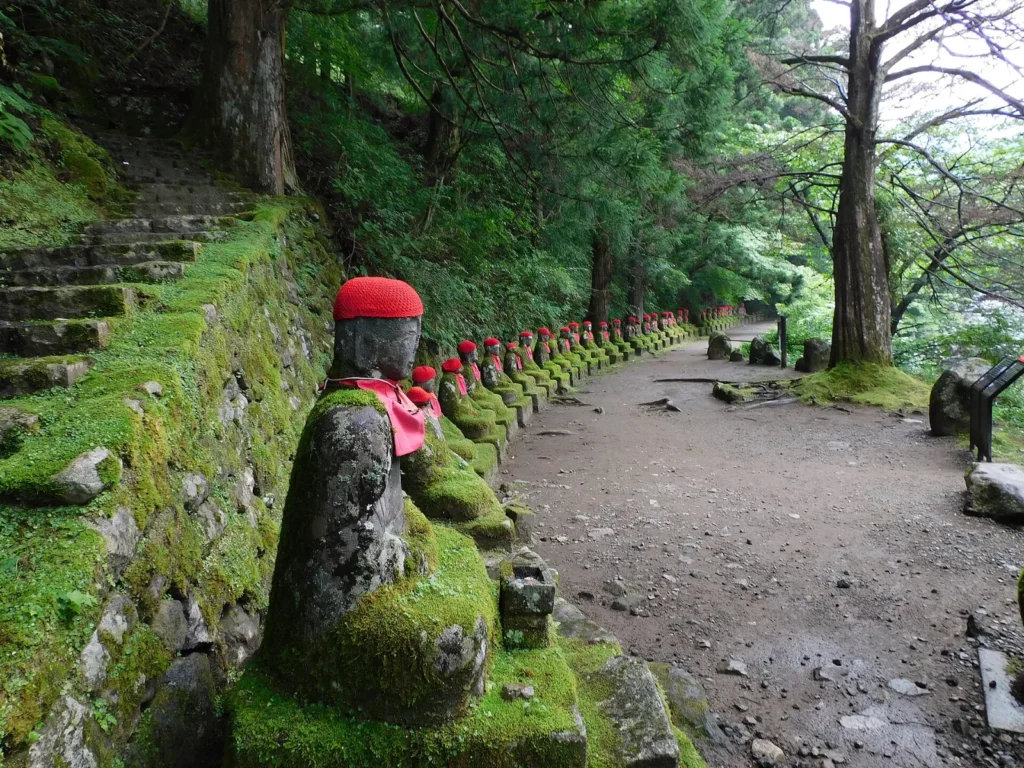
Kanmangafuchi Abyss is a small gorge on the Daiya River in Nikko, formed by lava from Mt. Nantai. Along the south bank stand about 70 stone Jizo statues known as the “Bake-Jizo” (ghost Jizo), because people say you get a different number each time you count them. There is no entry fee listed. It is about 20 minutes on foot from the Anzawa-cho bus stop. See our Nikko day trip guide.
Quick facts
| What it is | A gorge on the Daiya River, formed by lava from Mt. Nantai |
| Bake-Jizo | About 70 stone Jizo statues; the number is said to change each time you count |
| Admission | No fee is listed by the Nikko City Tourism Association |
| Season notes | Fresh green in spring, autumn leaves, snow on the Jizo in winter. Leeches (yamabiru) are often reported June–October after rain |
| Nearest bus stop | “Anzawa-cho” (bus toward Chuzenji Onsen, about 8 minutes from JR / Tobu Nikko Station), then about 20 minutes on foot |
| Last checked | November 2026 (on November 13, 2026) |
What to see
- Bake-Jizo: a row of about 70 stone Jizo on the south bank. The legend says the count is different on the way there and on the way back.
- The name: a stone statue of Fudo Myoo once stood on a rock here, set up by the priest Kokai; “Kanman” is said to come from the last words of Fudo’s mantra.
- Kobo Daishi’s “thrown brush”: the Sanskrit letters “kanman” carved on a cliff upstream, said to have been made by Kobo Daishi throwing his brush.
- The river: clear water rushing over volcanic rock. The Nikko Botanical Garden is on the opposite bank.
Tips
- Wear shoes for a riverside path.
- From June to October, especially on and after rainy days, the Nikko City Tourism Association warns of leeches on nearby hiking paths. Wear long trousers and check your legs.
- Cherry trees bloom in nearby Ganman Park in spring.
Prefer a guided day? Klook sells a guided Nikko World Heritage walking tour that visits Nikko Toshogu and walks to Kanmangafuchi Abyss, with lunch. It is a tour, so check the meeting point and what is included on the booking page.
Affiliate link
Getting there
- From JR Nikko Station or Tobu-Nikko Station: bus toward Chuzenji Onsen, about 8 minutes to “Anzawa-cho”, then about 20 minutes on foot.
- By car: about 10 minutes from Nikko IC. Parking available.
- Address: Takumi-cho, Nikko, Tochigi.
Combine it with Nikko Toshogu and Futarasan Shrine. See our Nikko day trip.
FAQ
Is Kanmangafuchi free?
The Nikko City Tourism Association lists no admission fee.
How many Jizo statues are there?
About 70. The legend says you never get the same number twice.
How do I get there?
Take the bus toward Chuzenji Onsen to the “Anzawa-cho” stop (about 8 minutes from Nikko Station) and walk about 20 minutes.
Are there leeches?
The tourism association warns of leeches on nearby paths from June to October, especially on rainy days and the day after.
When is the best season?
Fresh green in spring and autumn leaves are popular; in winter the Jizo wear snow.
Keep reading
Sources
Facts, access and safety notes come from the Nikko City Tourism Association’s official site. Last checked: November 2026 (on November 13, 2026). Please check before you go.