Researched guide · Last checked: Nov 13, 2026
Kuhonbutsu Joshinji is a Jodo (Pure Land) Buddhist temple in Okusawa, Setagaya City, founded in 1678 on the site of Okusawa Castle. It is known as “Kuhonbutsu” after its nine Amida Buddha statues, each with a different hand gesture, kept in three halls. The large grounds have maple trees that turn red in late November. It is 5 minutes from Kuhonbutsu Station and about 15 minutes from Jiyugaoka.
Quick answer
Gate hours: 6:00 to 16:30.
Admission: The official site lists no admission fee for the grounds.
Nearest station: Kuhonbutsu Station (Tokyu Oimachi Line): about 5 minutes. Jiyugaoka Station (Tokyu Toyoko Line): about 15 minutes.
Quick facts
| Gate hours | 6:00 to 16:30 |
| Admission | The official site lists no admission fee for the grounds |
| Nine Amida Buddhas | Nine statues in the three Sanbutsudo halls, made by the founder Kaseki Shonin |
| Autumn leaves | Late November to early December |
| December 2026 notice | Visits and some paths are restricted December 1–8 for a ceremony on December 6 |
| Nearest station | Kuhonbutsu Station (Tokyu Oimachi Line): about 5 minutes. Jiyugaoka Station (Tokyu Toyoko Line): about 15 minutes |
| Last checked | November 2026 (on November 13, 2026) |
The nine Amida Buddhas
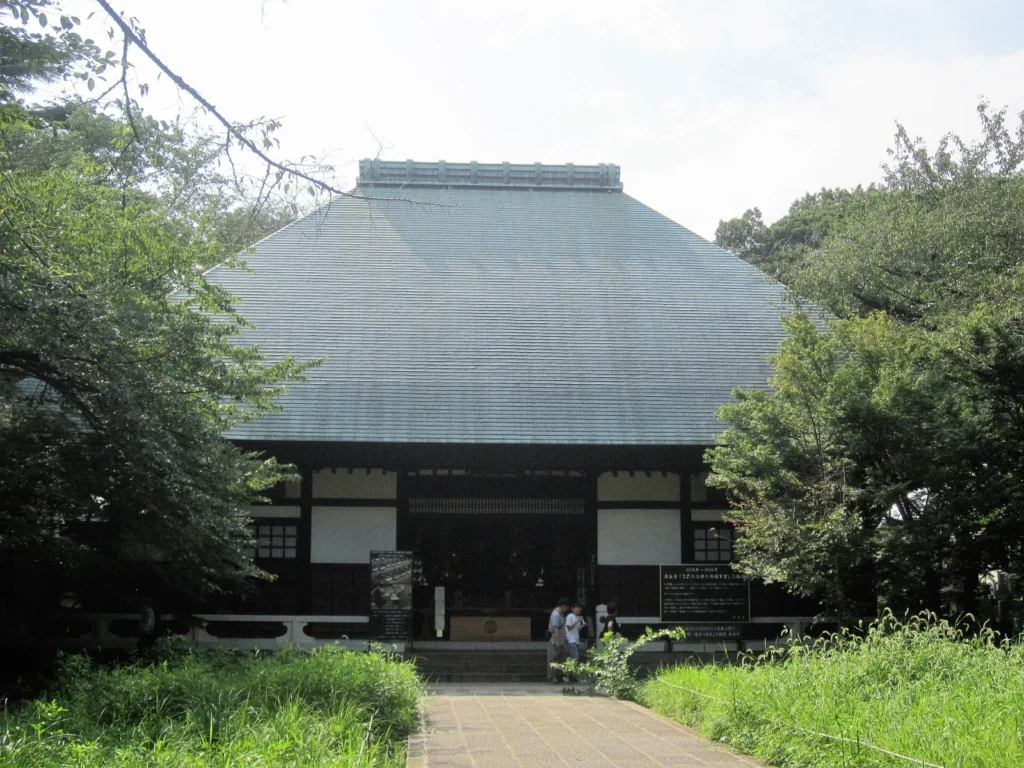
Based on the Contemplation Sutra, which describes nine levels of rebirth in the Pure Land, the founder Kaseki Shonin made nine Amida Buddha statues and one Shakyamuni statue. The nine Amidas, each with a different mudra (hand gesture), sit in three halls (Sanbutsudo), three in each. The temple says all halls and statues may be photographed, but not for commercial use and not during services.
What else to see
- Enma-do: the hall of Enma, king of the underworld, on the approach near the main gate (Somon).
- Niomon gate and bell tower.
- Ryugoden: the main hall. The temple says the whole site is laid out to represent the Pure Land.
- Autumn leaves: late November to early December. Spring cherry blossoms, summer sagiso (egret orchids, late July to early August) and winter plum are also on the temple’s list.
Visiting manners
- Stay on the paving stones; lawns and leaf-mulch areas are off limits.
- Pets must be carried or kept in a bag or cart.
- The cemetery is closed to visitors who are not there to visit a grave.
- The car park is for people attending memorial services; other visitors should use the train.
December 2026 restriction
The temple will hold a ceremony for its new head priest on December 6, 2026. From December 1 to 8, visits and some paths are restricted, and on December 6 the Enma-do is closed all day. Check the temple’s notices before you go.
Getting there
- Kuhonbutsu Station (Tokyu Oimachi Line): about 5 minutes. Turn left out of the station and the approach begins.
- Jiyugaoka Station (Tokyu Toyoko and Oimachi lines): about 15 minutes on foot.
Walk on to Jiyugaoka for cafés, or ride the Oimachi Line to Todoroki Valley.
FAQ
What are Kuhonbutsu’s opening hours?
The gates are open from 6:00 to 16:30.
When are the autumn leaves best?
Late November to early December, according to the temple.
Can I take photos of the Buddhas?
Yes, all halls and statues may be photographed, but not for commercial use or during services.
How do I get there from Jiyugaoka?
Walk about 15 minutes, or ride one stop on the Tokyu Oimachi Line to Kuhonbutsu Station.
Is the temple open in early December 2026?
Visits are restricted from December 1 to 8 because of a ceremony on December 6.
Sources
Hours, history, seasons and notices come from Kuhonbutsu Joshinji’s official site. Last checked: November 2026 (on November 13, 2026). Please check the temple’s notices before you go.
- Kuhonbutsu Joshinji: visiting guide (official, Japanese)
- Kuhonbutsu Joshinji: access (official, Japanese)
- Kuhonbutsu Joshinji: grounds map (official, Japanese)
- Kuhonbutsu Joshinji: FAQ (official, Japanese)
- Kuhonbutsu Joshinji: about the temple (official, Japanese)
- Kuhonbutsu Joshinji: December 2026 visiting restriction (official, Japanese)
- Kuhonbutsu Joshinji: December 6 restriction details (official, Japanese)