Researched guide · Checked on Oct 21, 2026
Heated seats, a panel full of buttons, the sound of running water at the press of a button: Japanese toilets surprise many first-time visitors. They are easy to use once you know what the symbols mean. Here is how to flush, how to use the bidet seat, and what the other buttons do, based on the guide from Japan’s toilet manufacturers’ association.
Quick answer
Toilet paper: put used toilet paper in the bowl and flush. Sanitary products go in the small bin beside the toilet.
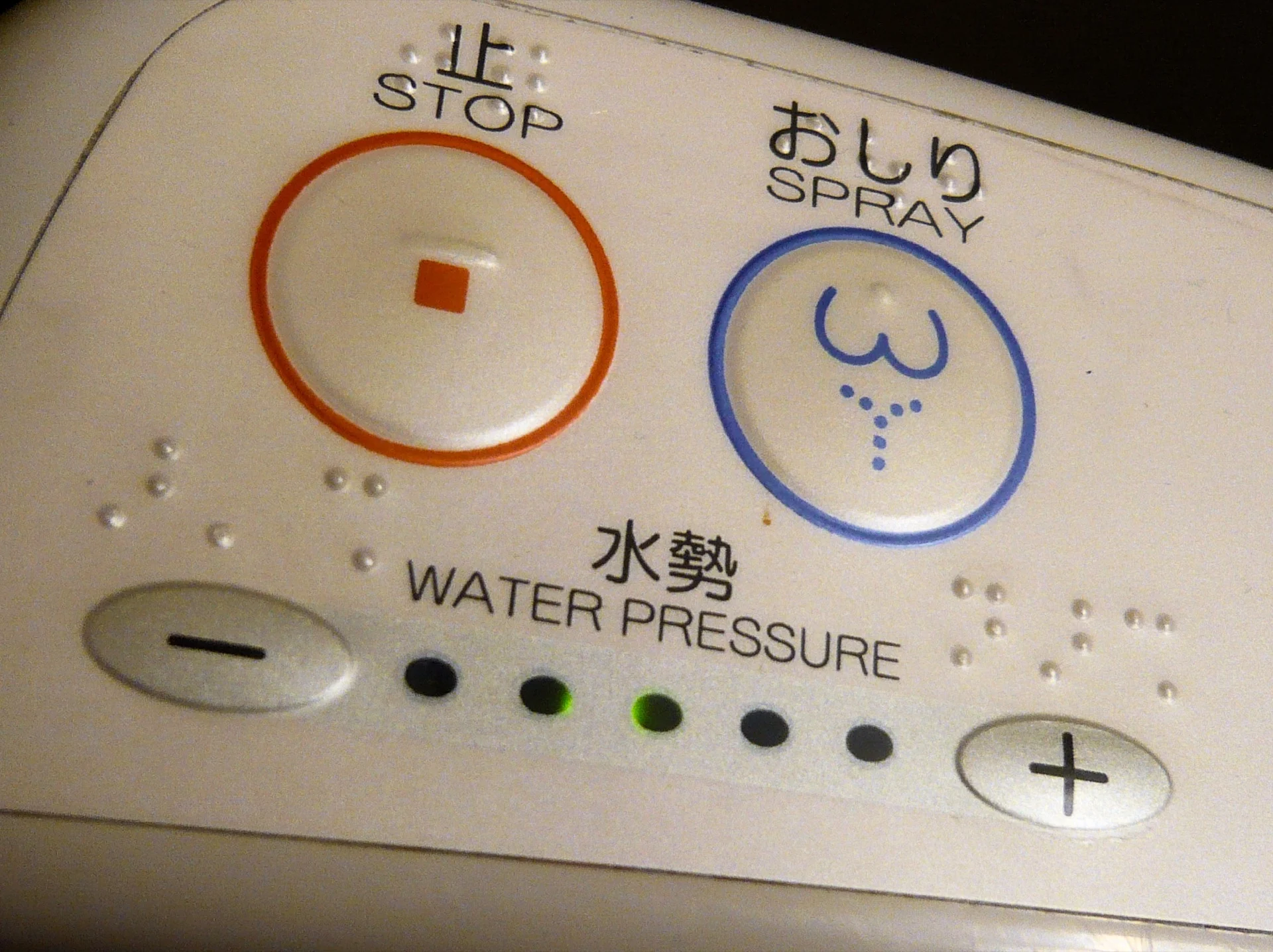
Washing: the buttons are usually on a panel beside the seat or on the wall. The square orange button is Stop (止).
Red or orange call button: an emergency call. Only press it if you need help.
How to flush
How you flush depends on the type of toilet:
| Type | How to flush |
|---|---|
| Toilet with a tank | Turn the lever on the side of the tank |
| Tankless toilet | Press the lever down |
| Wall button | Press the flush button on the wall |
| Sensor | Hold your hand over the sensor |
| Remote control | Press the flush button on the bidet seat’s remote panel |
| Automatic | Some new toilets flush by themselves when you stand up |
Always flush after use. Only toilet paper and paper marked as flushable should go in the bowl.
The bidet seat buttons
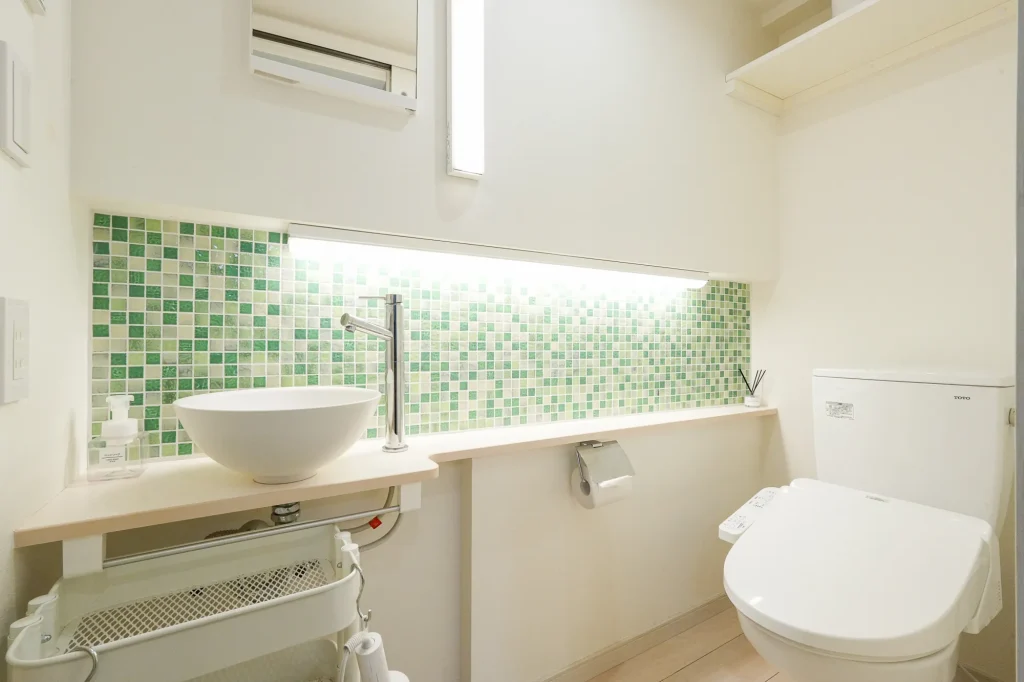
Most toilets in Japanese homes, hotels and stations have a seat with warm-water washing, drying and a heated seat. The Japan Sanitary Equipment Industry Association says more than 80% of households (with two or more people) had one by 2016. Visitors sometimes call it a “bidet toilet”; the industry calls it a spray seat.
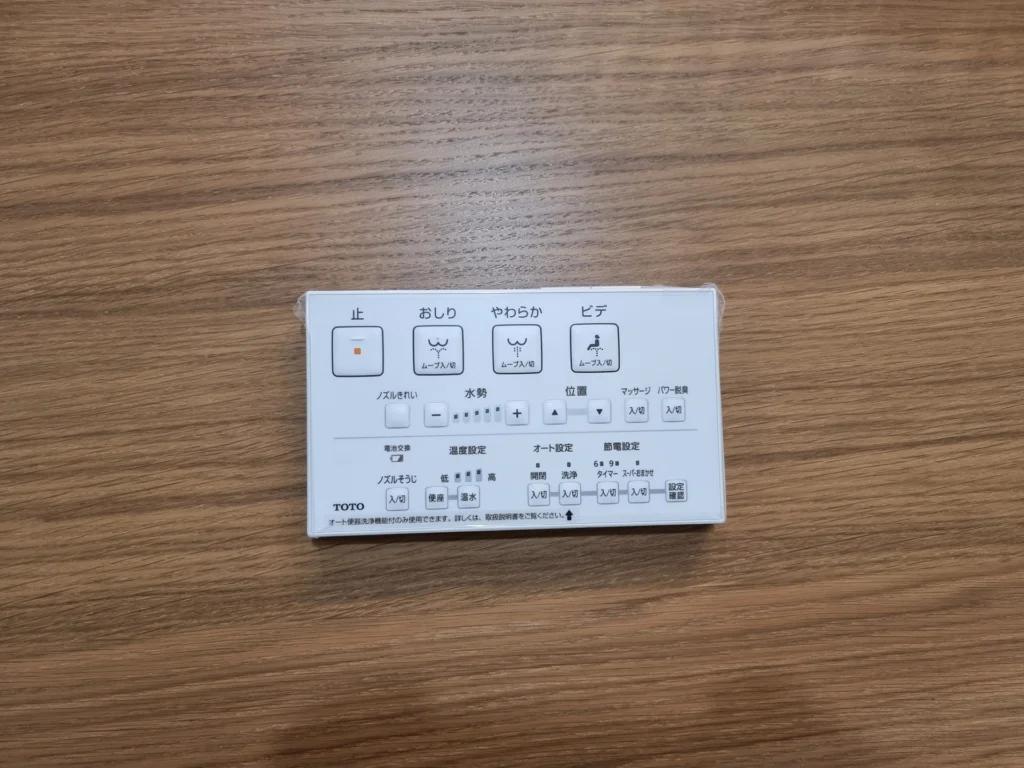
In 2017 the association agreed on standard symbols so that visitors can recognize the buttons, and these were later registered as an international standard (ISO 7000). The main ones are:
| Button | What it does |
|---|---|
| Stop (止) | Stops washing. Usually a square, often orange |
| Rear wash (おしり) | Sprays water to wash your bottom |
| Bidet (ビデ) | A gentler front wash |
| Dry (乾燥) | Warm air to dry |
| Flush (大 / 小) | Large or small flush |
| Lid and seat | Open or close the lid or seat |
- Stay seated while the water sprays, and press Stop when you are done.
- Water pressure (水勢) and spray position (位置) can usually be adjusted with + and − or arrow buttons.
- Some panels are labelled in English as well as Japanese.
The sound button
Some public toilets, especially women’s restrooms, have a device that plays the sound of running water to cover other sounds. Wave your hand over the sensor or press the button; it switches off by itself after a while. Some start automatically when you enter.
The emergency call button
Near the flush button there may be a call button. If you feel ill in the toilet, press it and someone will come to help. Do not press it otherwise. In many public toilets, the flush button, the call button and the paper holder follow a standard layout (ISO 19026): the flush button is above the paper holder, and the call button is behind you at the same height.
Finding a toilet
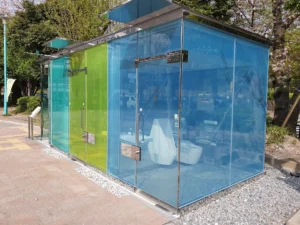
You will find toilets in train stations, parks and department stores, and many convenience stores let customers use theirs. Some are works of art: see our guide to THE TOKYO TOILET in Shibuya.
FAQ
How do you use a Japanese toilet?
Sit as normal, then use the panel beside the seat or on the wall. Press the rear wash button to wash, Stop to finish, and the flush lever or button when you leave.
Can you flush toilet paper in Japan?
Yes. Put used toilet paper in the bowl and flush. Sanitary products go in the bin.
What is the button that plays music or water sounds?
A sound device that covers noise. It turns off by itself.
Where can I find a toilet in Tokyo?
Train stations, parks and department stores have toilets, and many convenience stores let customers use theirs.
Related Articles


Sources
How-to information and the standard symbols come from the Japan Sanitary Equipment Industry Association (checked October 21, 2026).